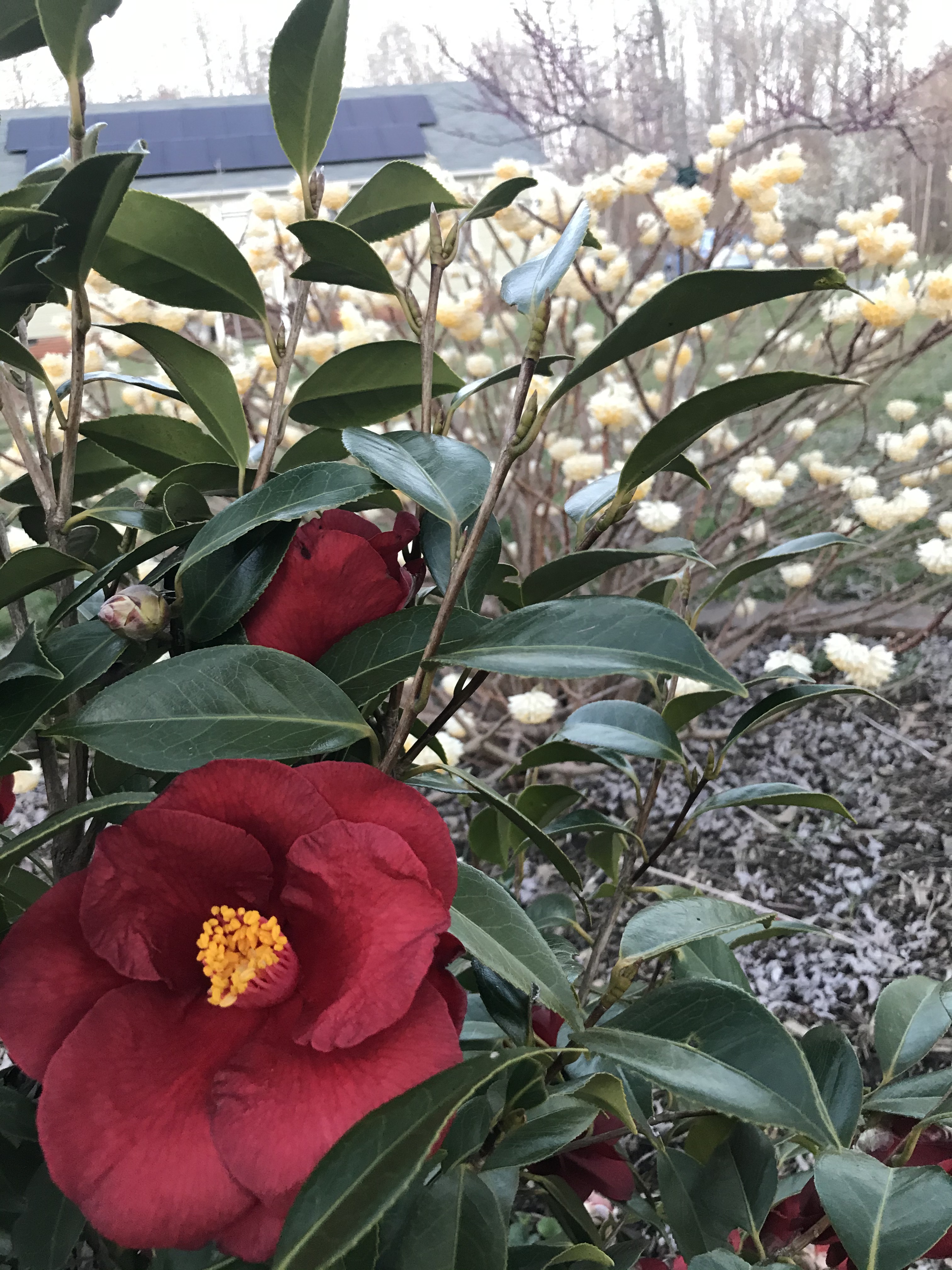
I bought this bush in Charlotte several years ago. Ann and I were wandering around. Not really shopping. But, open to the possibility of finding something interesting to take home with us. And this odd plant with lots of fuzzy cluster flowers and no leaves grabbed my attention and came home with me.
It blooms at the end of winter and smells divine. It’s very much a sign of impending Spring.
After that, it’s just a big green lump until it drops its leaves in Autumn.
The display when mine blooms next to the ‘Yuletide’ camellia (which insists on blooming in February despite its name) rocks my socks.
This does crack me up and make me roll my eyes a bit.
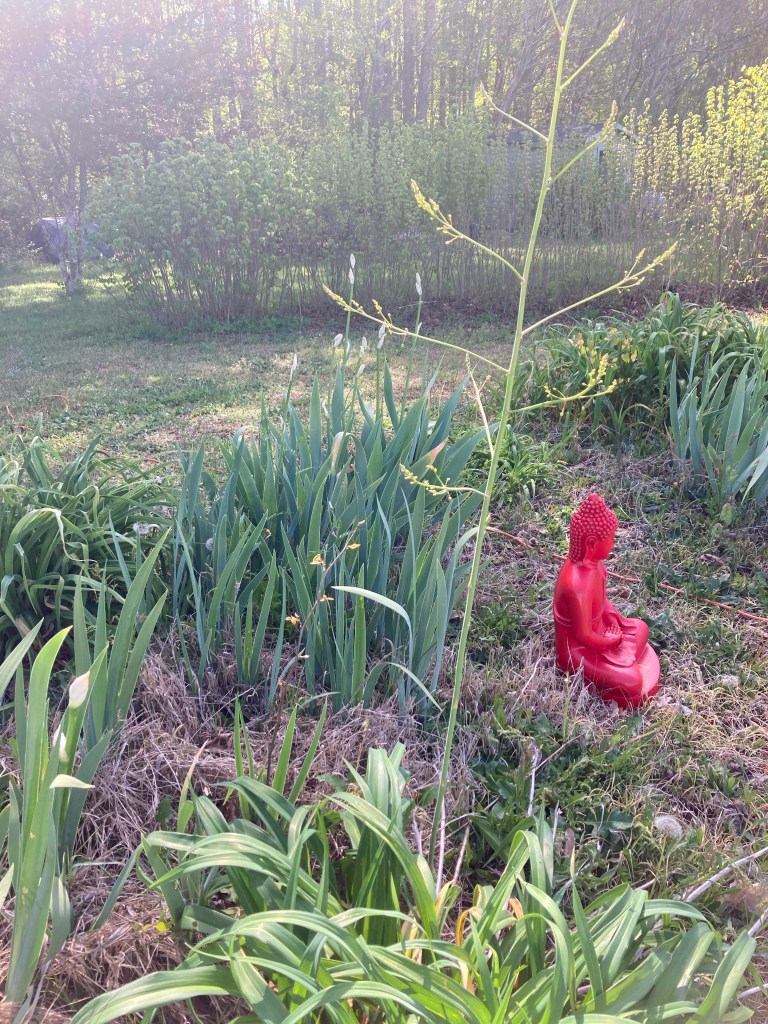
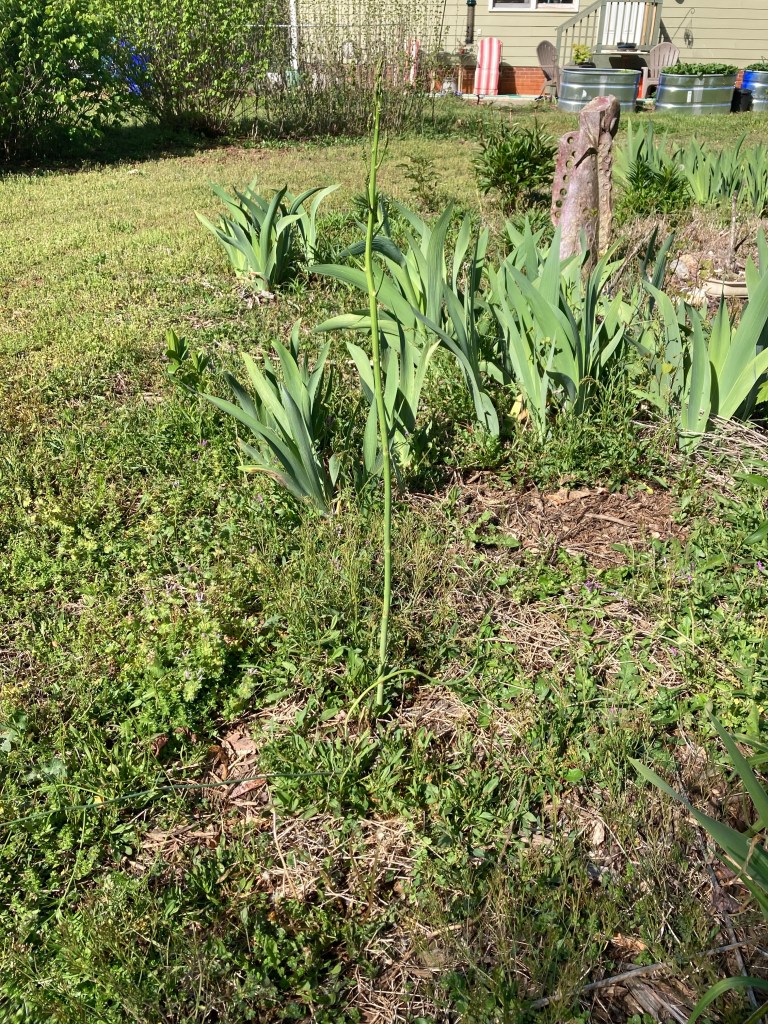
To start asparagus, you plant “crowns” in early Spring. If I recall correctly, they show up at garden centers in February. The crowns look like old fashioned rag mops.
Alternatively, you can hope that I am your neighbor and that the birds will seed them into your yard as enthusiastically as they do in mine.
There are a couple more spots but they didn’t photograph well.
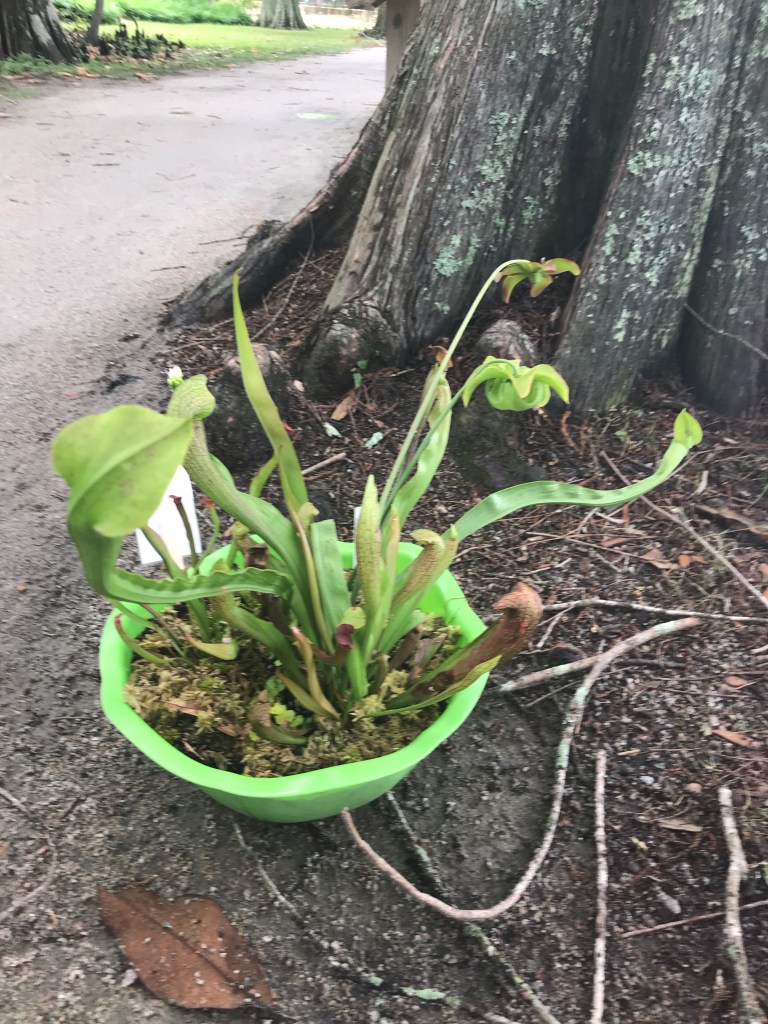
Swan Lake Iris Gardens in Sumter, SC has an Iris Festival every year on Memorial Day weekend and the local Master Gardeners group has a fundraising plant sale. Most of what they sell are irises. But, one of the MGs is a genius with carnivorous plants and donated several bog gardens to the cause. After some heavy quizzing (because I didn’t want to spend $40 on one to just kill it), I bought one.
New purchase
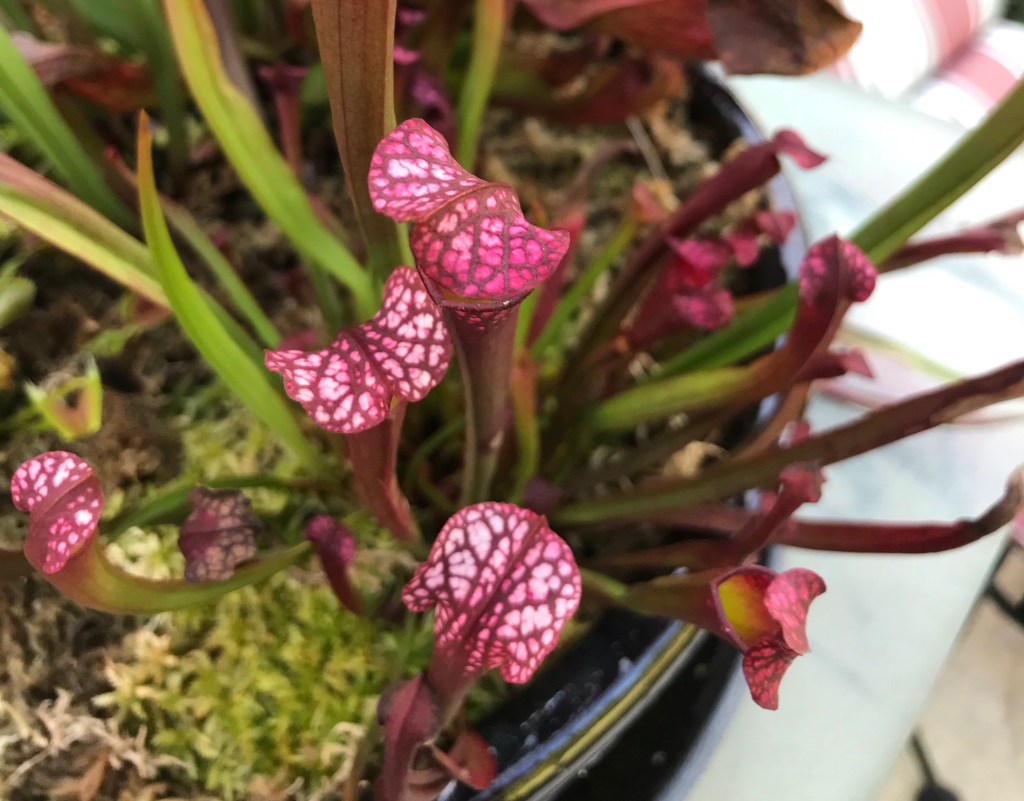
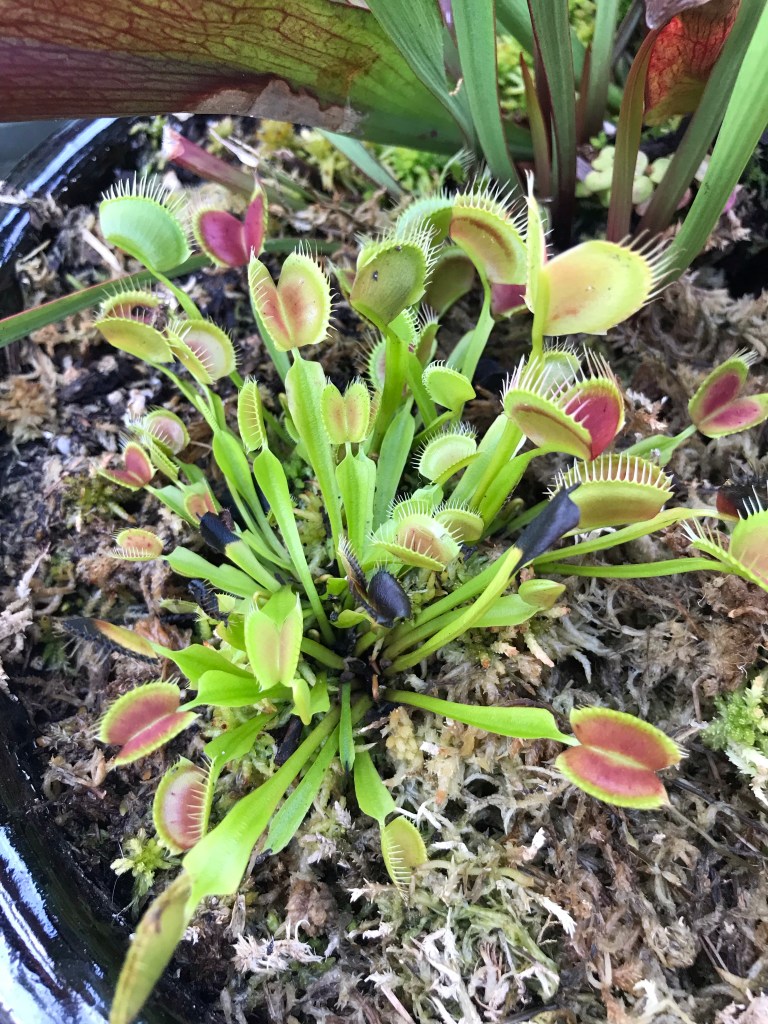
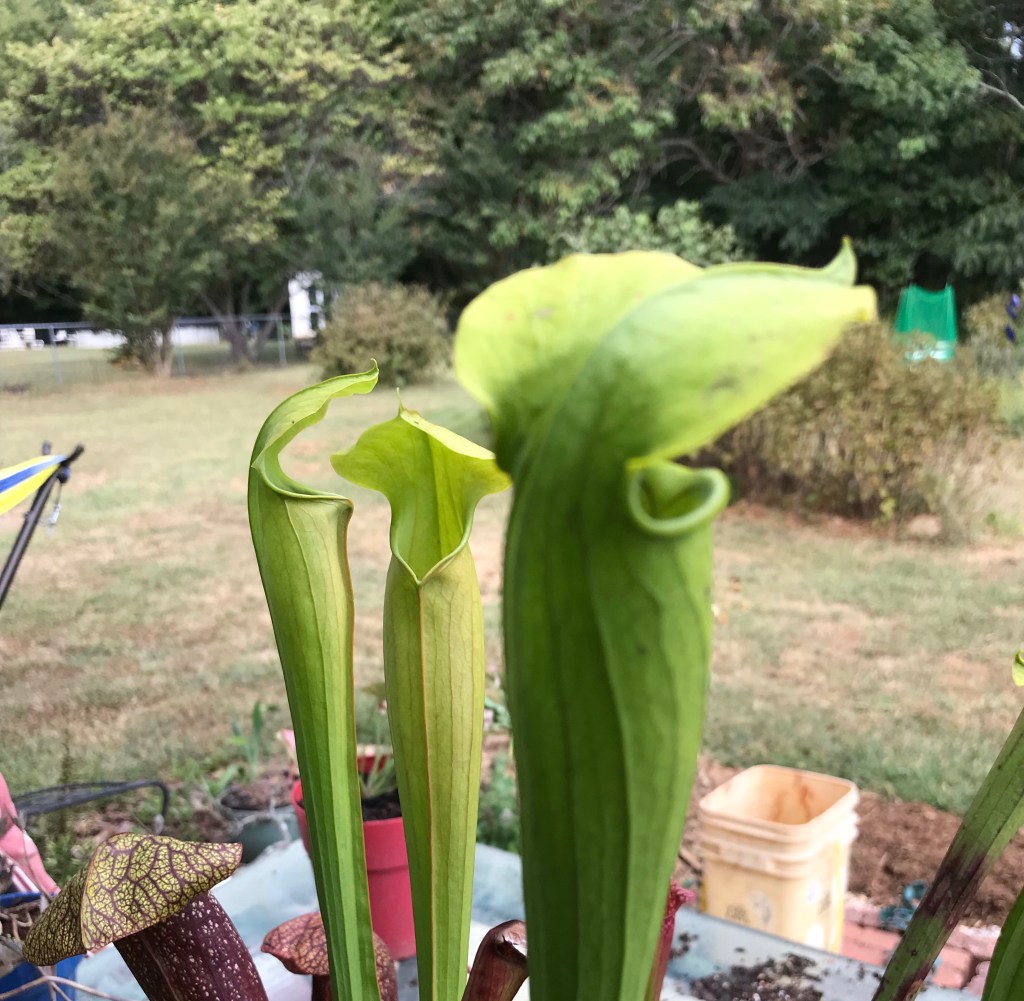
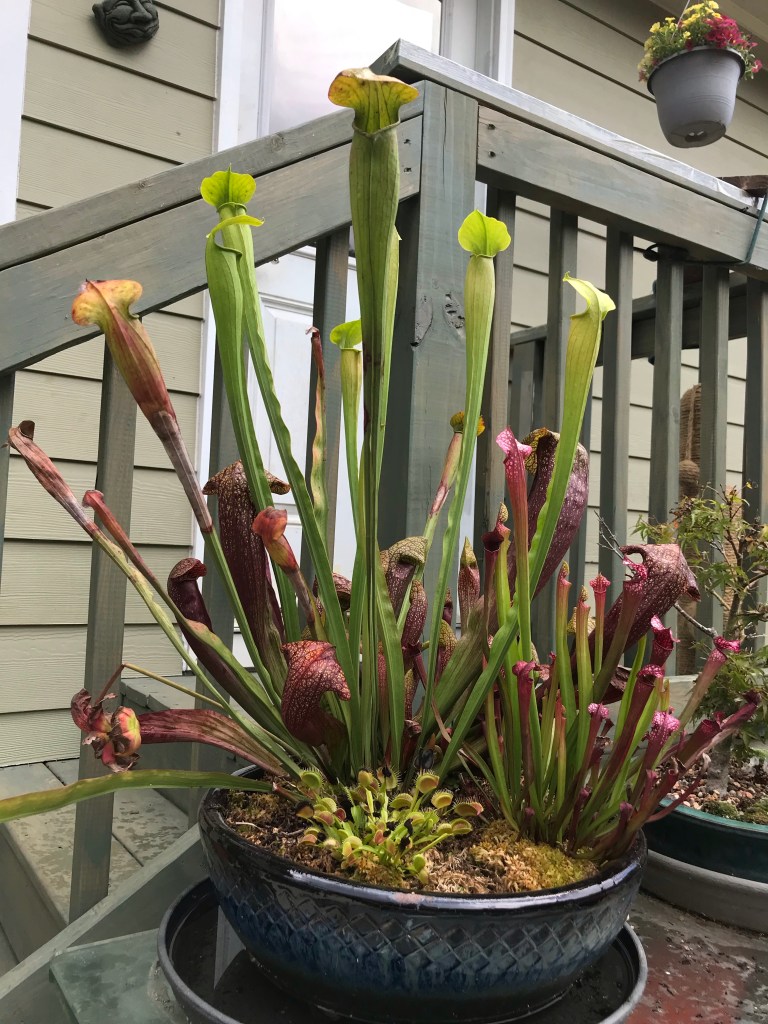
I chose this one because I liked the variety of colors in the sarracenias and it included a Venus Fly Trap. The one on the bottom left is a S. psittacina, also called a Parrot pitcher. The green pitcher plant is a S. oreophilia. The red and white one on the top left is probably a cross of S. leucophylla and S. rubra and I believe it is small because it is young, not because it will stay that way.
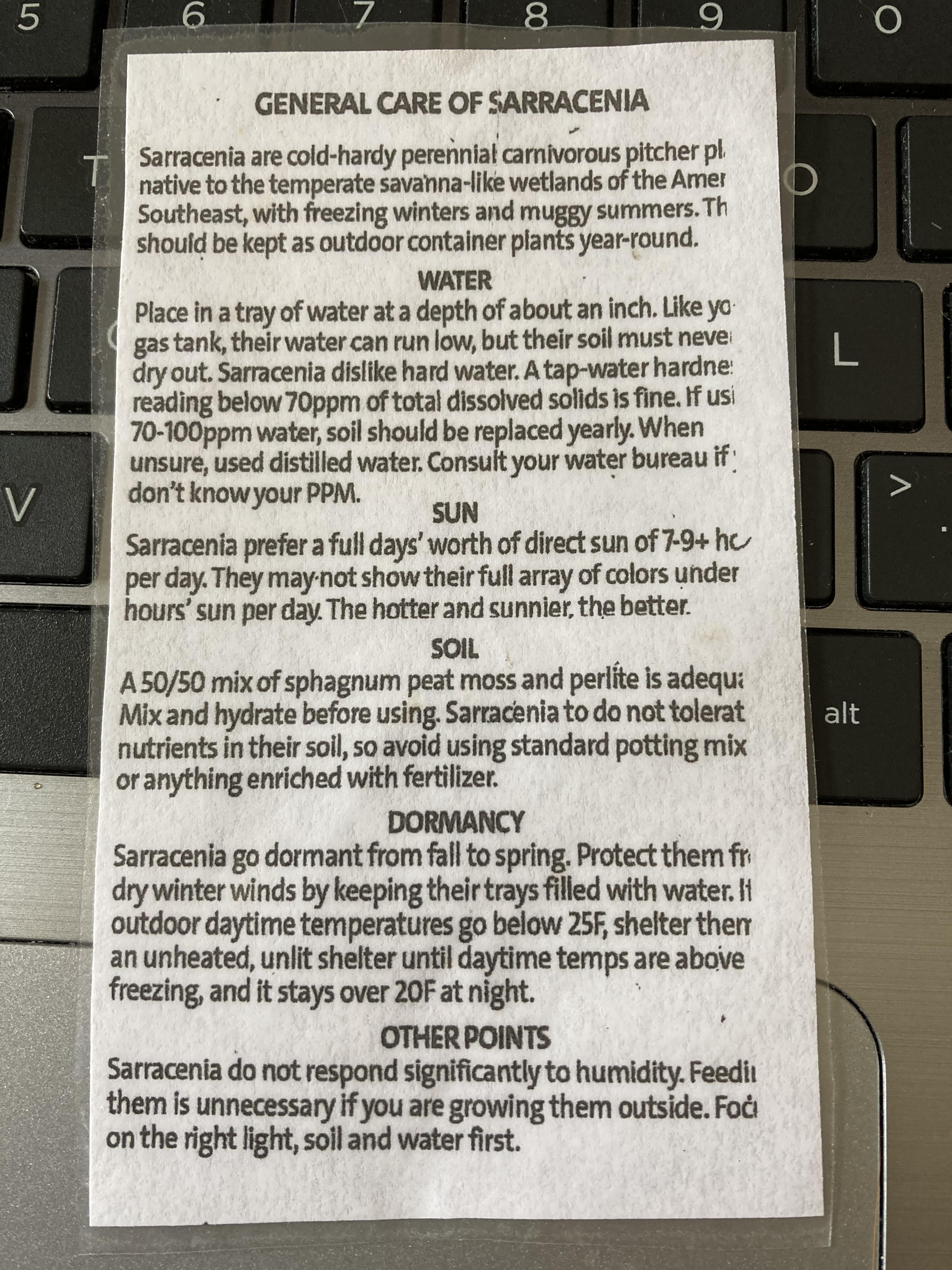
She told me to keep their feet wet (they are bog plants), leave them outside all year (they are native to our part of the world), don’t freak out when they die back in winter and don’t bother to feed them. Particularly, don’t fertilize them. They get nutrients from the insects they trap and, if you fertilize them, they don’t need those nutrients and don’t bother to make traps.
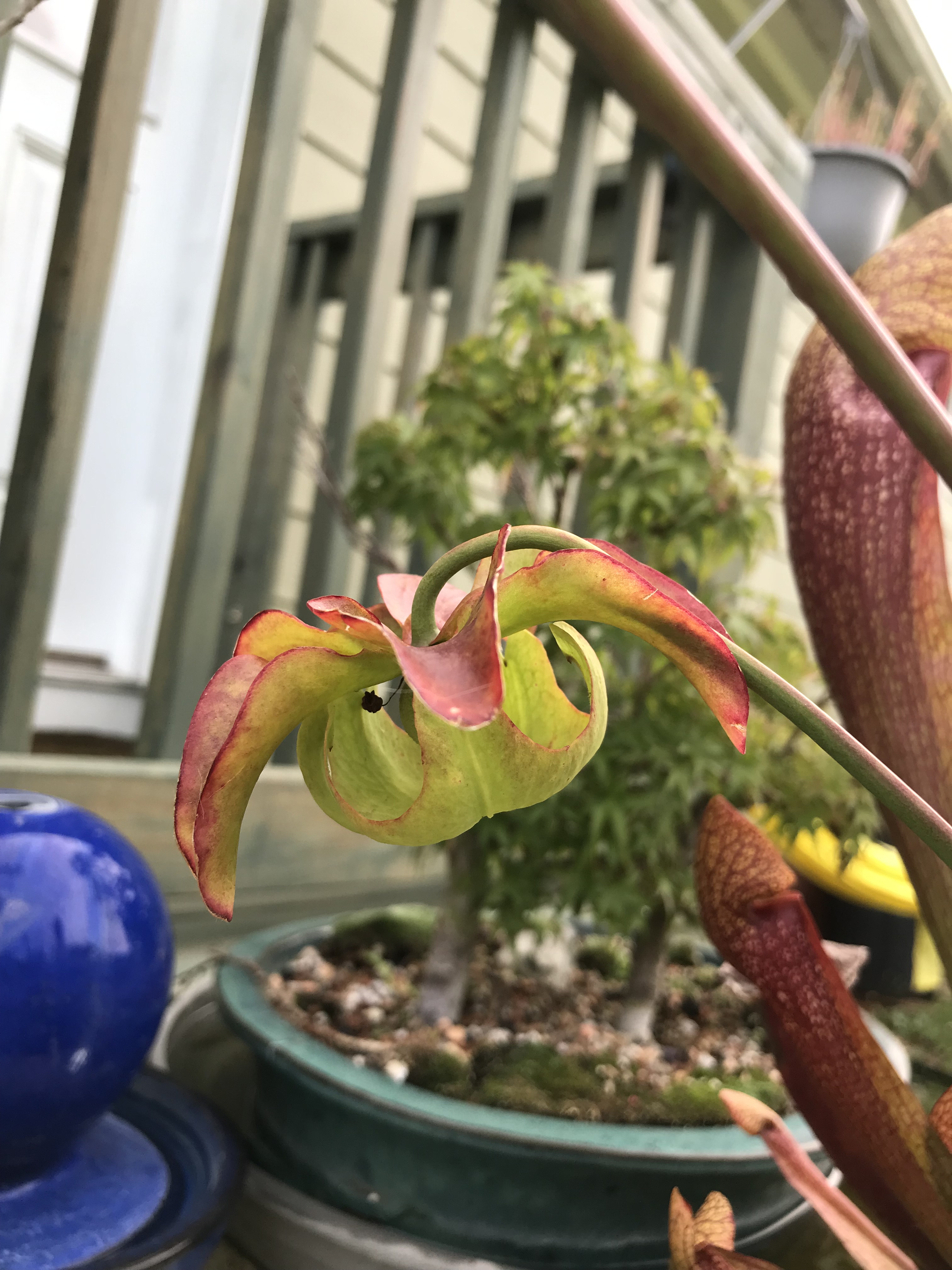
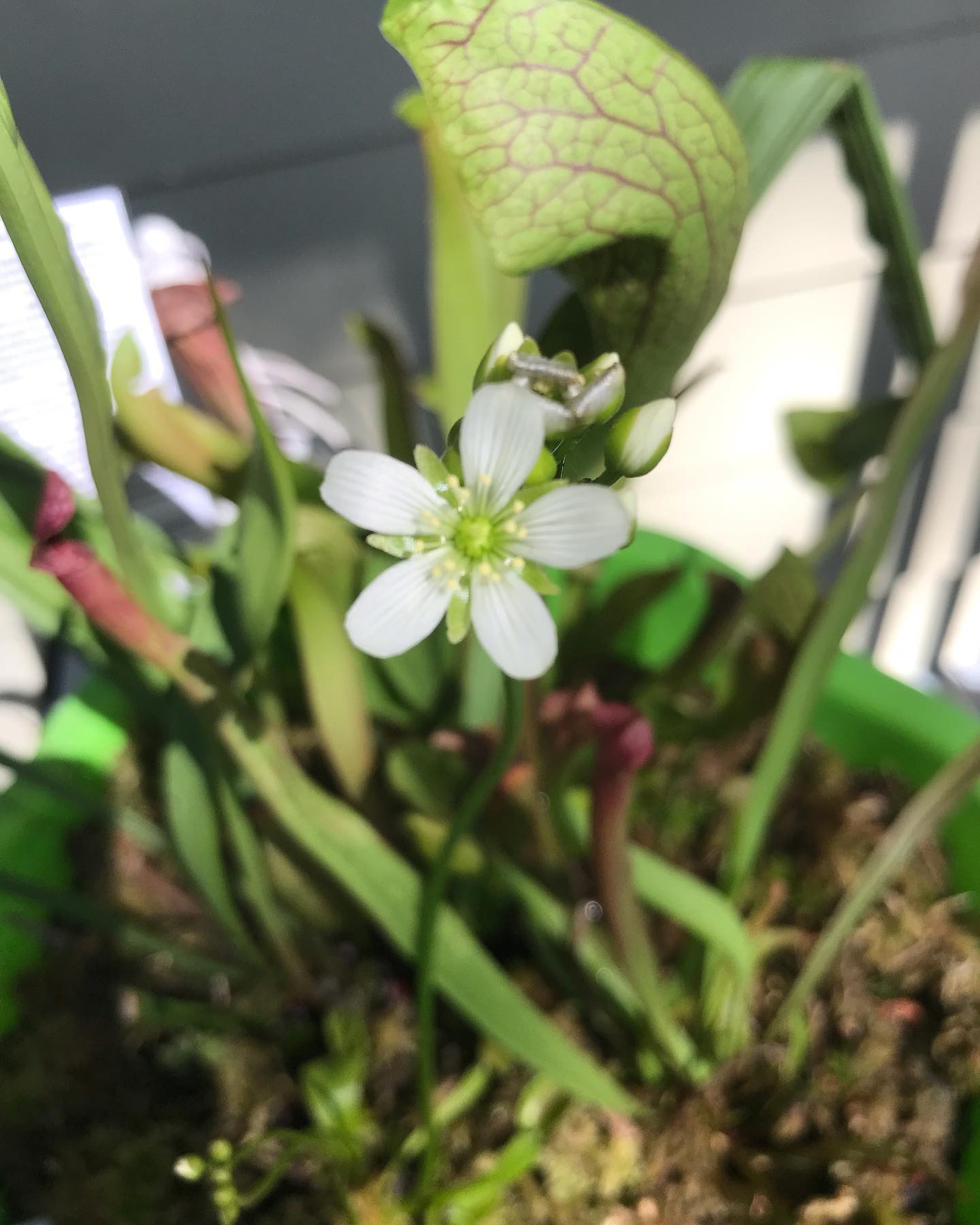
In case you didn’t know, the traps are not the flowers of carnivorous plants. They are modified leaves. On the right is a VFT blossom and on the left is a pitcher plant blossom.
Because the plant sale was a fundraiser, the Master Gardeners didn’t use fine pots for the plants they donated. (I don’t blame them. I wouldn’t have either.) But, that meant that the plastic pot my bog was in turned out to be brittle. So, I replaced with a ceramic pot I got from Lowe’s. It is made to survive freezing and is glazed inside as well as out. (Terracotta does bad things to carnivores.)
It does have some soil underneath with a healthy dose of perlite and vermiculite to keep it from compacting too much. And there is sphagnum moss on top to help keep it wet.
The colors got stronger after it moved to my patio where it gets sun all day long.
My husband says it’s his favorite of my plant projects and my kid calls it the Swamp of Eternal Gladness. I am absolutely delighted.
This was the “care card” she included with my purchase.





 I am the Audience