North Carolina State University is the largest agricultural college in the state and they run the State Extension Service. Each county has an office that does all sorts of useful things for their communities. They operate using public funds supervising 4H clubs and helping anyone involved with plants, from farmers and public gardens to someone trying to keep a houseplant alive.
Each county has trained volunteers to help shoulder the load. I start training in Guilford County in January. I actually live in Orange County, but the Orange training class is already full, Greensboro isn’t far and I have a friend who was signing up there.
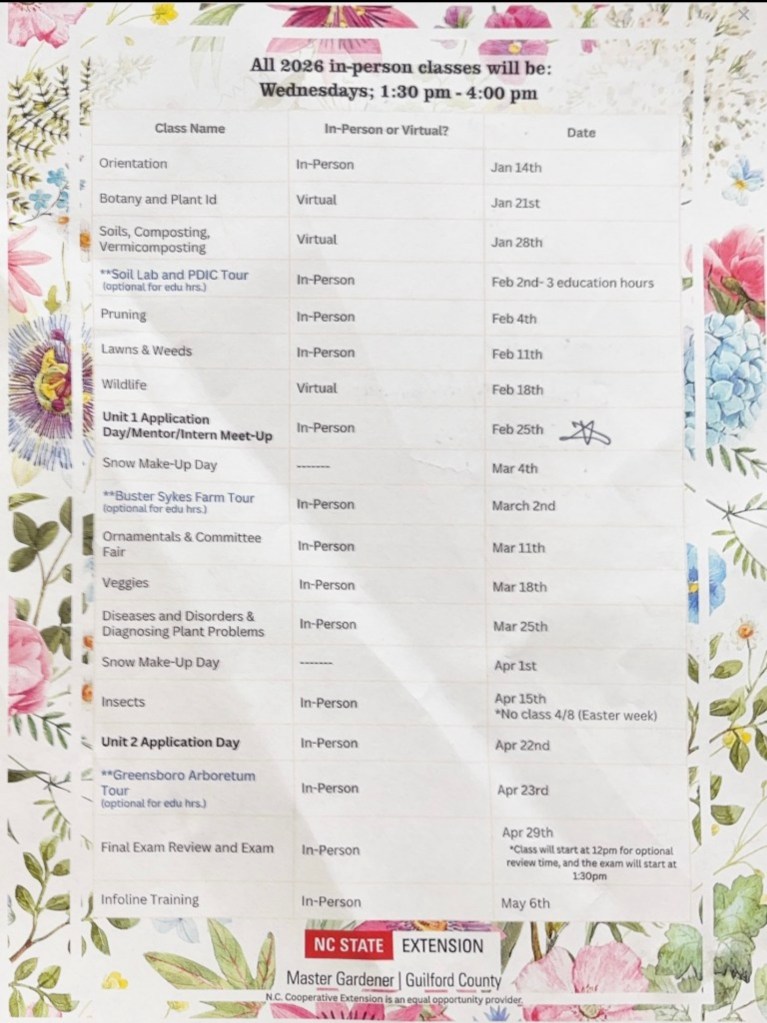
Orientation is January 14 and we will have class nearly every Wednesday until the beginning of May.
The star on 2/25 is because that’s not a day to miss. That’s the day we meet our mentors. We can miss a day and make it up. But, that one really needed to be on everyone’s calendar.
Application days are test days. Those aren’t days to miss either.
On the Virtual Wednesdays we have all day week to watch the video on the MG intranet and there’s a little quiz afterward to prove we actually did watch all of it.
The intranet is how we log our hours, too. You don’t get to just sign up and say “I paid my $120 and I’m a Master Gardener.” You are expected to seriously put in some time.
MG Interns are expected to volunteer a lot as we continue working with our mentors. Once we are actual Master Gardeners, we are expected to serve a minimum of 10 hours per year. (There’s a party in November when we have completed our training. Friends and family are invited to celebrate.)
In our first year, we are expected to put in 40 hours after we finish the class:
16 in demo gardens (There’s a bog in one of them.)
8 at the plant sale or other events.
12 on the Infoline. (4 times for 3 hours. A MG will be with us.)
4 extra hours. If I recall correctly, this is helping to man the information table at farmers’ markets.
Continuing education is expected, too. Notice there are some optional days for that included in the training schedule.
We have a book and we’ll be expected to read before coming to class. We can buy a hardback copy if we really want to have one in our hands for $50 or $60. Or we can download it from that website for free. You can get the HB from other online stores than the NC Extension service and they can be a little less costly. But, not by much.
We’re using the second edition, originally published in 2022. They’re working on a 3rd edition. But, it is such a great book that other services want to use it and #3 is going to be for the entire Southeast, not just NC. So, they’re putting extra effort into that one and it’s not coming out soon. Taylor said that the only differences between #1 and #2 are organizational and if we find an inexpensive copy of the first edition, it will have the same info in a different arrangement.
You can know I’ll be going with free on my tablet.
I have used the Infoline a few times and I’m looking forward to doing that, kind of giving back. That training is learning where to look for answers. Complicated stuff gets passed along to the Extension Agent.
I’m really looking forward to the Raleigh field trip on 2/2. We get to see how soil is tested and see what we need to know to tell people how to collect their samples.
I went to the NC State Extension Service Pawpaw Field Day yesterday. Since I have had pawpaws growing in my back yard almost as long as I have had Chuck in my life and have never had fruit, I felt the need to touch base with people who know something about them.
I got to taste fresh fruit, ice cream and bread. It does have its own flavor, which is very mild. I really couldn’t tell it was in the ice cream. The bread was delicious and, until I get some actual pawpaws, will be good made with bananas or persimmons.
They have a collection of 30 varieties of pawpaw trees at the Forsyth County Agriculutural Building and collect ripe fruit to freeze the pulp in anticipation of the day. The fruit is only good for about 3 days at room temp, 5 days in the fridge. They do not ripen in a way to allow growers to pick them green for shipping. But, pulp freezes just fine.
The woman who led my group through that collection said she can’t tell the varieties apart by taste. A woman in the group said she definitely could.
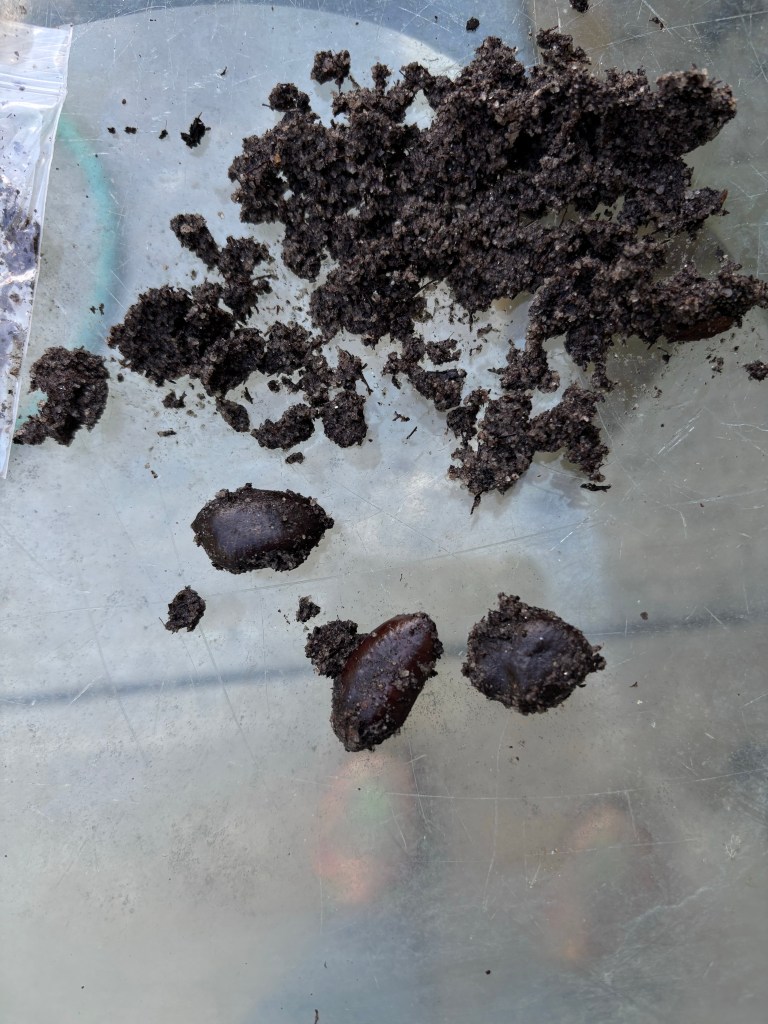
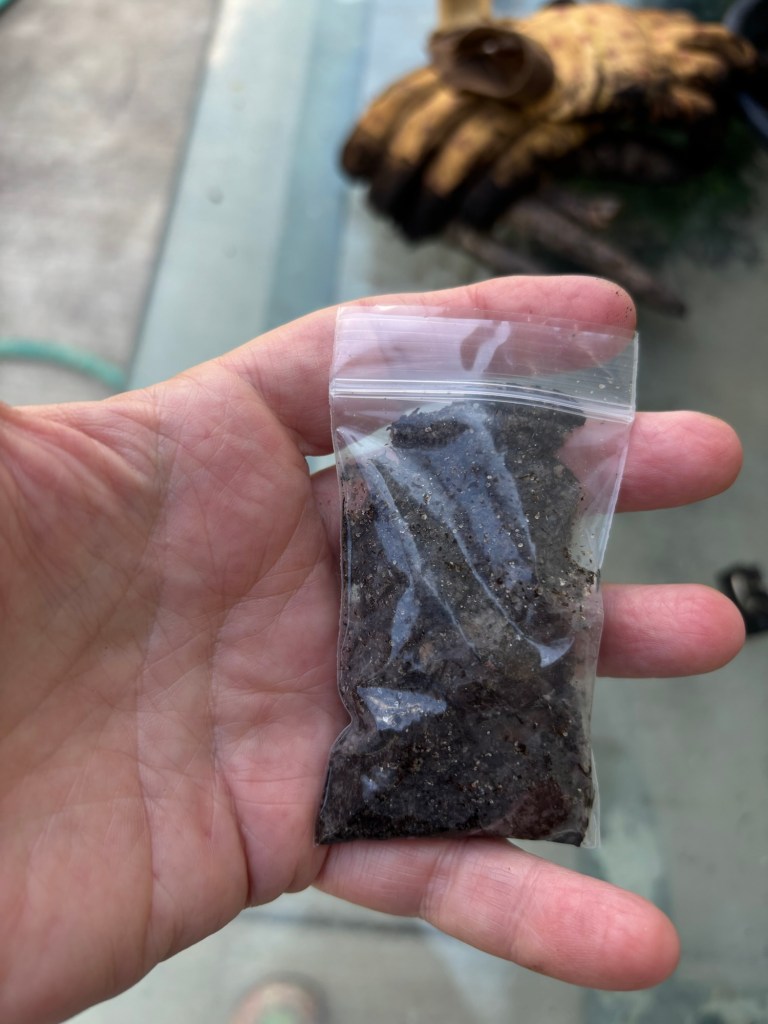
Along with getting to taste, I picked up a baggie of seeds. Everybody has told me something different about why I don’t have fruit. My arborist says it’s because of how they open and close their sex-changing flowers and has nothing to do with requiring cross-pollination. One collection of Master Gardeners said I need a different variety of plant that what I already have, like you do with blueberries. Someone else said that as long as you have separate trees near each other, they will pollinate each other just fine; it doesn’t need to be different varieties.
The guy that gave me the baggie of seeds said they just bag up what they have from collecting fruit for the festival. So, I mostly likely have more than one kind in the bag.
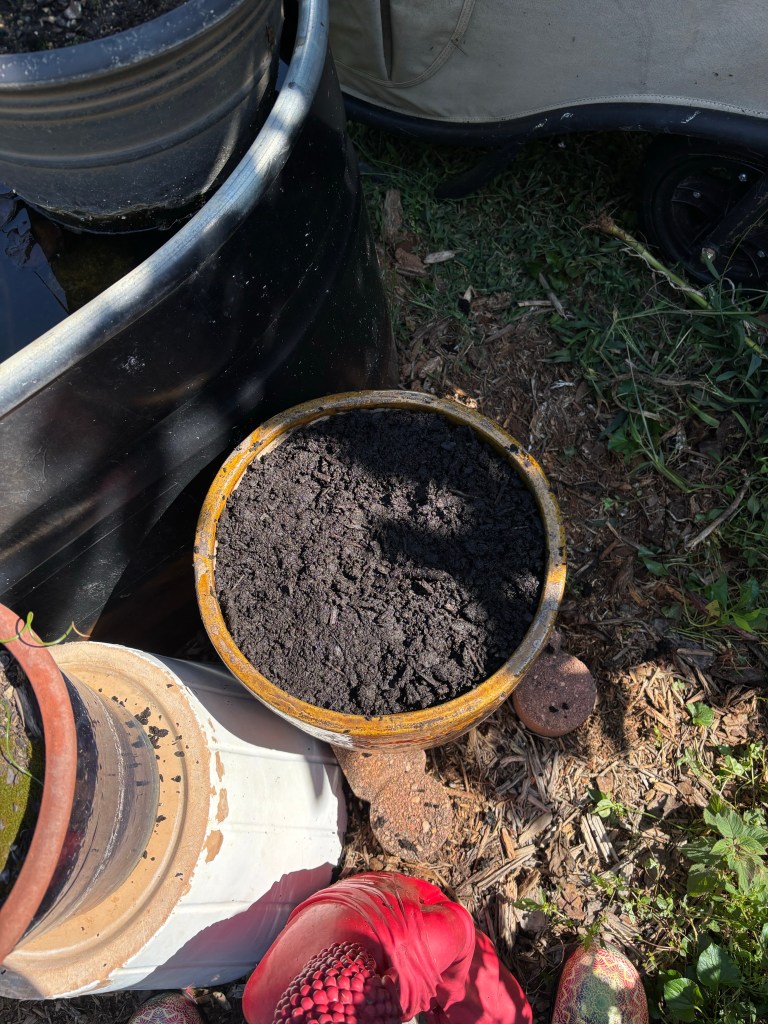
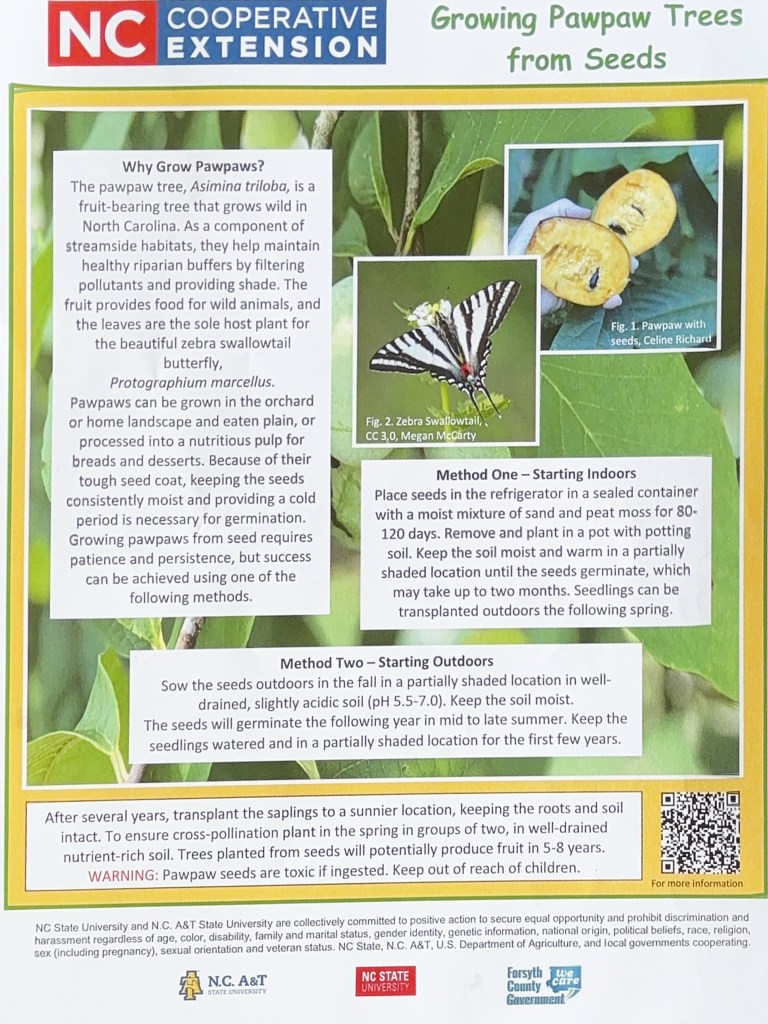
Since our winters have gotten so erratic, I don’t really trust the weather to germinate what is simply outside. Maybe yes, maybe no. So, I plan to put a couple of seeds in a pot by the shed and the rest in the fridge until Spring and then stick those straight in the ground. Maybe put one of them in another pot to see how that does. I think there are 5 in the bag.
I’ve been waiting this long. What’s another 5-8 years for fruit?
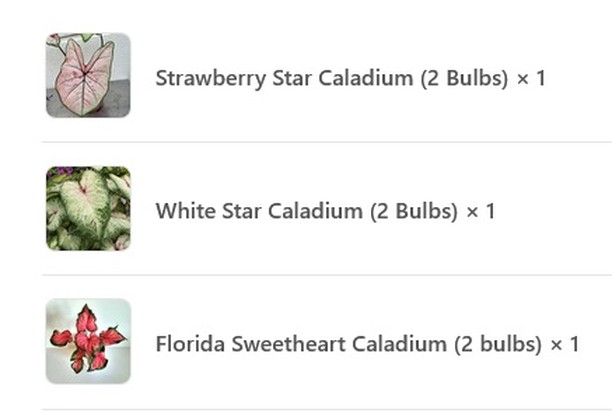
The bulbs I left in the ground have not come back up. I bought the bulbs from Blue Buddha Farms.
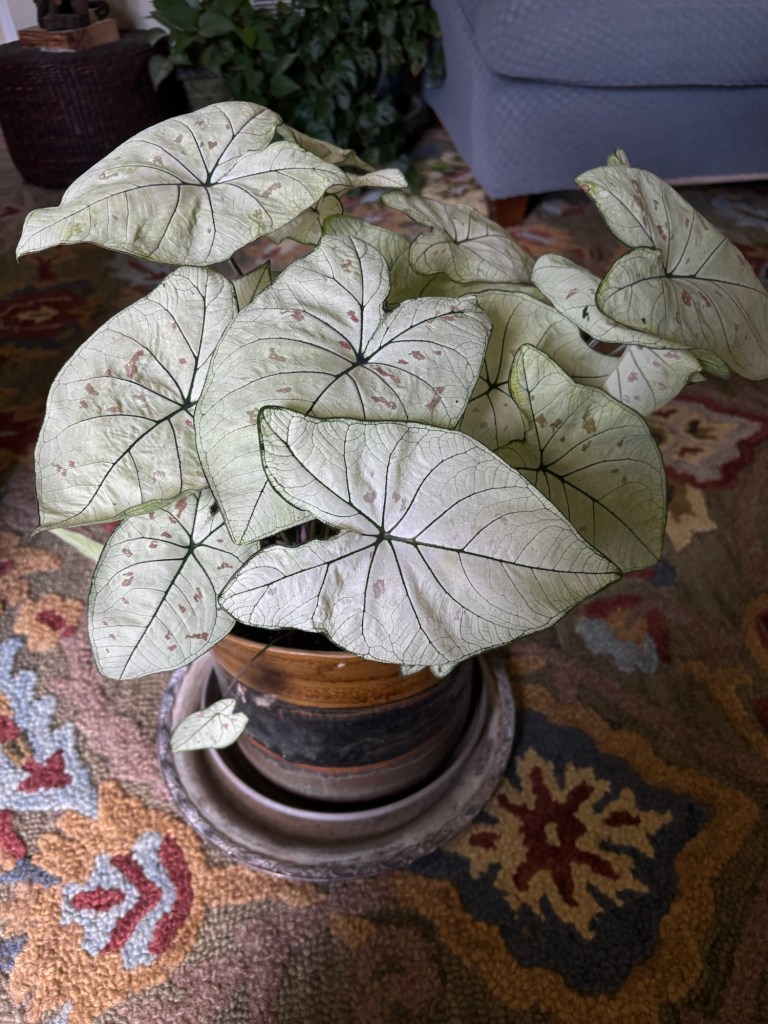
This one started coming up inside after a surprisingly short period of dormancy. Since it is so lush, we’ve left it inside.
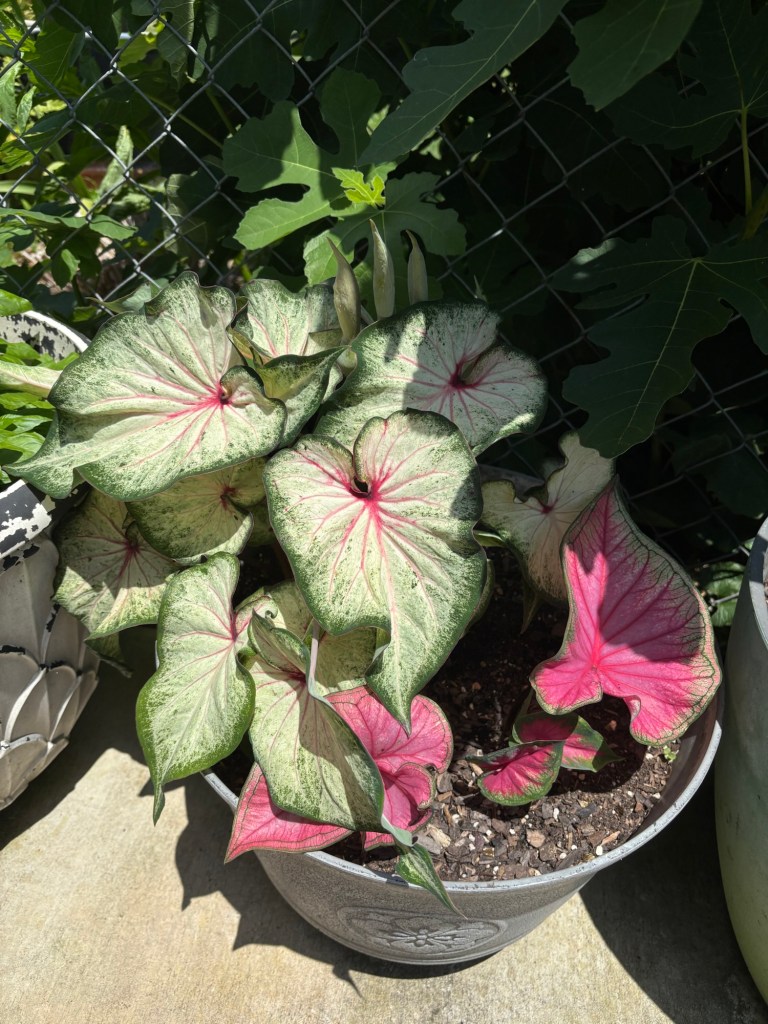
‘Strawberry Star’ caladiums
The mostly white one slowly started back around the end of February. And it has done well outside. I’ll bring it in when nighttime temps start to stay around 50°F.
‘White Star’ and ‘Florida Sweetheart’
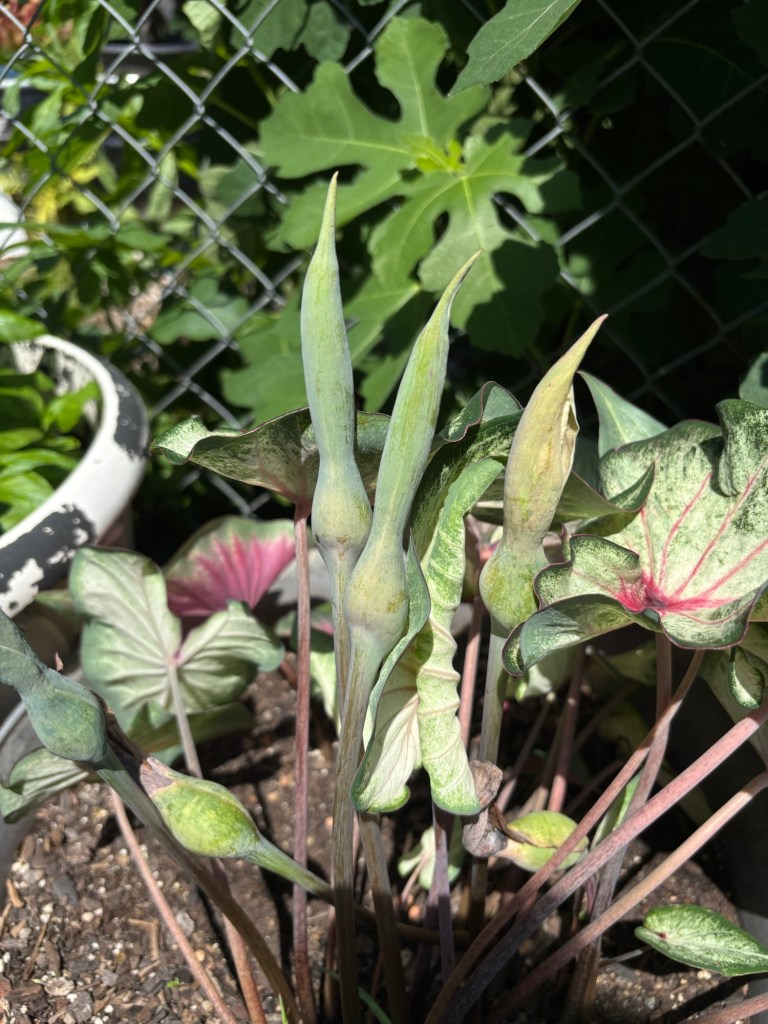
The mostly red one just came up recently. Like…. This week. I thought it was not going to.

 I am the Audience