When I was married to my second husband, we went to a big antique and general junk festival. Spawn found an old, worn out, plastic guitar that had 4 of the 6 strings still attached. It was a buck. I rolled my eyes and bought it for them.
Some time later, they were playing with it and wouldn’t go to bed. I took it away and, in putting it down too fiercely for old, worn out plastic, shattered it. They were devastated. I groveled in apology. I did not intend to break it. I didn’t realize it was so fragile.
I have felt like a shit mom about that ever since.
About a decade later, they started playing in earnest. There was some school band with piano, trumpet and coronet in there between those events. Enough to learn to read music.
Every 5 years, the company I worked for gave me a present via a catalogue that I got to pick from. I have received a glass vase (5), a double strand pearl bracelet (10), a leather carry on (15), rings (20, 25, 30) and a Solo Stove (35) (that I gave to my sister. because there was nothing in the catalogue that appealed to me).
Last week, I got the catalogue to pick out a retirement gift.
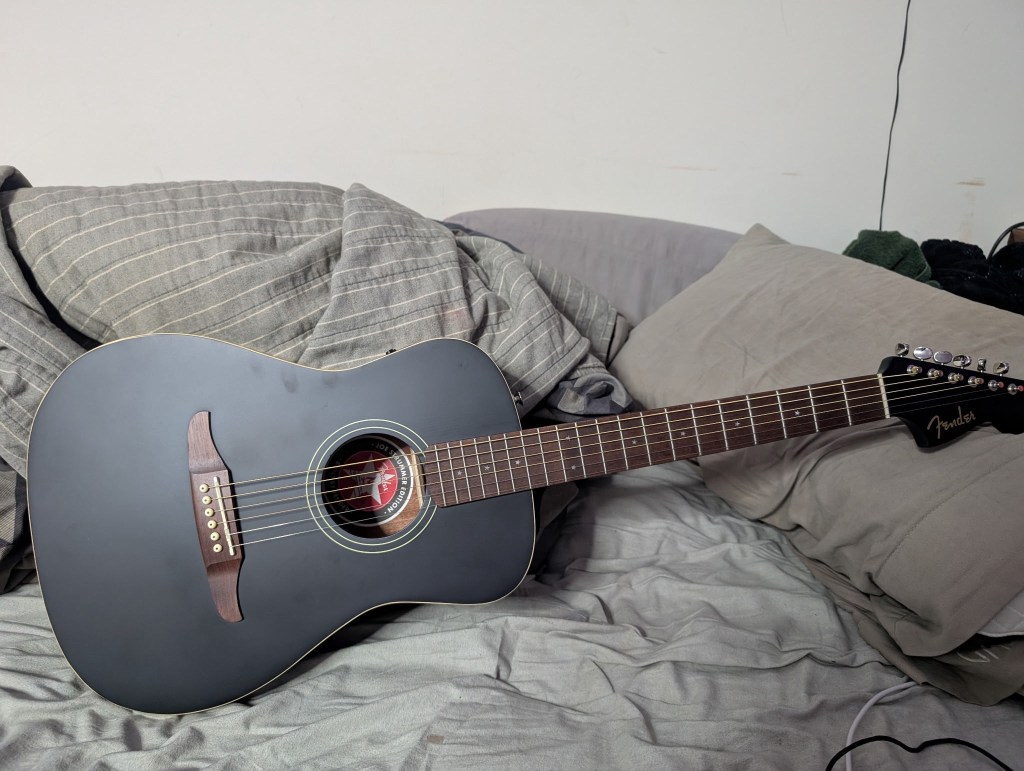
Spawn got an acoustic Fender.
They remembered the event with the little plastic guitar and said this has definitely made up for it.
I have a friend who is doing MG training in Orange County at the same time as I am doing mine in Greensboro. We so NOT have the same curriculum OR the same expectations by our agents for follow up.
Not exactly anyway. At least as far as we can tell right now.
So.
This is what MG training is like where I am doing MY thing.
Clearly, different counties use their volunteers as seems best to them and those needs vary.
What I’m posting can give someone an idea of what to expect in a general way.
At our first class, we were given a folder with a name tag attached that has the logo of the extension service, our names, and STUDENT printed on it. We’re expected to wear those every time we’re doing something official so that the people there have an idea of how much instructions we need. We get a new one with INTERN on it after we finish the class and until November. Then, when we have fulfilled all our requirements, we get one that says MASTER GARDENER.
The folder contained the schedule I already showed you, a page of certification requirements, a schedule of events for the coming year, and some basic information about the paid employees and committee heads.
We got a brief welcome from most of those people over the course of our 2.5 hour class.
After introductions, we got more detailed information about what is expected from us and how to meet those requirements.
Certification requires 35 hours of education from our training classes and 5 hours of education from field trips, videos, guest lectures, final exam review and any extra training workshops we participate in. In addition, we’re expected to complete 40 volunteer hours by November. 16 hours in the demo garden, 8 hours at any of various events (plant sales, farmers’ market booth, 4-H helper, etc.), 12 hours on the Infoline and 4 hours doing what we enjoy the most.
Annual recertification requires 10 hours of Education and 30 hours Volunteering, 9 of those in the Demo Garden and/or Infoline. Plus a $20 Recertification fee. (I have no problem with that. I think it’s entirely reasonable.)
We watched this little video about the Extension service.
Then, we got a tour of the demonstration gardens. To my frustration, the gardens are so well labeled that they didn’t feel like we need a map. So, I can’t show you exactly how it’s arranged. There are all sorts of small garden areas, shade, crevice, water, bog, vegetable, herb, zen, serenity, pollinator, birds, natives, succulents….
I’m trying to remember if there are any other types specified. I’ll try to do better when I’m not in a crowd of 30 people. That should be easy to do because we will be doing mandatory work in each of 4 zones once a month for 4 months. That way, we learn some about each area and don’t pick favorites without knowing all the choices that are actually there.
When we went back inside, we learned to use the intranet. We will be logging our hours, using the calendar to let committee heads know when to expect us to come help out and log Infoline calls there.
“Infoline” includes checking the emails for home grower questions in addition to answering phone calls. We DON’T answer farming calls or email. Those go directly to the agent. We work with community gardens, schools and household growers, both inside and out. But, small scale.
We have to avoid giving brand recommendations, too. We can say “A copper based fungicide will treat that rust on your peach trees. You can get it at any of the farm and garden stores. You want to look for this (chemical name) at this strength and apply it this often.” But we can’t say “Get Ortho Coppercide at Lowe’s and use that to treat the rust on your peach trees.”
It can never look like the Extension Service is advertising any product.
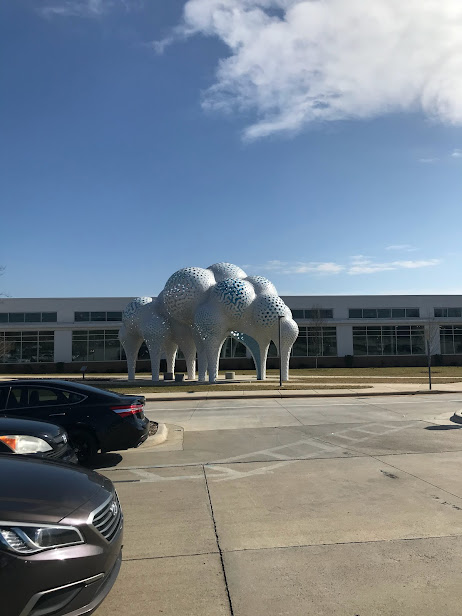
Sometime in 2019 or ’20, I saw a picture of a piece of public art in Charlotte that intrigued me. I mentioned it to a friend and she said “Oh yeah. It’s outside the community services building.” Which was kind of vague. But, I found it.
I almost missed it as I drove by because it’s across a fairly large parking lot and very similar in color to the building itself.
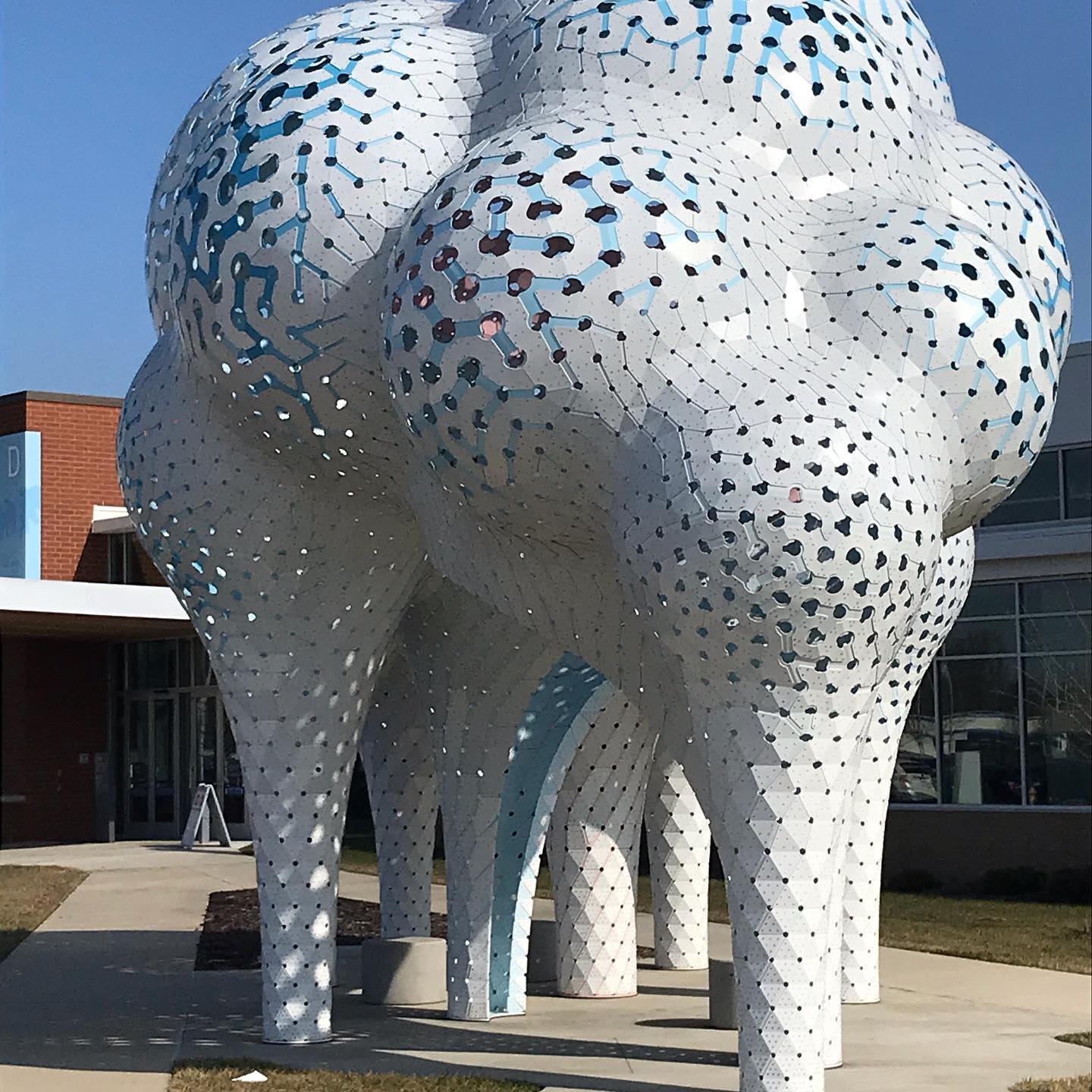
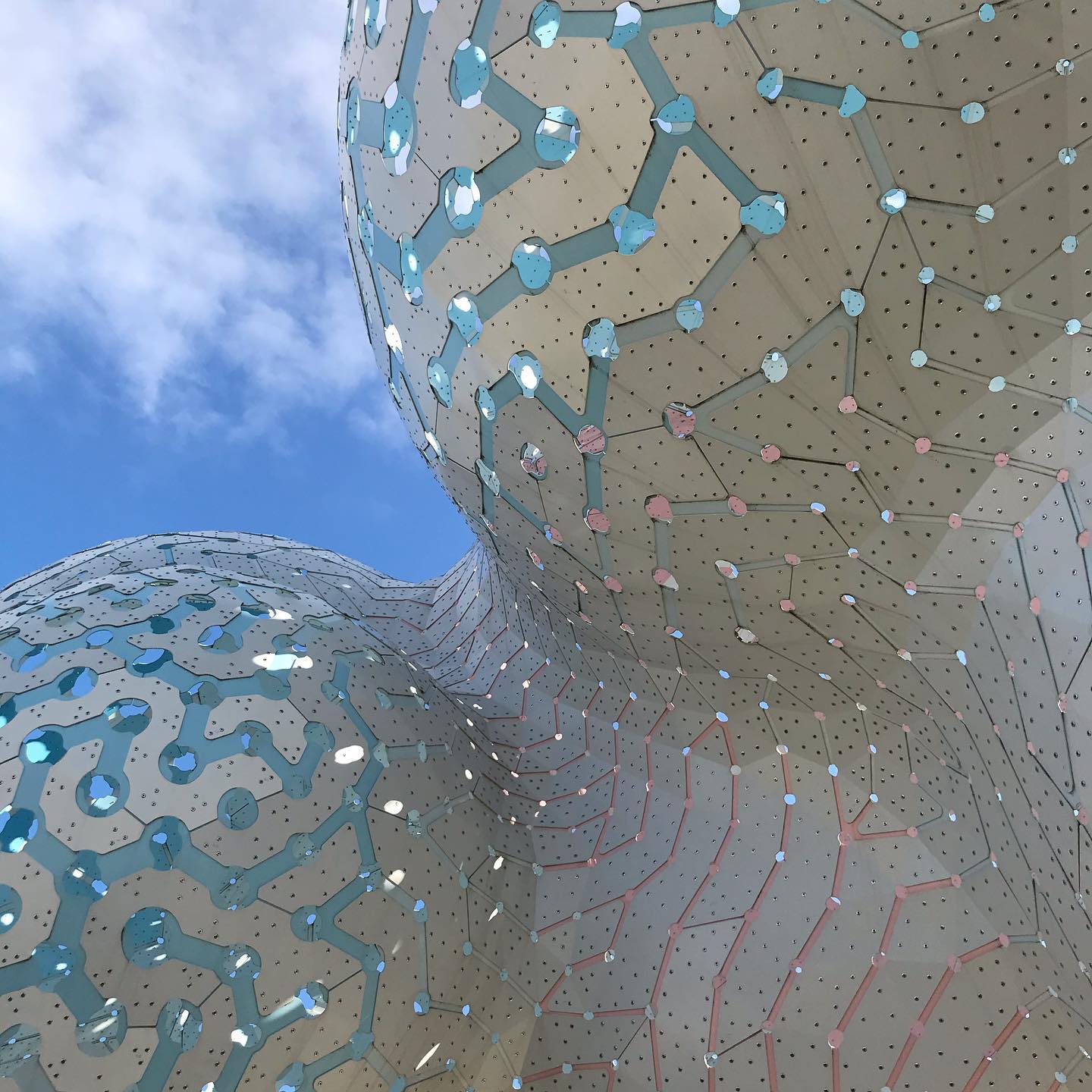
It is wonderful in every sense of the word.
The day I was there was balmy with a light breeze and I had the space to myself. The piece isn’t part of a larger exhibition or noted any particular way. It’s just there, being lovely.


 I am the Audience