Last Fall, the Columbia Museum of Art in Columbia, SC had an exhibition of some of the French Moderns. I saw “Matisse” in the description and (of course) I wanted to see it. Columbia is about a 3 hours drive from me and that’s usually longer than I want to go for a day trip. But, I could stop off overnight on the way home to see my kid. So, I packed a bag and headed south.
It was a good exhibition and I’m glad I went. However, I found the museum’s permanent collection more interesting that the special one. I feel that I can show you some of what I saw there without risking the income of any of the artists.
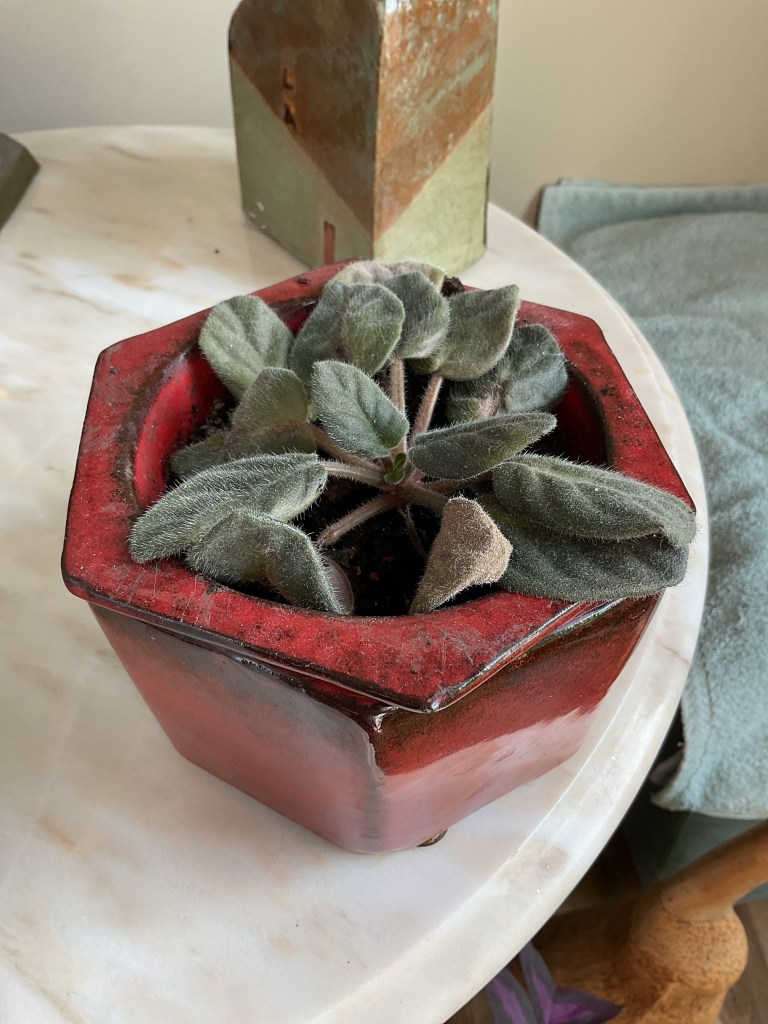
I have an African violet and you are going to get a long story.
The first time I tried to grow them, a friend (who had 50 growing in her front windows) gave me leaves to root. They started, but didn’t ever get healthy and died before they bloomed. So, I thought they were difficult and gave up on them.
Maaaaaaaaany years later, I was having some health issues and my cousin sent me a plant basket which included an African violet. It lasted long enough for me to get a pot for it.
AV pots are pretty neat. They have a terra cotta insert that hold the plant and a decorative outer pot that holds water allowing the soil to stay always a little moist.
When that plant eventually died, I replaced it with this one that I found when I was out and about with my mother.
It stayed healthy and blooming for years. But, eventually got a gooseneck as it continued to grow and the leaves died at the bottom. I read that you can just cut that and stick the stem back in the soil and it will make roots from where the leaves had been. It lasted a long time after I did that.
It quit blooming last year and the leaves aren’t looking healthy. I’ll wait until it is completely dead before I replace it though. I really like this one and while there’s life there’s hope.
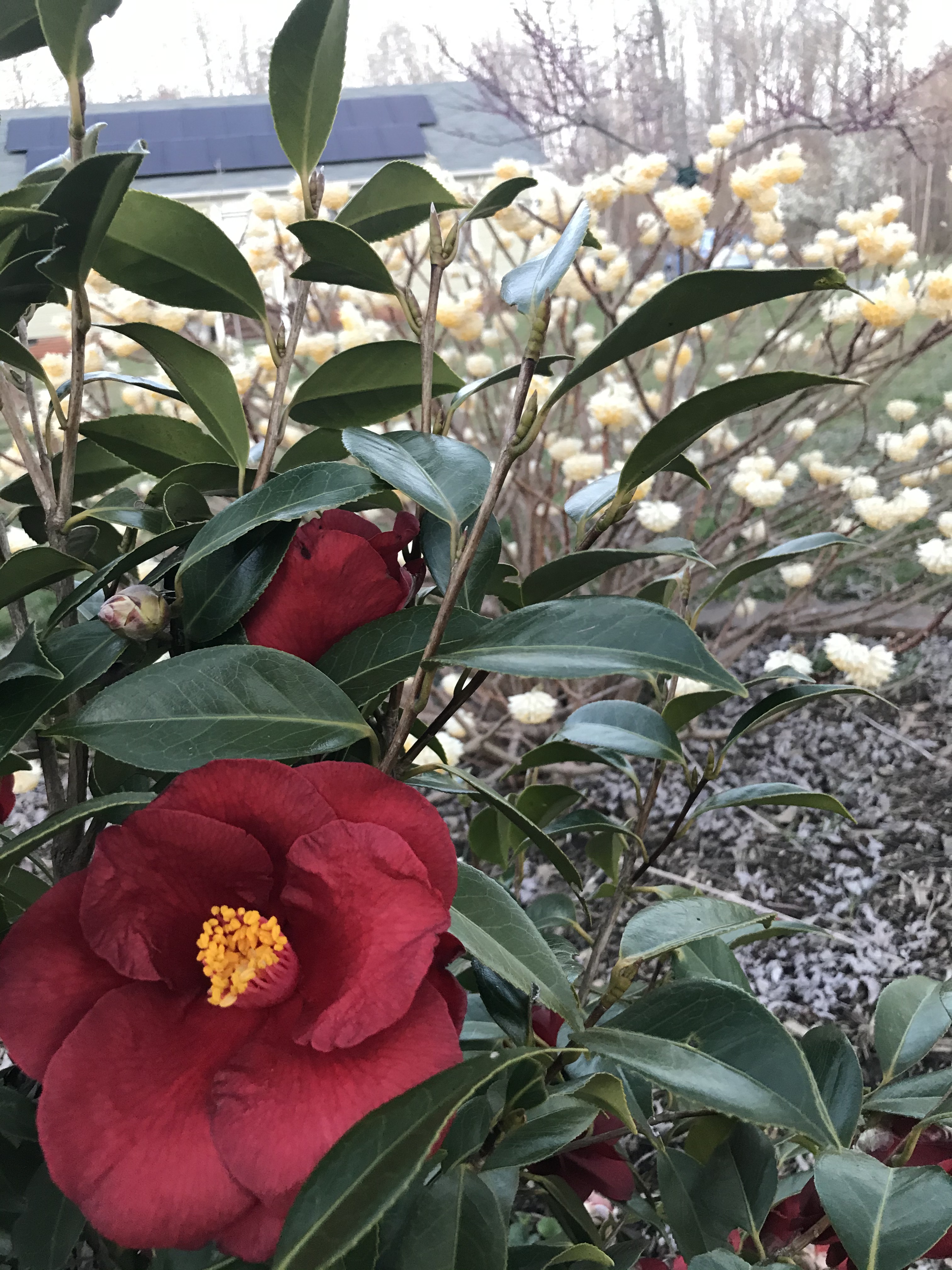
I bought this bush in Charlotte several years ago. Ann and I were wandering around. Not really shopping. But, open to the possibility of finding something interesting to take home with us. And this odd plant with lots of fuzzy cluster flowers and no leaves grabbed my attention and came home with me.
It blooms at the end of winter and smells divine. It’s very much a sign of impending Spring.
After that, it’s just a big green lump until it drops its leaves in Autumn.
The display when mine blooms next to the ‘Yuletide’ camellia (which insists on blooming in February despite its name) rocks my socks.
My friend, Luke, who is @LessEthereal most places online, is a huge fan of micropoetry. In particular, haiku and haiga. He pointed me to a website that’s doing a haiku-a-day thing for February. (Shortest month for the shortest poetry. Ha!)
They have a page about what haiku actually is and it’s not what American schools teach. They are more interested in what is said than in the number of syllables. And the differences between the languages makes that ridiculous anyway.
Taken from the “Not 5-7-5” article on that website: “Specifically, a haiku tries to invoke the time of year with a word that is typical of that season, such as snow for winter, or frog for spring.” And…” traditional haiku include words that function like a spoken sort of punctuation. More importantly, they cut the poem into two parts, creating a sort of juxtaposition, not only grammatically but also imagistically. The point is to carefully pair two images together in such a way that a shift or disjunction occurs between them. The art of haiku lies in creating the right amount of distance between the two parts, so the leap is neither too far (and thus obscure) or too close (and thus too obvious).”
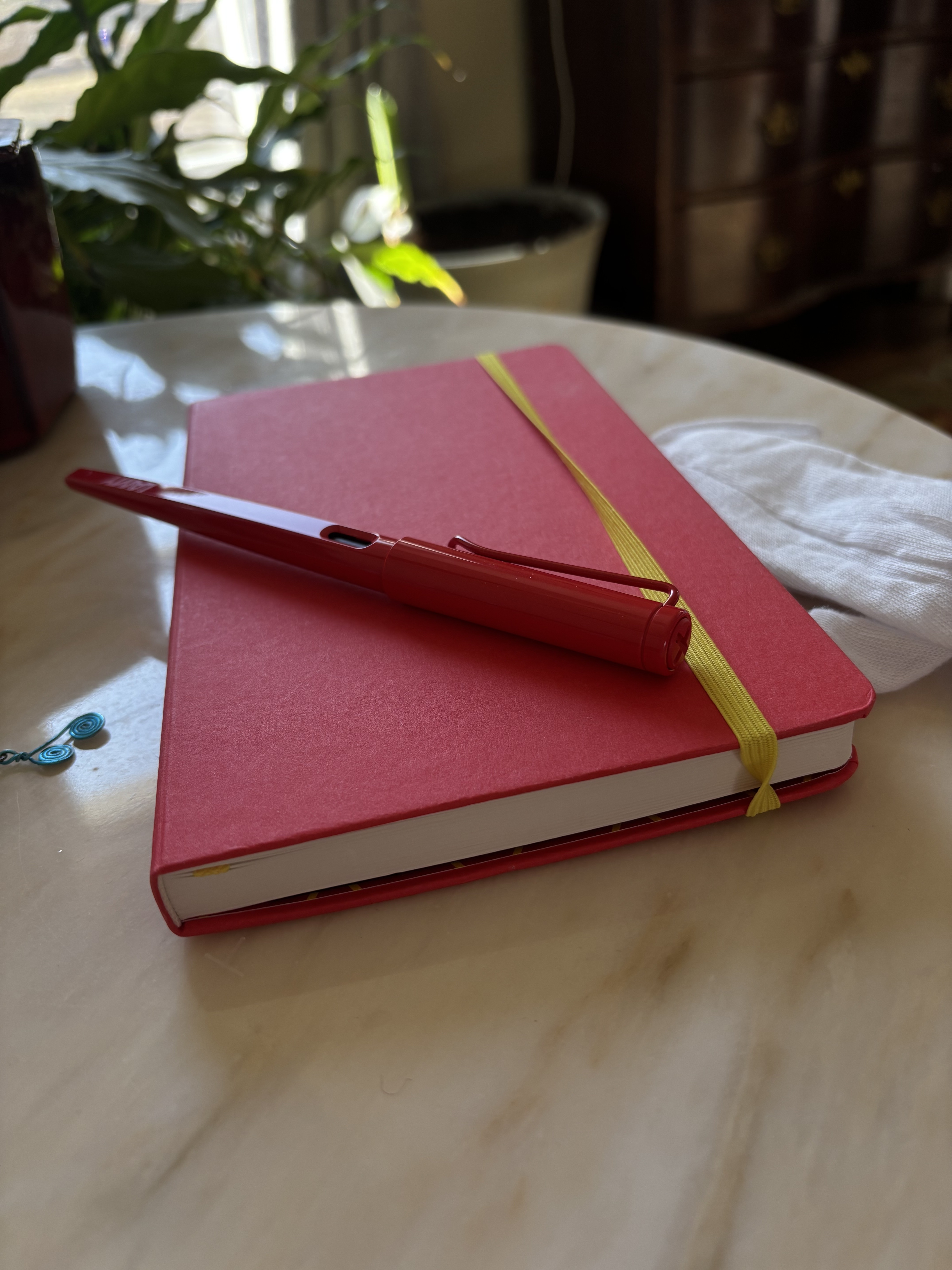
I have a new 1.5mm italic fountain pen that I can only use at home because I have to use ballpoint at work. And I have an empty journal that was lying around the house.
I’m trying to write one thing a day that can lead me into writing sophisticated haiku. If I ever write one that I think ticks all the boxes, I’ll share.





 I am the Audience