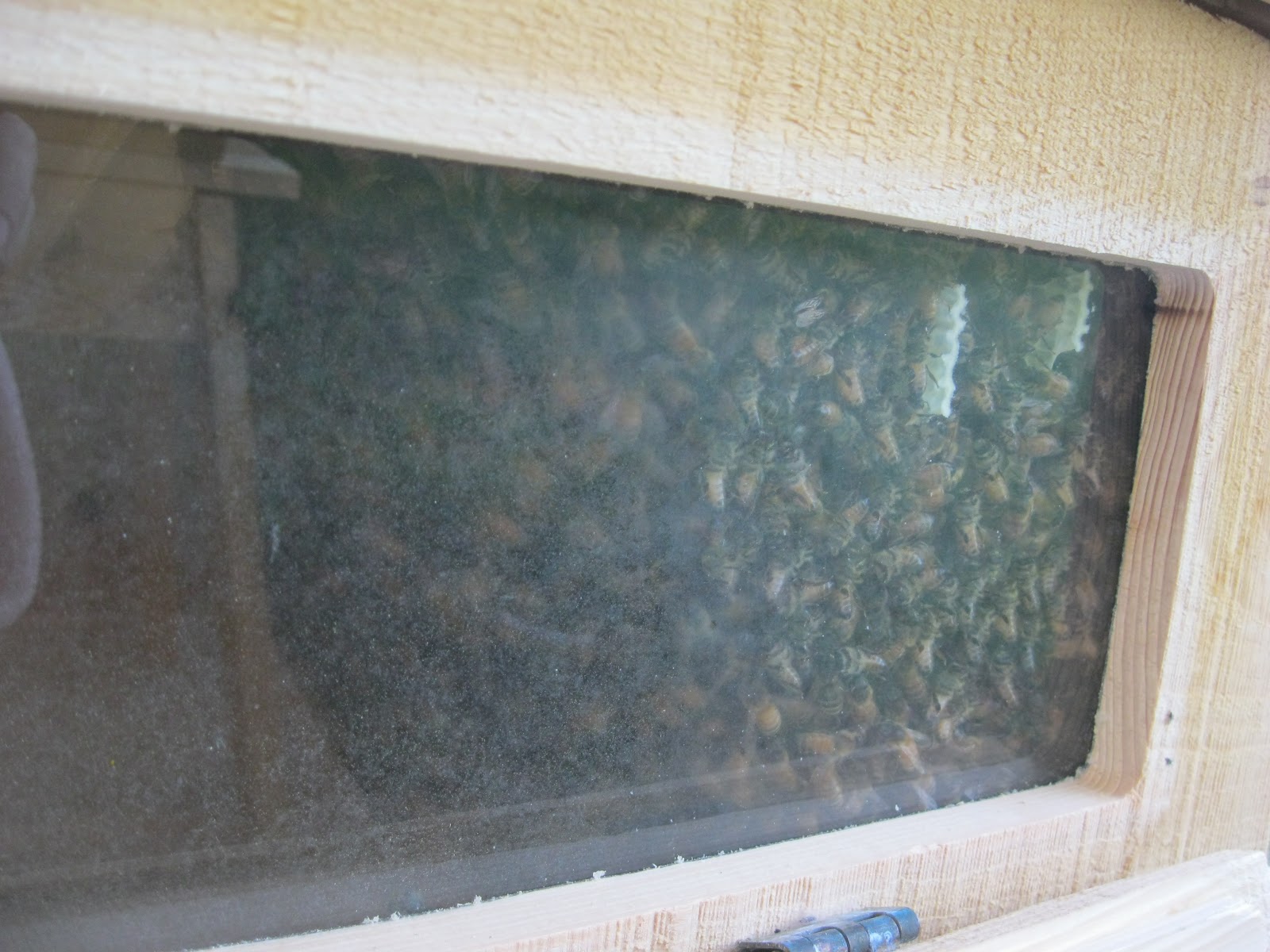
• My first cut out.

    April 8, 2012
    a day in this life

    They didn’t get grumpy until we were taking the second comb out. They were surprisingly patient as we got started. And by the end, we were too busy to pay attention to their temper tantrums. We even let the smoker go out and forgot all about it. Never saw a queen, but Randy has at least 3 queen cells in the frames.

    I only got stung 2.5 times. The half was through my jeans and I didn’t feel it as much as the 2 through my gloves.
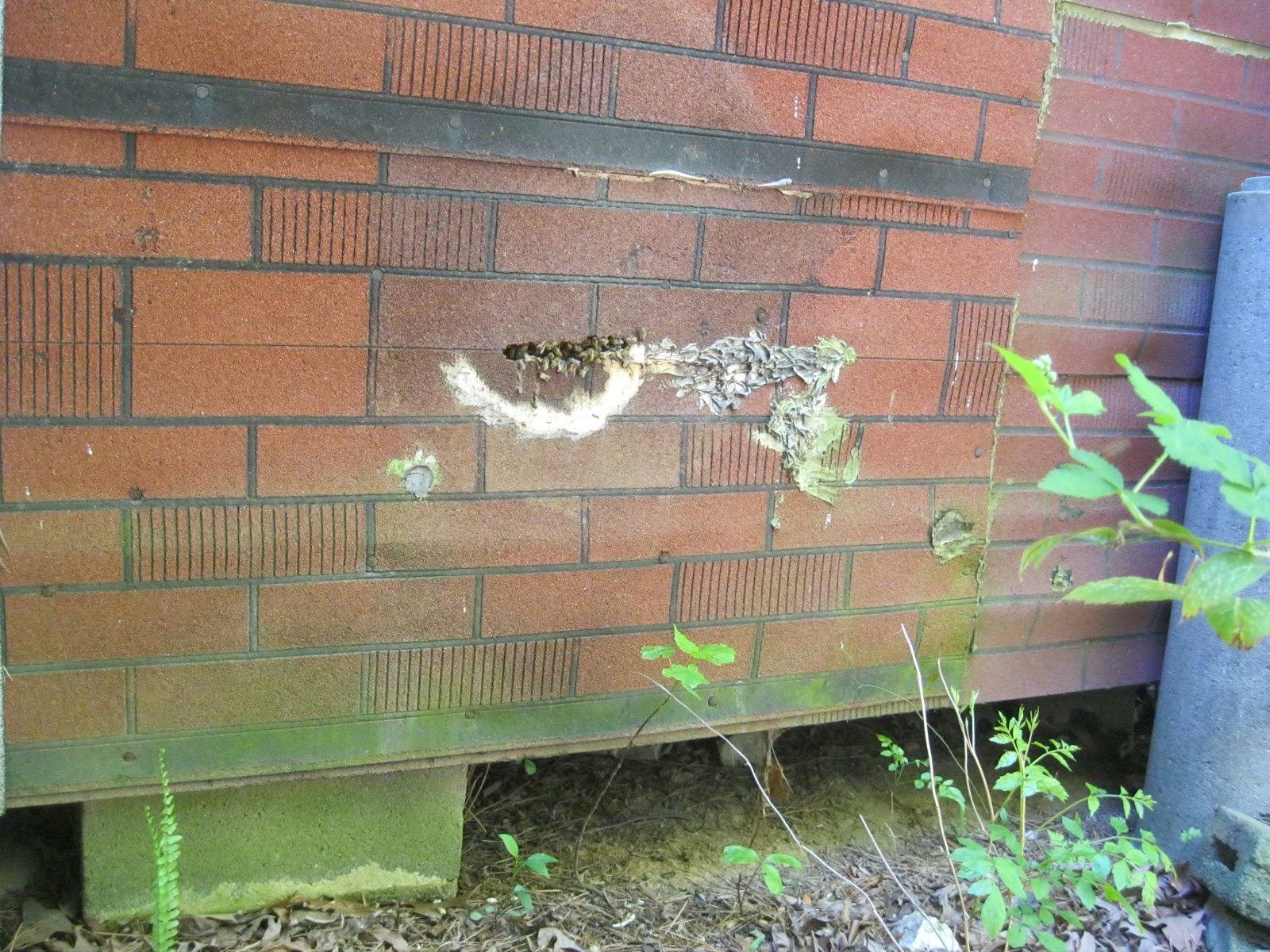
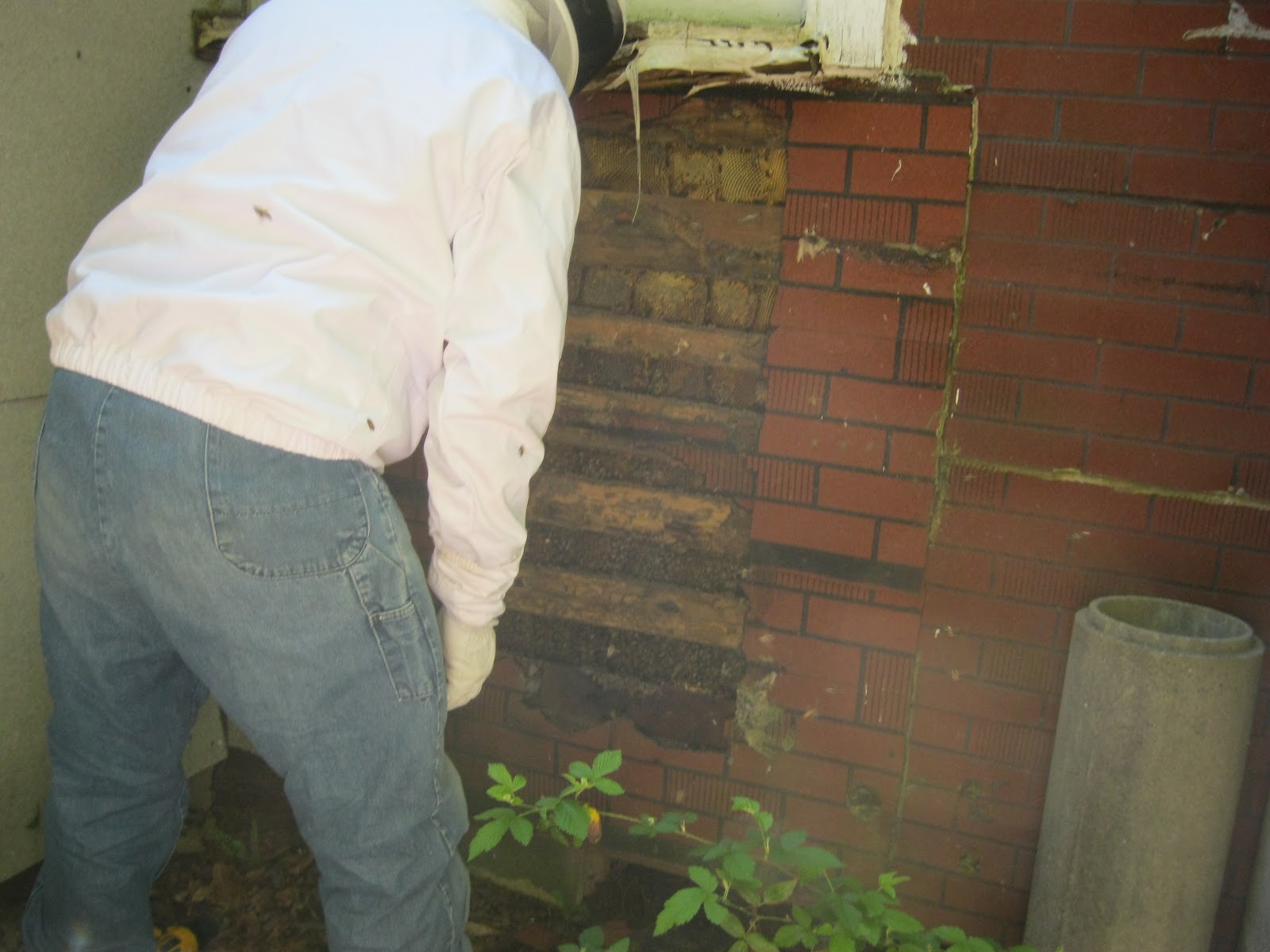
    This is what it looked like before we started on it
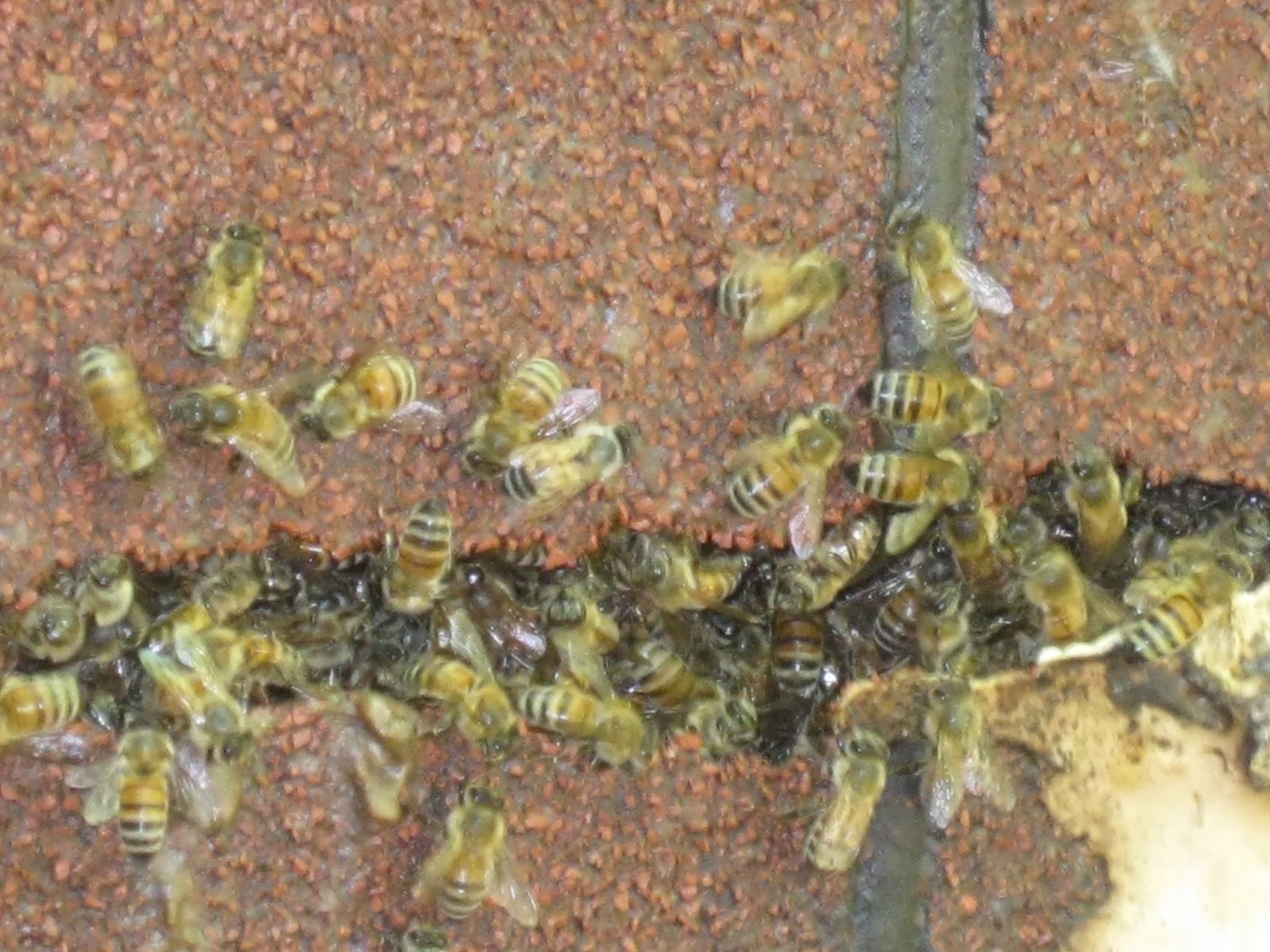
    And there were a LOT of bees using that opening.

    This is the “undamaged” wall.
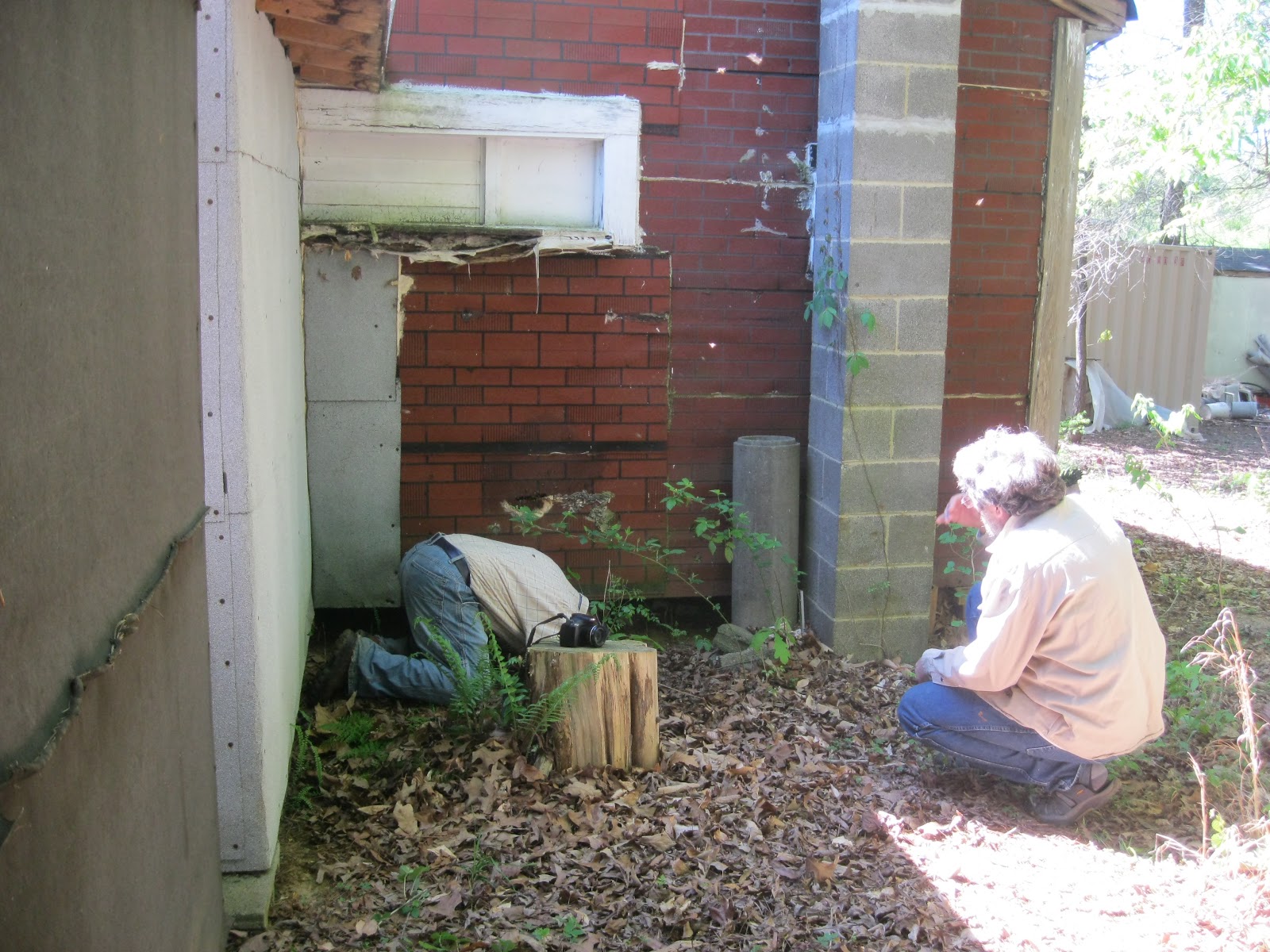
    Chris trying to see where the bottom is while Randy watches.
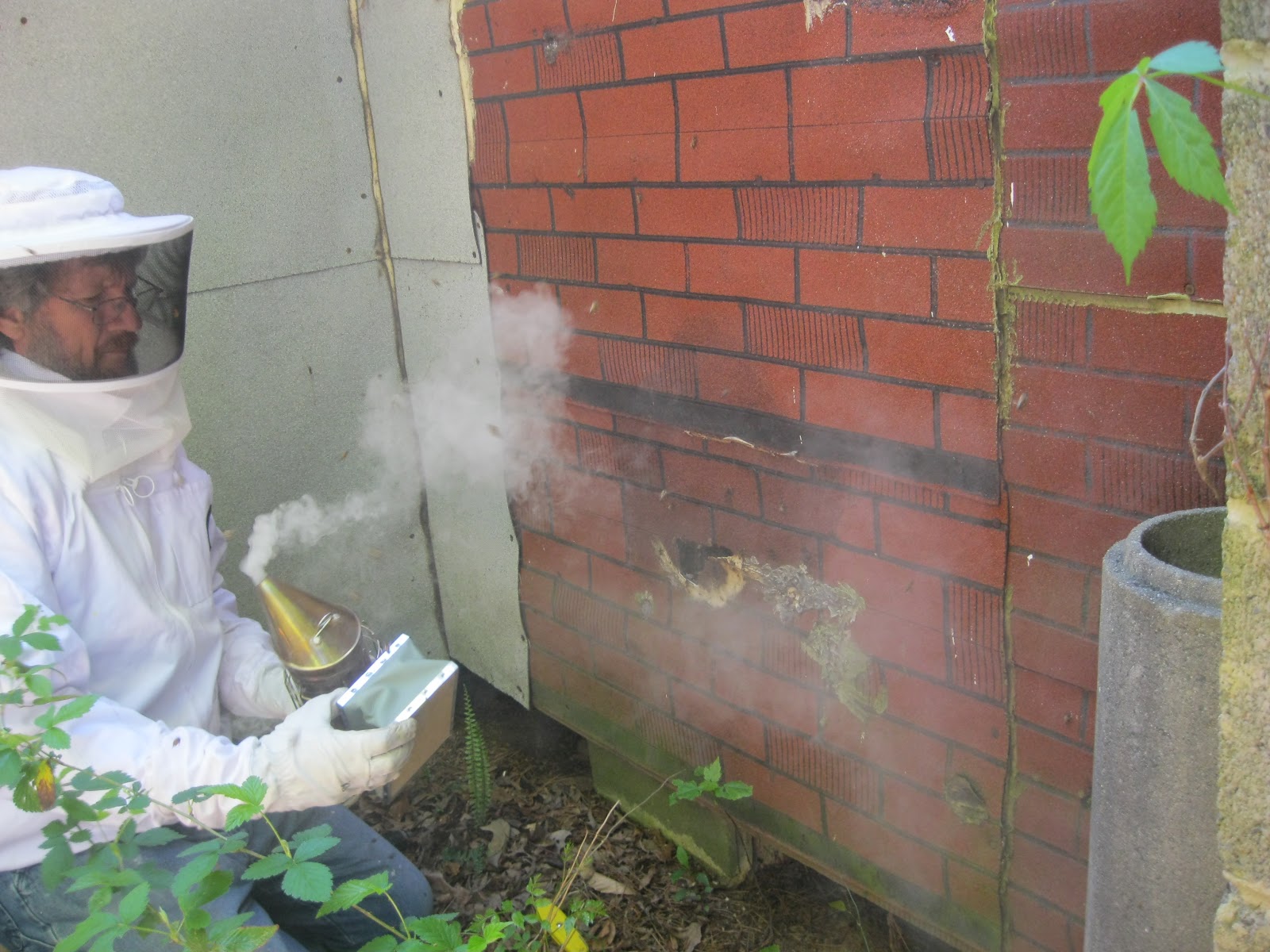
    Randy starting up the smoker
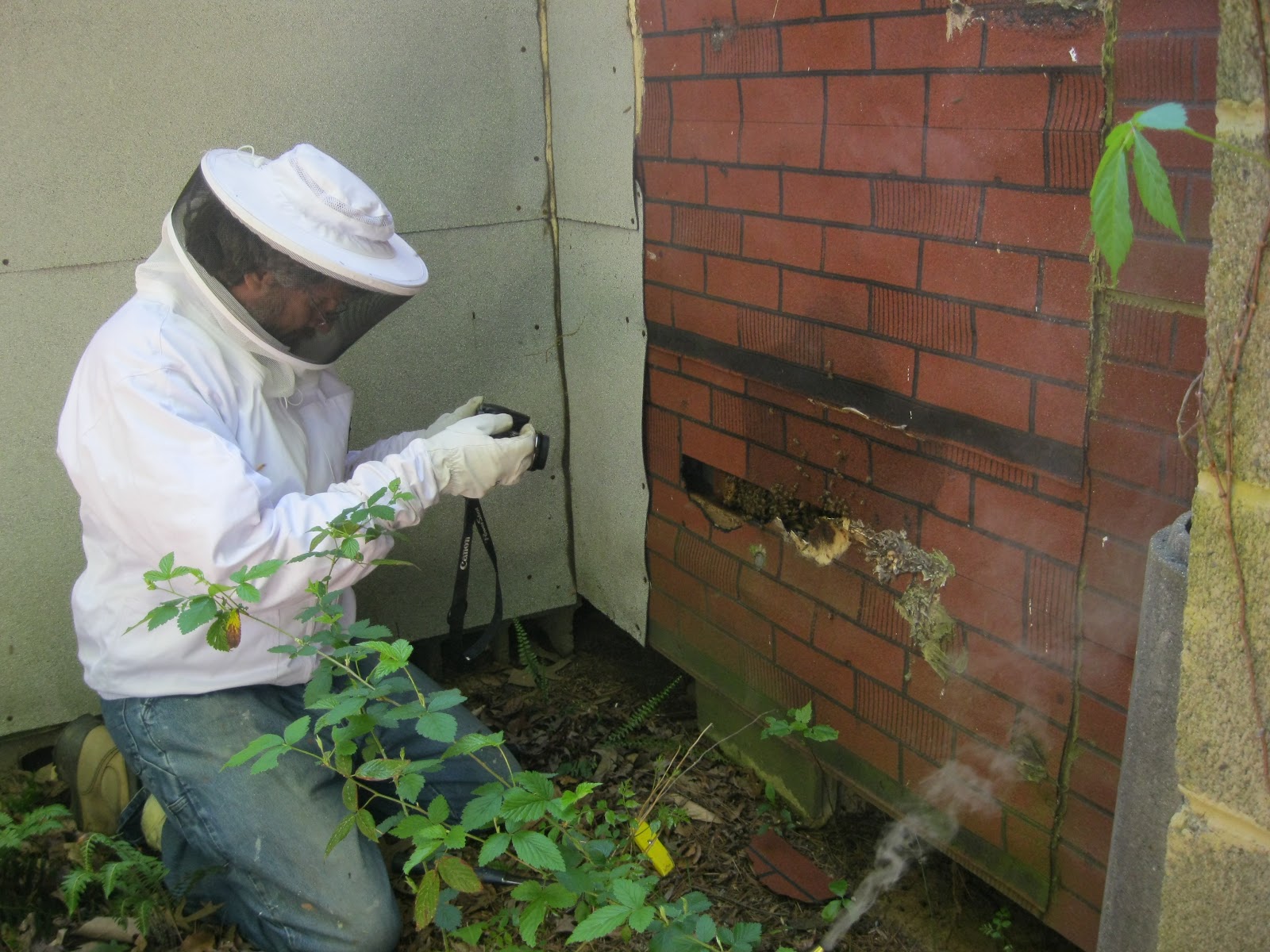
    And taking a Before picture
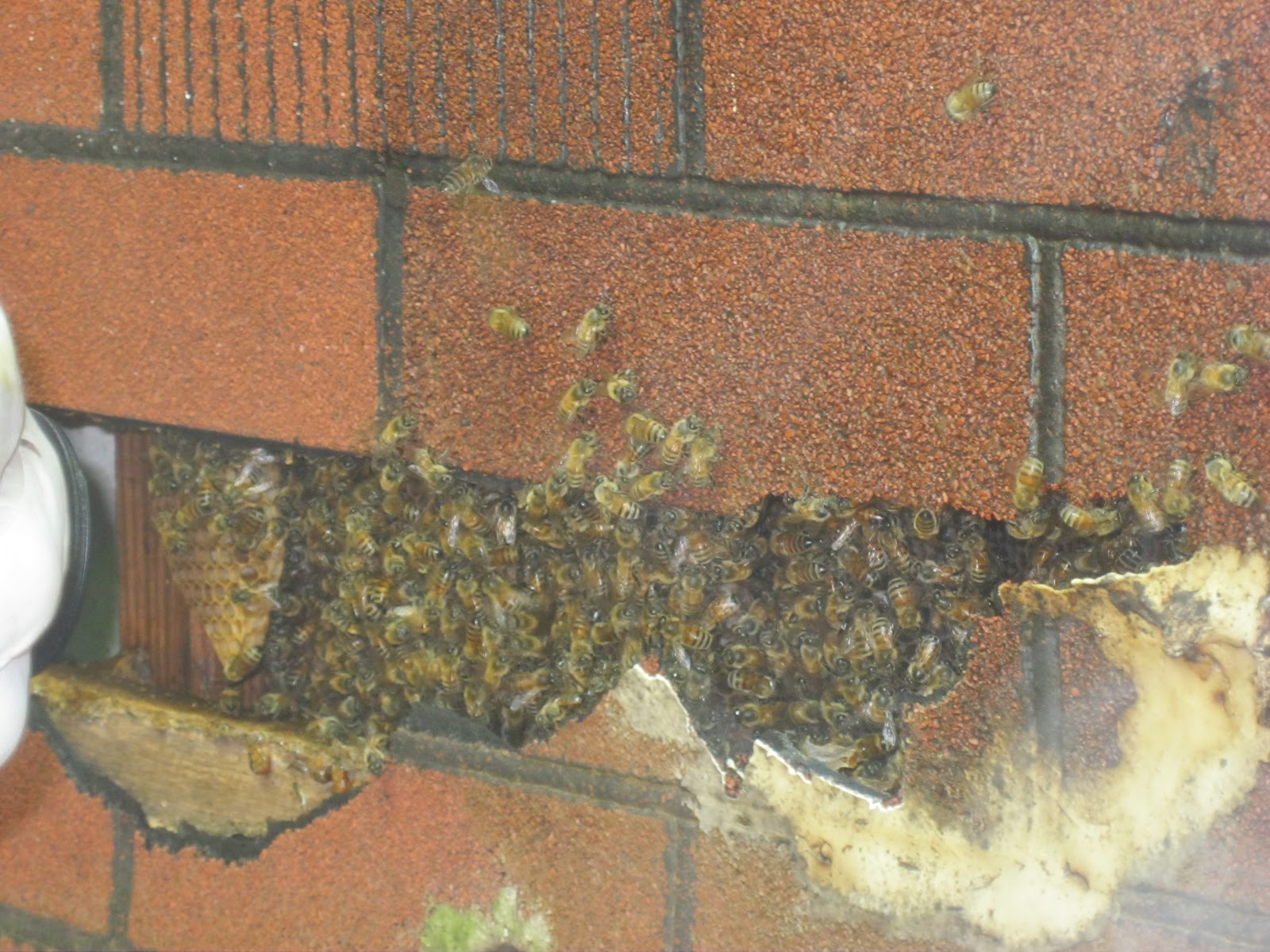
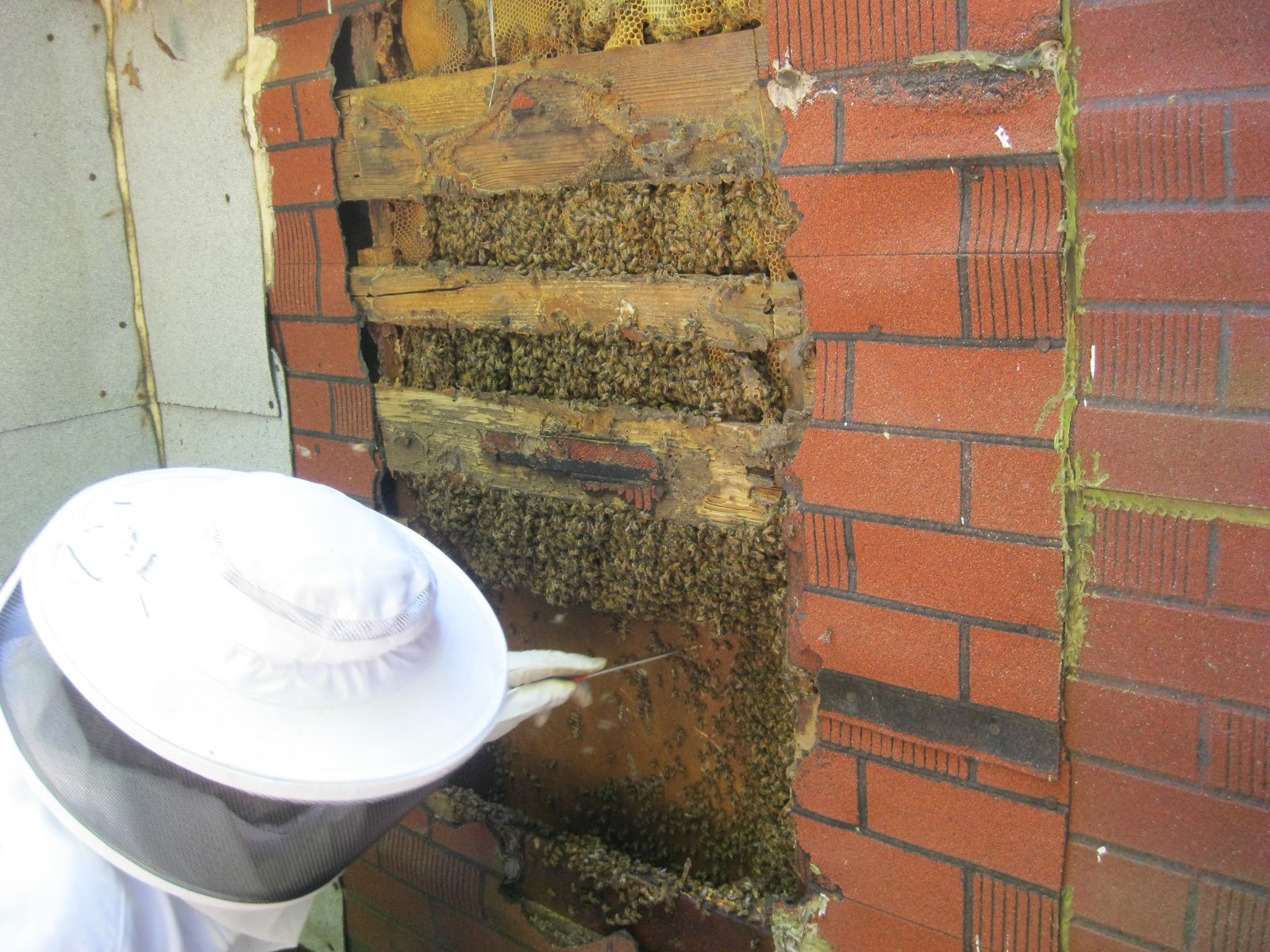
    Starting to get in it.


    We think this is all of it
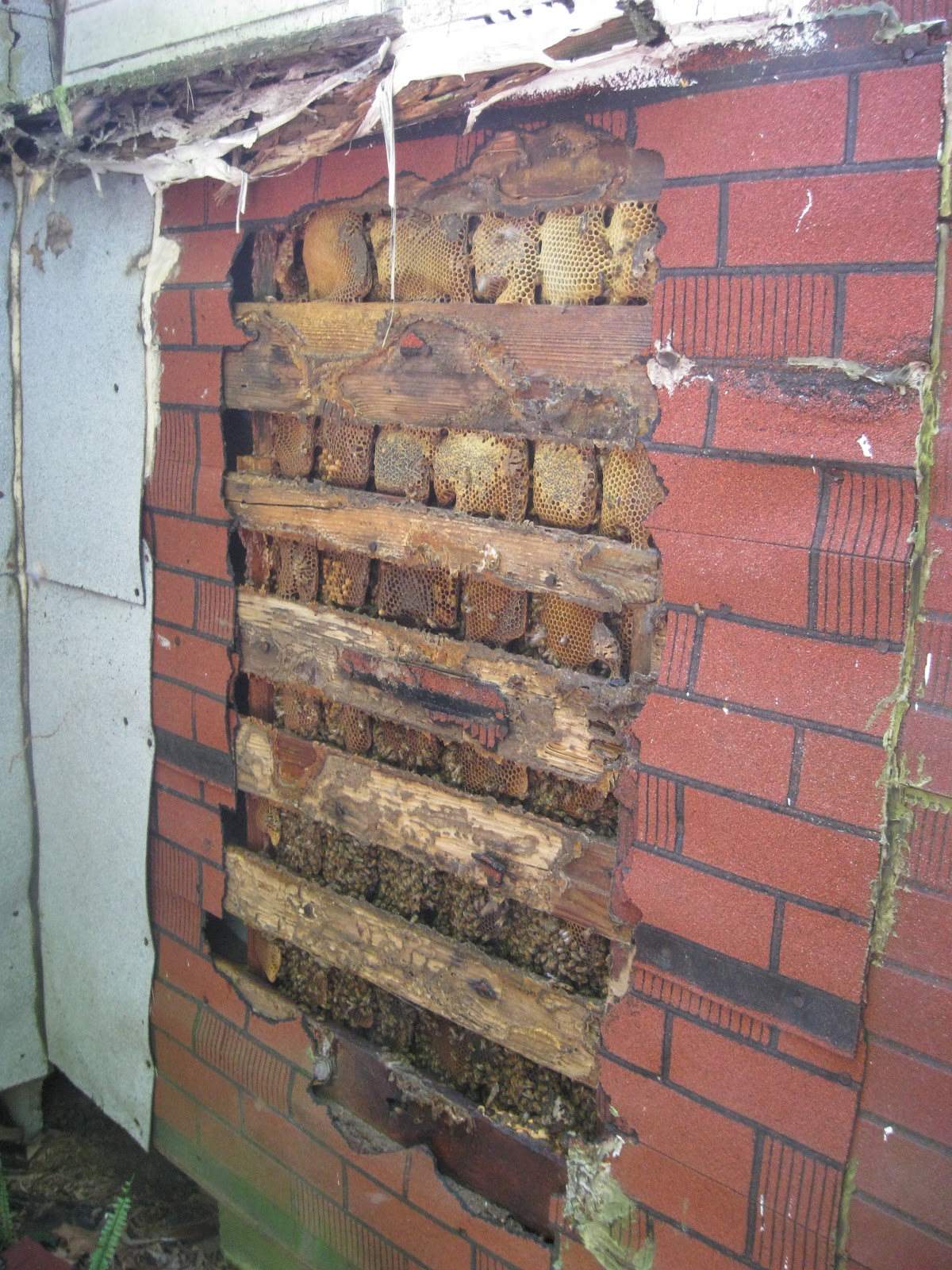
     

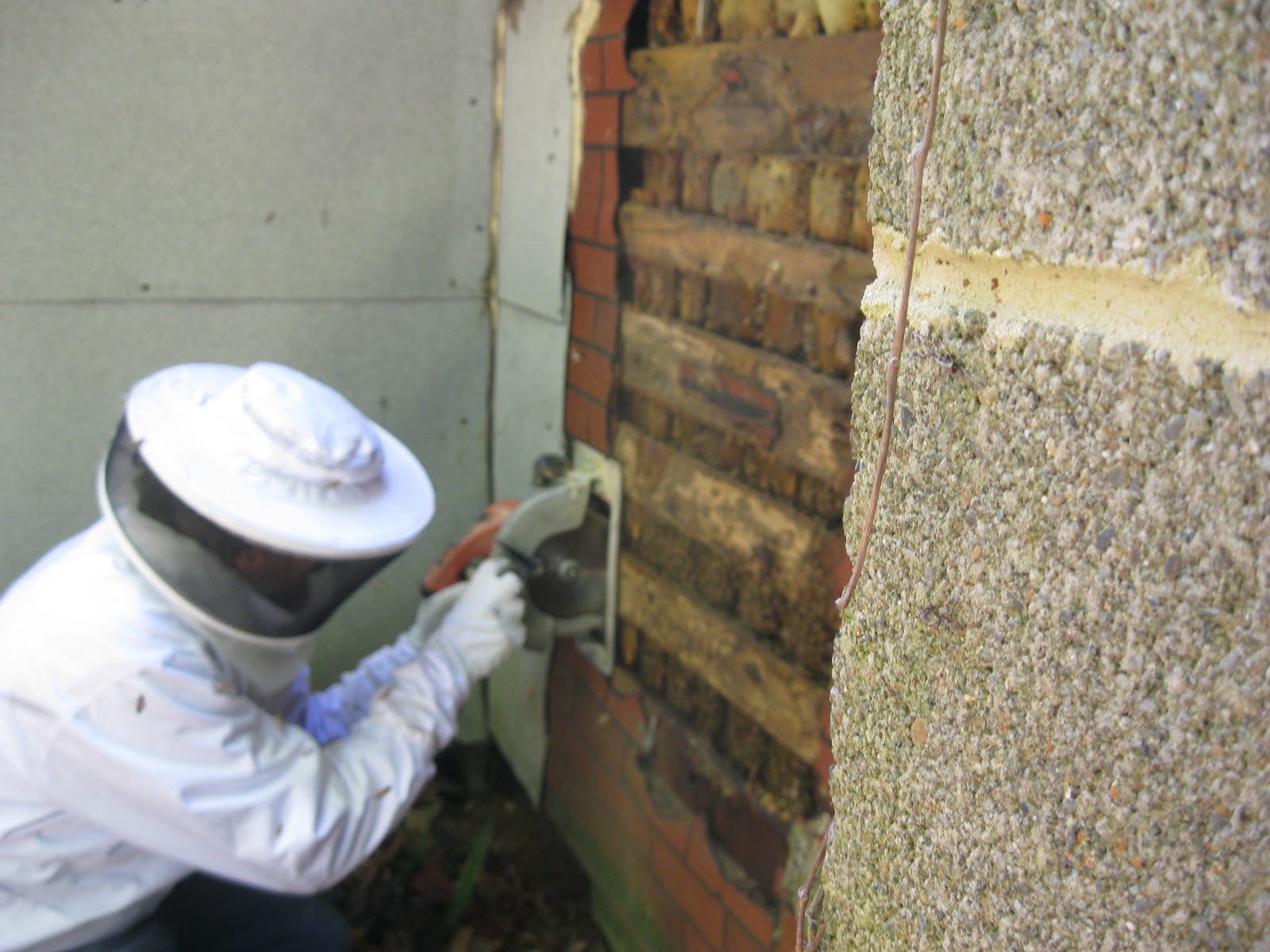
    Randy starting to cut
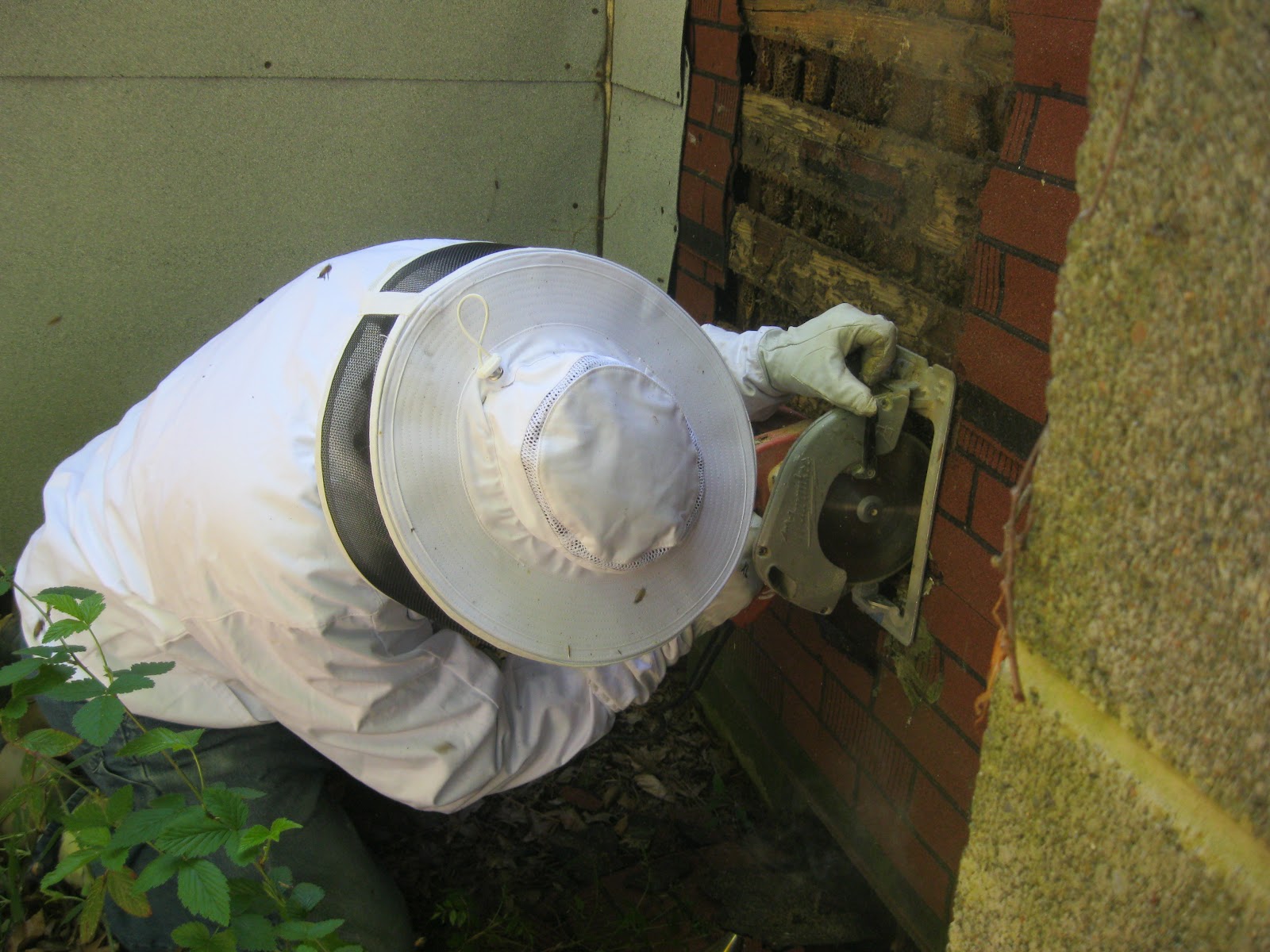
    out the first board.

    And take it off
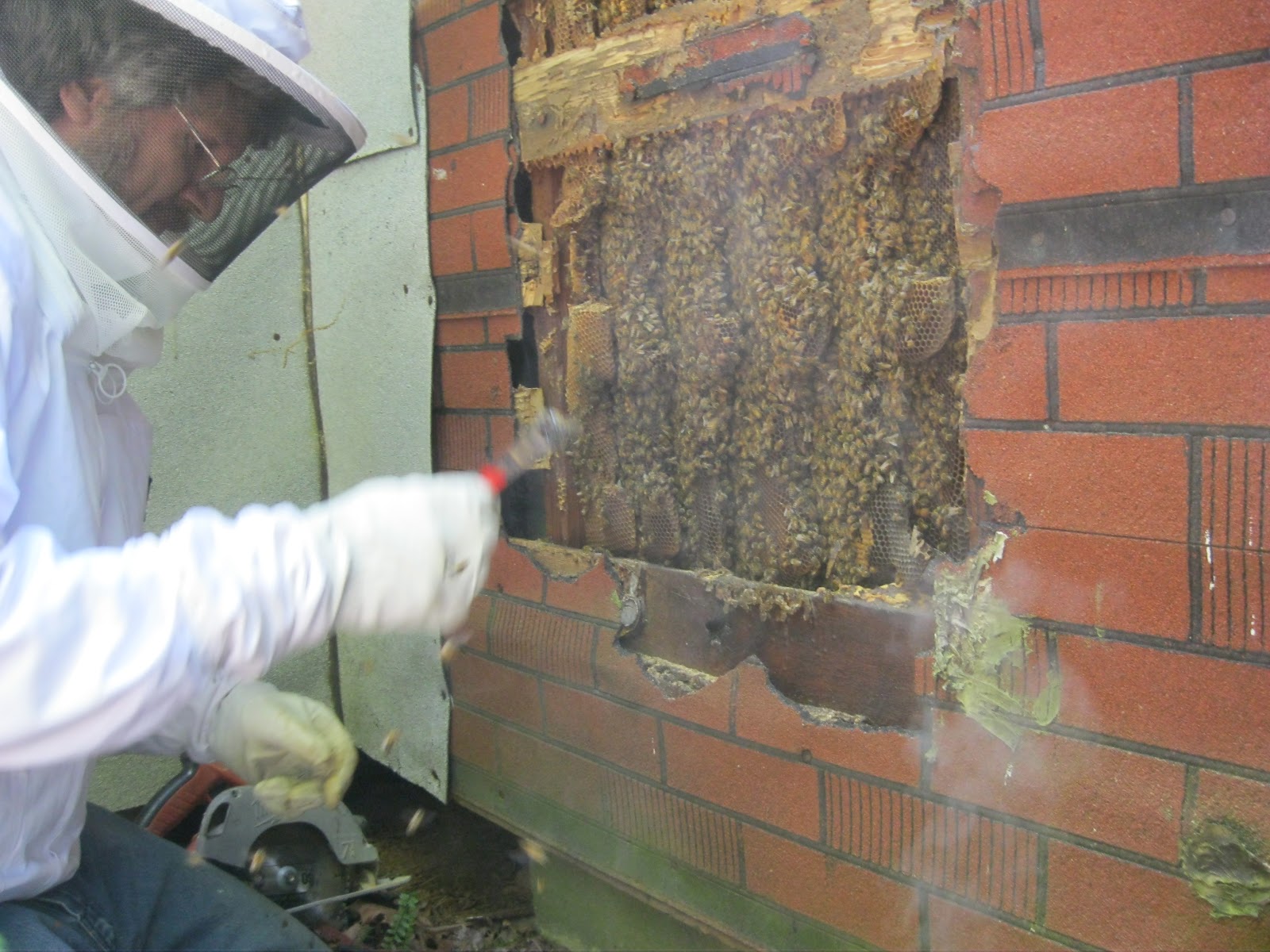
     

    Removing the first comb
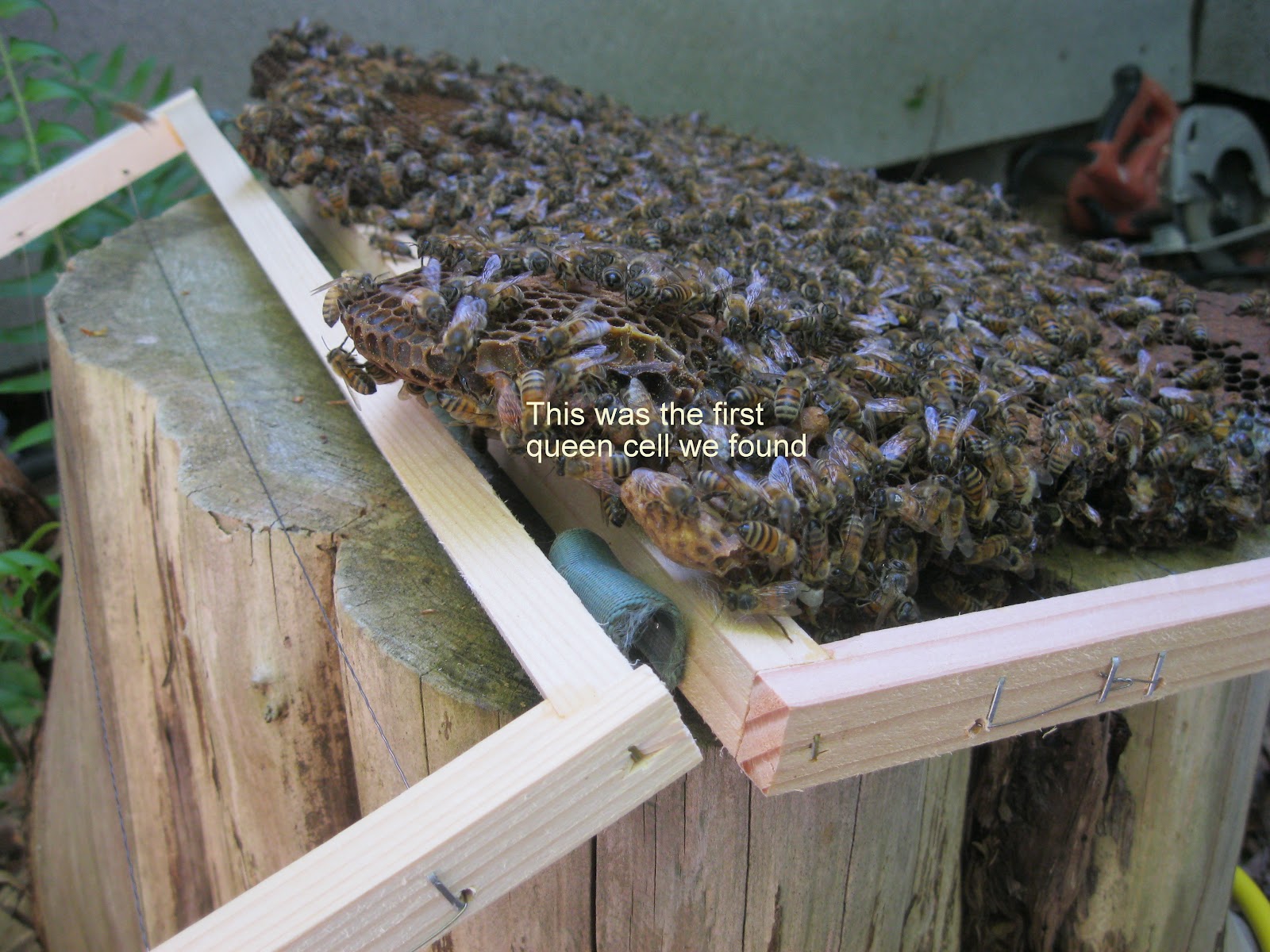
     

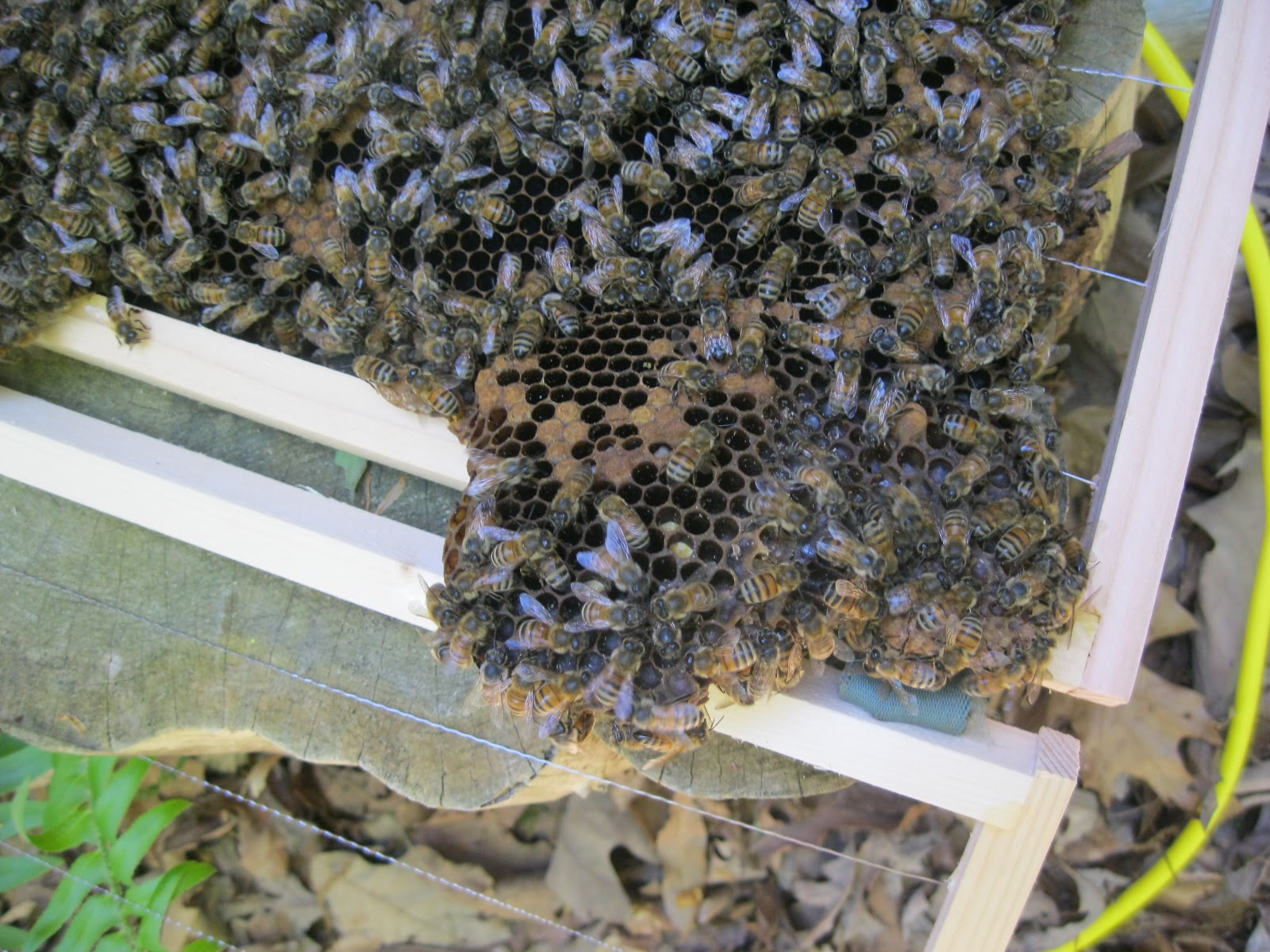
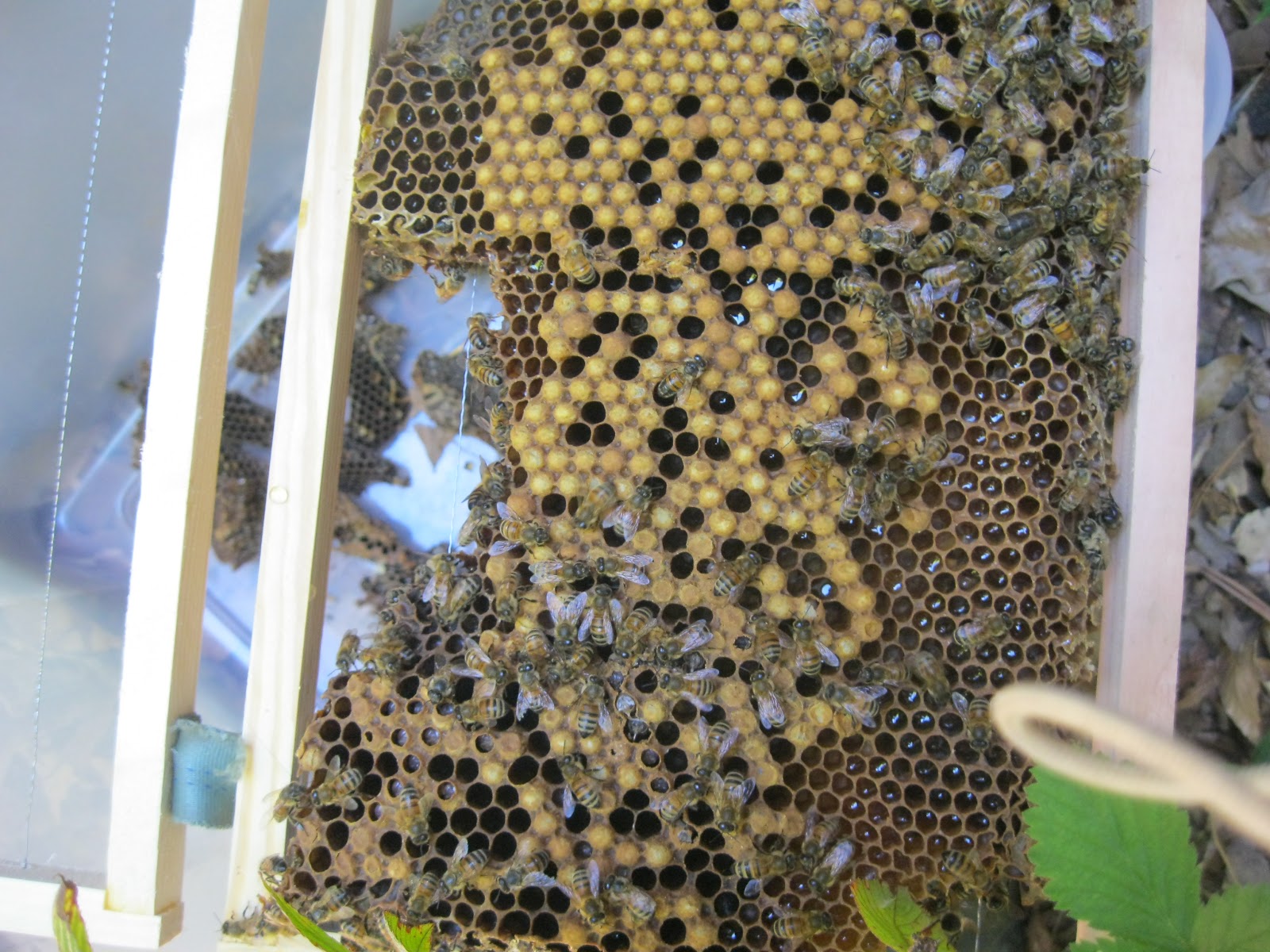
    He has ingenious frames that hold the feral comb.
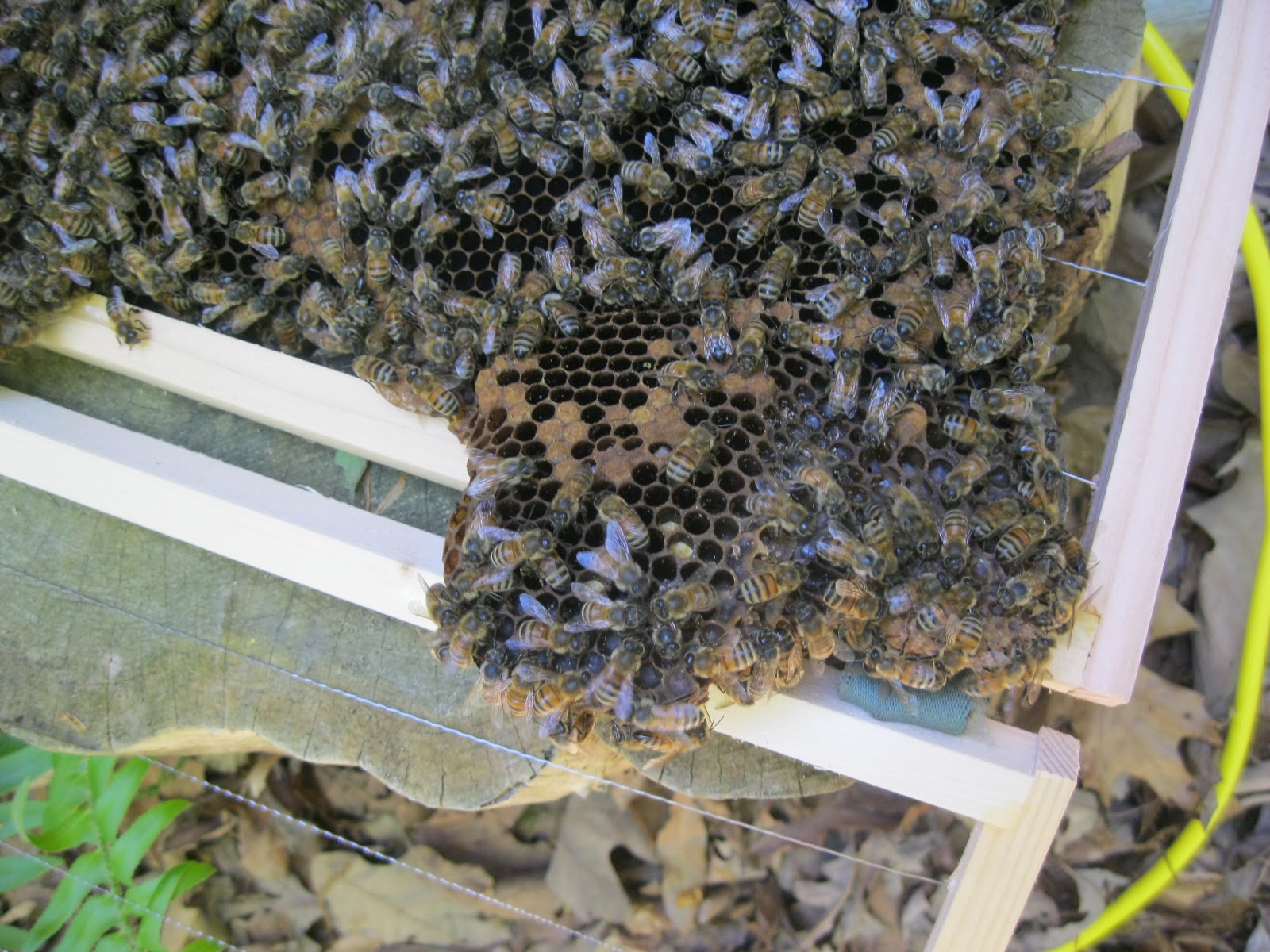


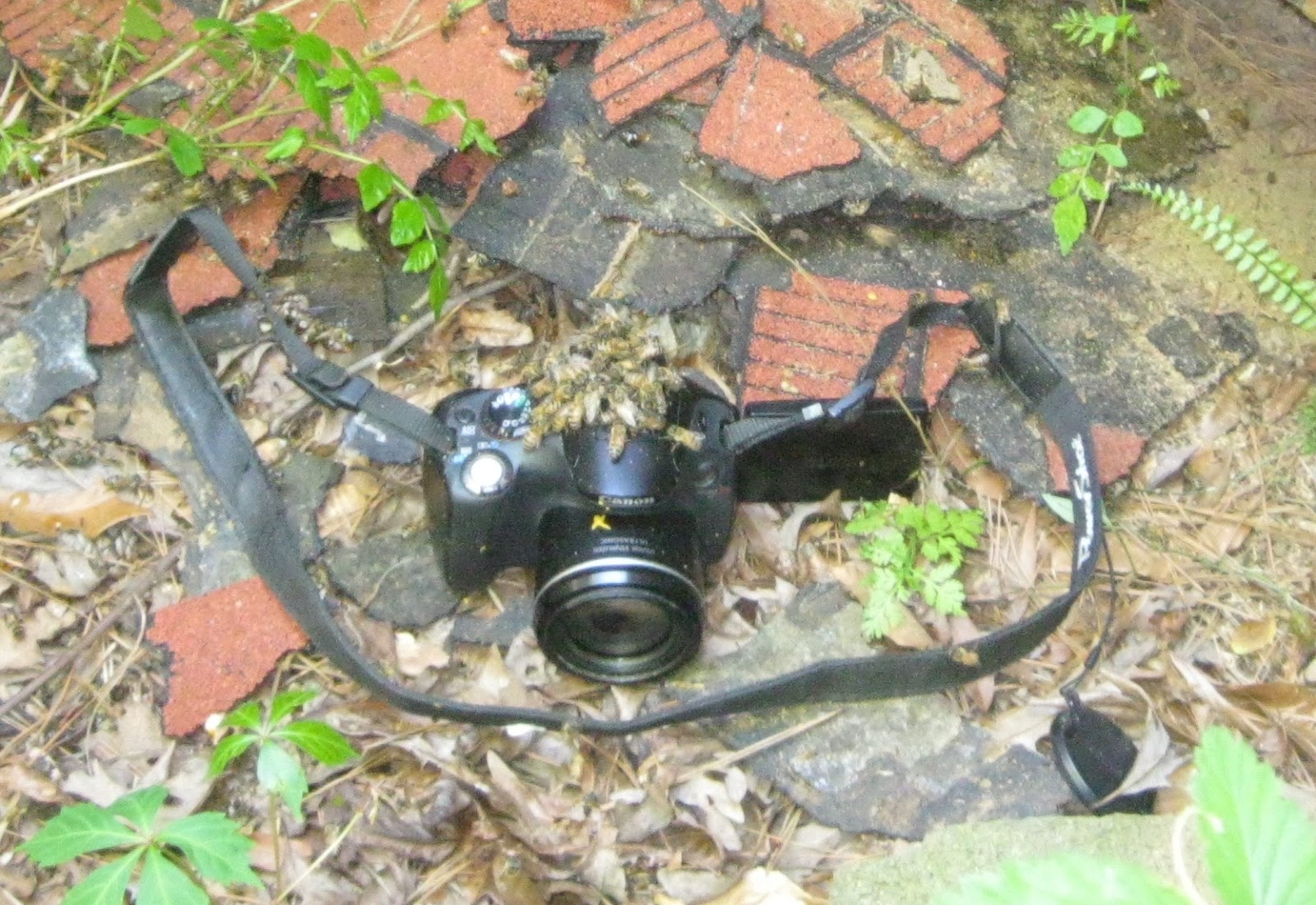
    The bees cleaned all the honey he got on his camera off for him before we left.


    And there was a LOT of honey.  Besides this for Randy, some went to the woman who wanted the colony removed, some went to the helper (ME!!!) and some went to the neighbor who showed up with a pot to carry it in.

    This is the hole after we took out as much comb and bees as we could.
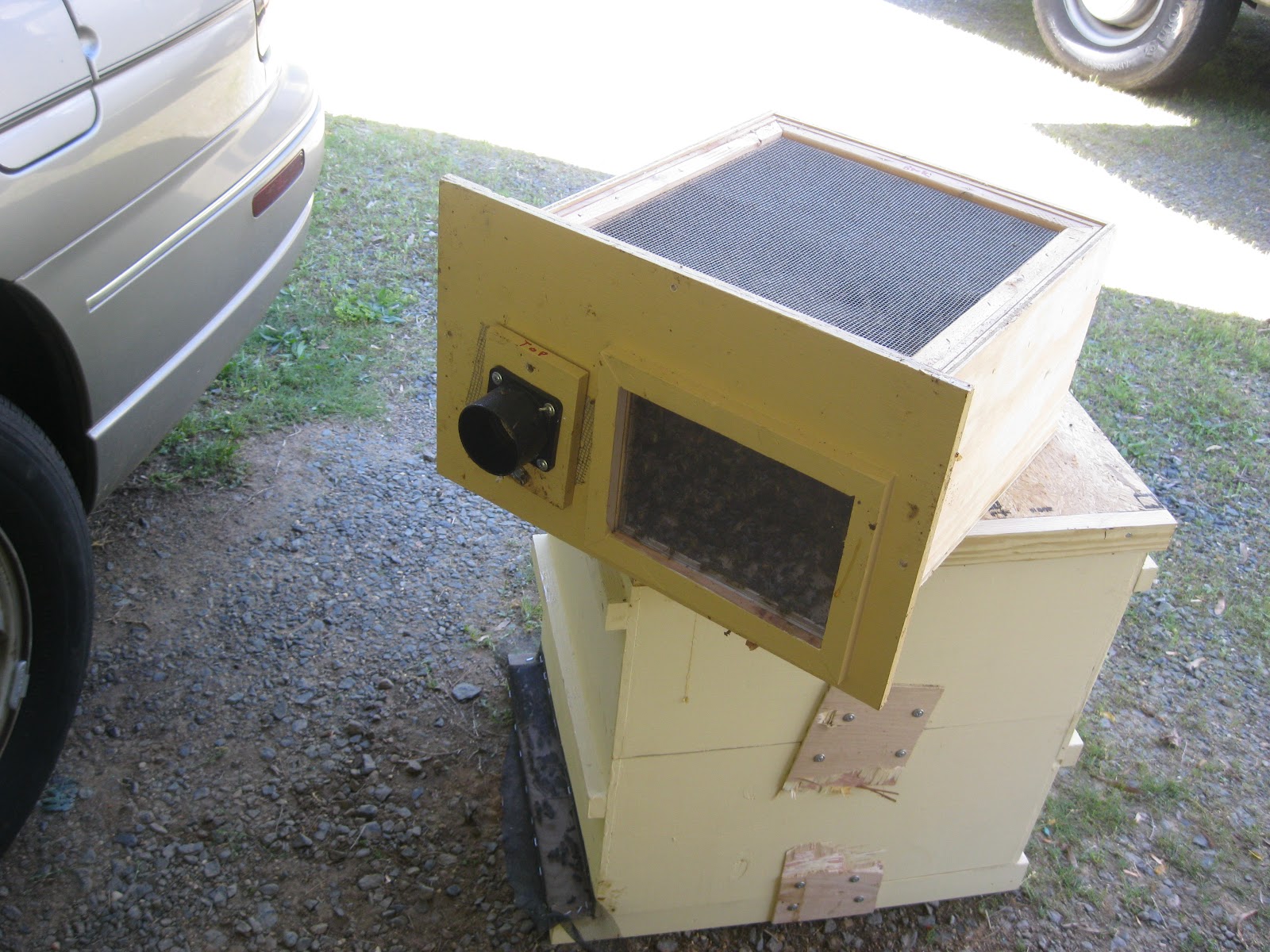
    Randy took 2 boxes of comb with brood, pollen, honey and at least 3 queen cells back to his bee yard.  Plus a couple of packages of bees in the vacuum box.

    Feral comb honey for my mother.
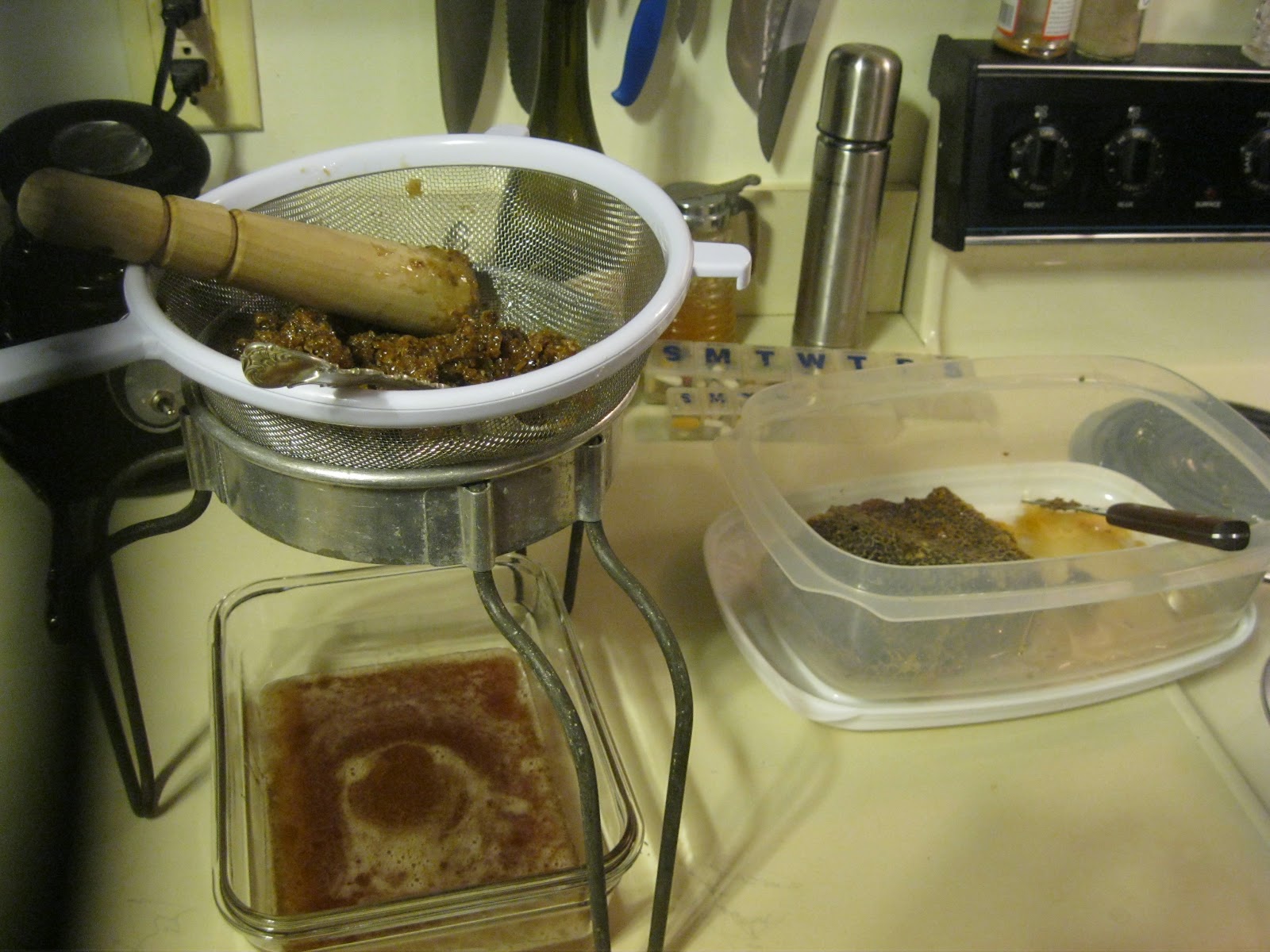
    Plus our high tech honey extraction system.

    And here is Randy’s take on the whole thing  🙂  There is a link to his blog in our sidebar. Randy and Meg’s Garden Paradise.
  • Thoughts on chickens

    April 5, 2012
    a day in this life

    If we are interested in helping to rescue breeds that are considered Critical by the American Livestock Breeds Conservancy, these appear to be the best choices for our situation, imvho:

    Hollands have earned a good reputation as being ideally suited to farm conditions. They are good foragers with calm temperaments. The breed is fairly cold tolerant, though during periods of extreme cold the males may suffer some frostbite to their single combs. The hens can become broody and will sometimes raise their own offspring. Hollands also tend to have a slow to moderate growth rate. But this fact must be weighed against their ability to rustle a significant portion of their own food.

    Sumatra hens lay an abundant number of white, or lightly tinted, eggs and are considered excellent winter layers. They are also among the best of mothers and broodies. Both adults and chicks are very hardy and easy to raise. Sumatra chickens are active and alert and are especially good at launching themselves vertically to escape dangers.

    Threatened chickens of interest to us are Andalusian, Cubalayas, Favorolles, and Lakenvelder.  They are more for egg laying than meat.

    Getting what is easiest to acquire from Ol’ Mill Hardware is our most likely choice, though.

  • Tea plants!

    April 1, 2012
    grow your own, tea

    I have been pining for tea bushes (Camellia sinensis) for about 3 years, ever since I learned they will grow in our region.  Camellia Forest Nursery in Chapel Hill sells tea bushes, among other gorgeous things, and has instructions for how to make the leaves ready to use on their website.

    They aren’t, however, open at all times for retail sales.  So, I was delighted yesterday to have remembered that they were open when I was going to have some available money in the bank.

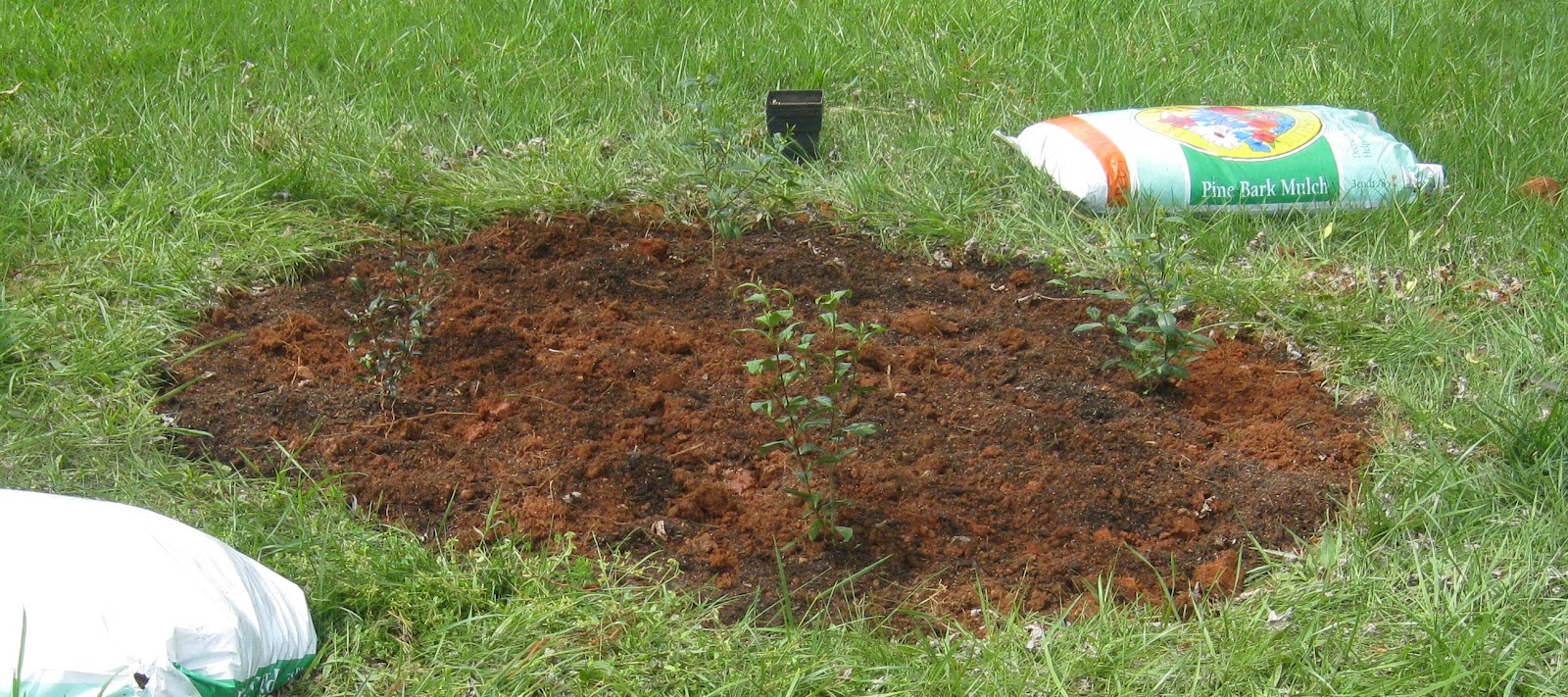
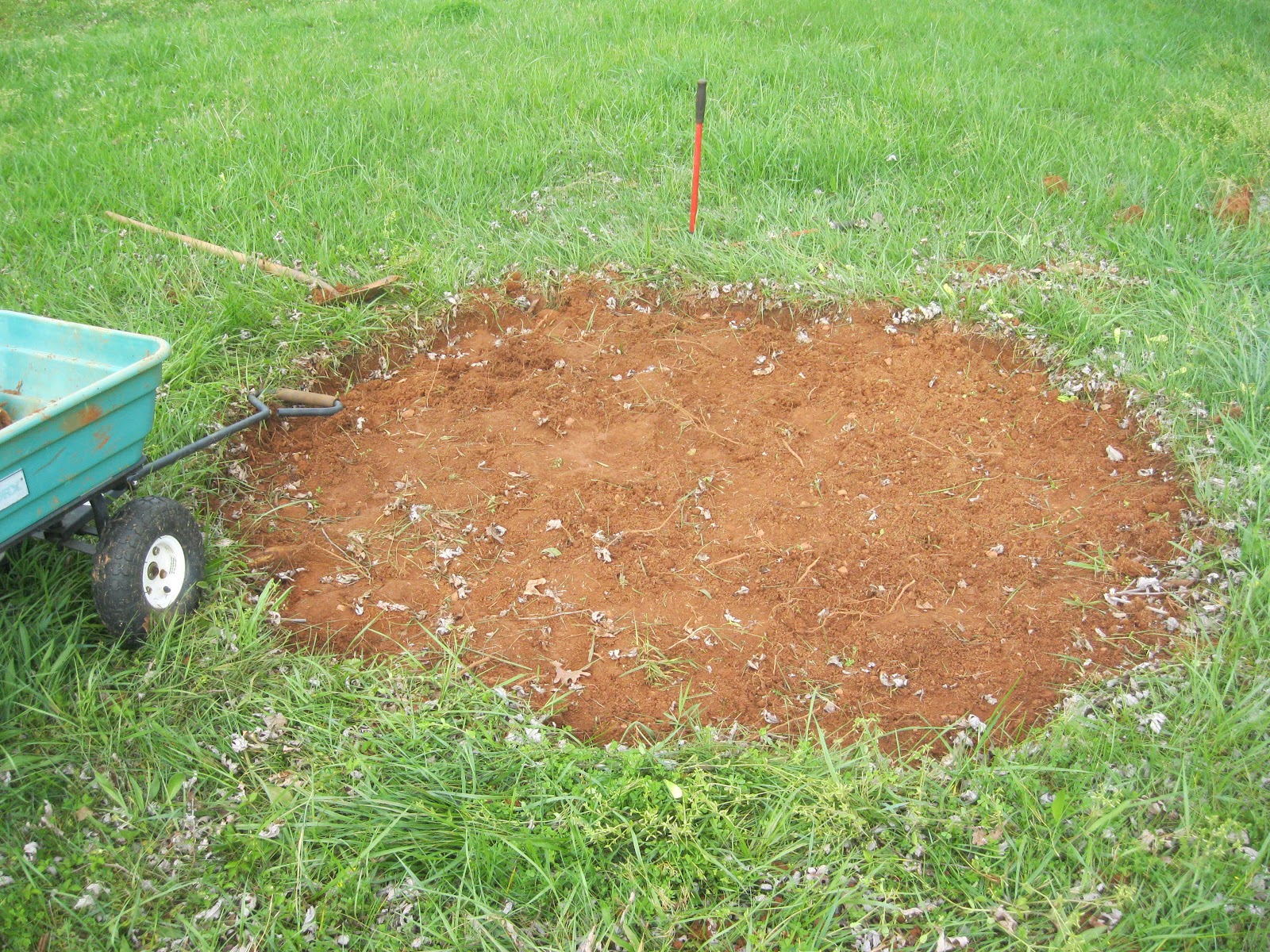
    I bought one pink flowering and 3 small leaf tea bushes.  Then, I spent a large part of the afternoon digging up sod.  I finished getting the sod up this morning.

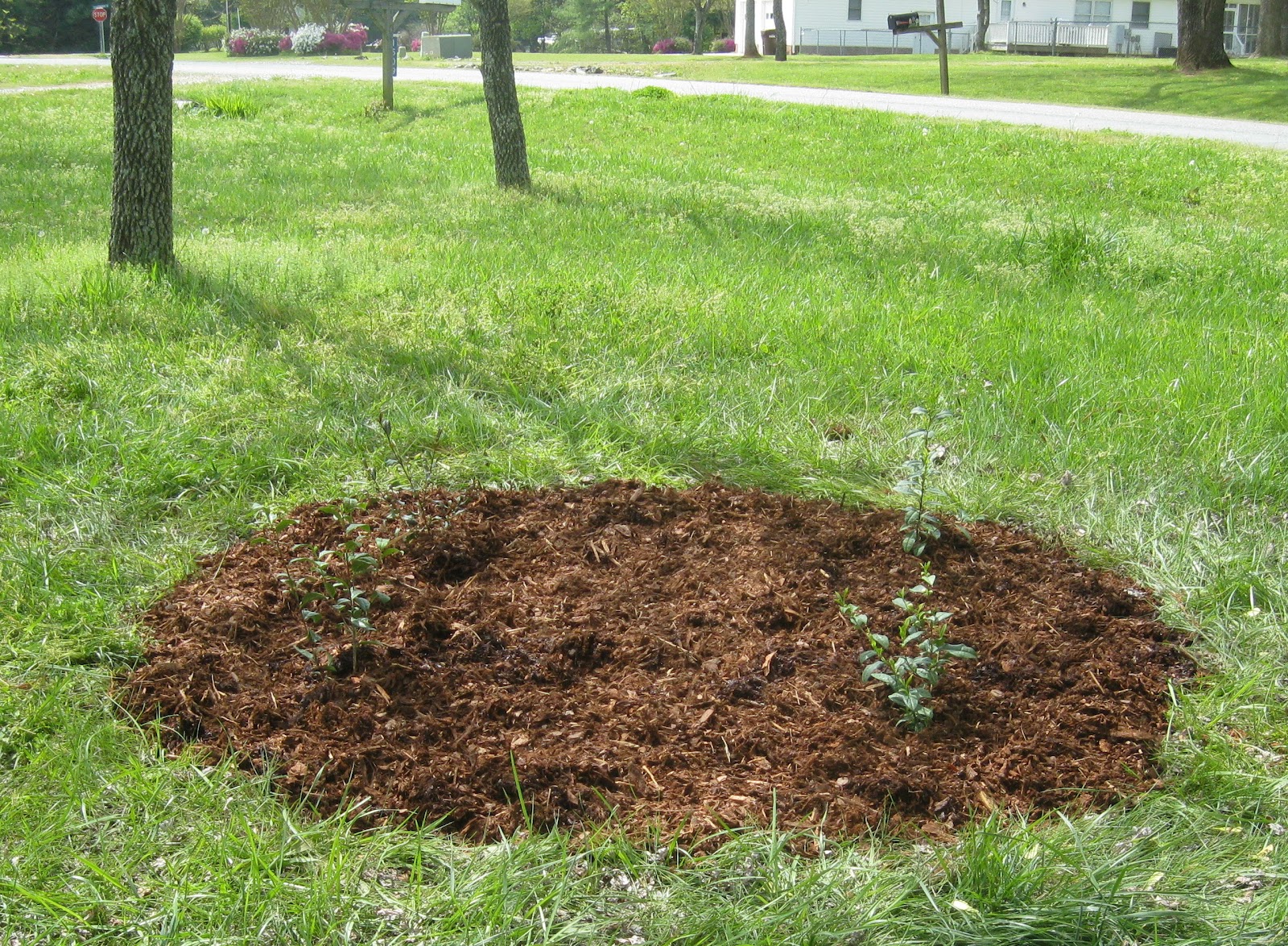
    We intend to mulch where most of the shade is in the front of the yard very heavily this year and are buying a trailer to haul it with.  The tea bushes need a semi-shady spot and that means either back in the woods or in the front.  Since the back is REALLY shady, the front seemed to be the best choice.  But, it is full of grass.  And mowing around the tea would be a pain in the buttocks.  And they need soil amendment because our clay isn’t their favorite place to live.

    So, first, sod removal.

    Then, soil amendment with vermiculite, cow manure and “organic garden soil” worked into the native clay, followed by planting the bushes.

    Then, mulch.

    It has rained here a little bit the last couple of days so the ground was pretty moist, but we are sprinkling them a little anyway to settle their dirt and be sure they have a good start.
    I’m just tickled to pieces.
  • Rosamund flourishes

    March 30, 2012
    a day in this life

    When I checked the syrup status last night, Rosamund had about half a quart and Lucretia had 2/3.  I had some syrup left from yesterday’s feeding and added it to Rosamund’s jar this morning.  Also, I moved the back board back one bar.  It was originally behind bar 10.  The cluster is back to bar 7 so they have plenty of free space to move into. Lucretia’s cluster only goes back to 6 and isn’t as full or attached, yet.

    (Yes, I changed the name of the Left hive.  Starting with L works better for me than saying El.  And it’s not like they come when I call.)

  • The bees know

    March 30, 2012
    a day in this life

    A friend sent us a link to an article about Bayer CropScience, neonicotinoids and bees.

    One of the comments was a great reminder to me that the bees know what they are doing more than I do.  I’m considering having it tattooed on my thigh so I see it every day.

    From Tubbercurry:

    Are we potentially doing more harm by dusting with sugar than not opening the hive? Something to consider: when a beekeeper opens a hive it is invasive to the super-organism that is the beehive.  Many beekeepers open their hives way too often and all this opening helps to contribute to the demise of their beehive’s health. If you’re just curious, watch the hive entrance and see what you can find out about the bees by that rather than opening the hive. If the bees are bringing in pollen they’re feeding brood and chances are the queen is laying eggs. Even if she’s ill or old, the bees know how to replace her. Way too many beekeepers even organic ones over-manage their hives.

    Addendum 3/31/12:  This is a great explanatory article: Beekeepers to EPA: We’re running out of time

Previous Page
1 … 173 174 175 176 177 … 199
Next Page

Blog at WordPress.com.

I am the Audience

Free and worth every penny paid

  • a day in this life
  • dancing in the field of dreams
  • food & drink
  • Laughing
  • poetry and songs
  • Beautiful
  • dirt under my nails
  • bonsai
  • travel
  • odds&ends
  • Labyrinths
  • birdwatching
  • randomness
web counter
  • Subscribe Subscribed
    • I am the Audience
    • Join 53 other subscribers
    • Already have a WordPress.com account? Log in now.
    • I am the Audience
    • Subscribe Subscribed
    • Sign up
    • Log in
    • Report this content
    • View site in Reader
    • Manage subscriptions
    • Collapse this bar