My friend, Luke, who is @LessEthereal most places online, is a huge fan of micropoetry. In particular, haiku and haiga. He pointed me to a website that’s doing a haiku-a-day thing for February. (Shortest month for the shortest poetry. Ha!)
They have a page about what haiku actually is and it’s not what American schools teach. They are more interested in what is said than in the number of syllables. And the differences between the languages makes that ridiculous anyway.
Taken from the “Not 5-7-5” article on that website: “Specifically, a haiku tries to invoke the time of year with a word that is typical of that season, such as snow for winter, or frog for spring.” And…” traditional haiku include words that function like a spoken sort of punctuation. More importantly, they cut the poem into two parts, creating a sort of juxtaposition, not only grammatically but also imagistically. The point is to carefully pair two images together in such a way that a shift or disjunction occurs between them. The art of haiku lies in creating the right amount of distance between the two parts, so the leap is neither too far (and thus obscure) or too close (and thus too obvious).”
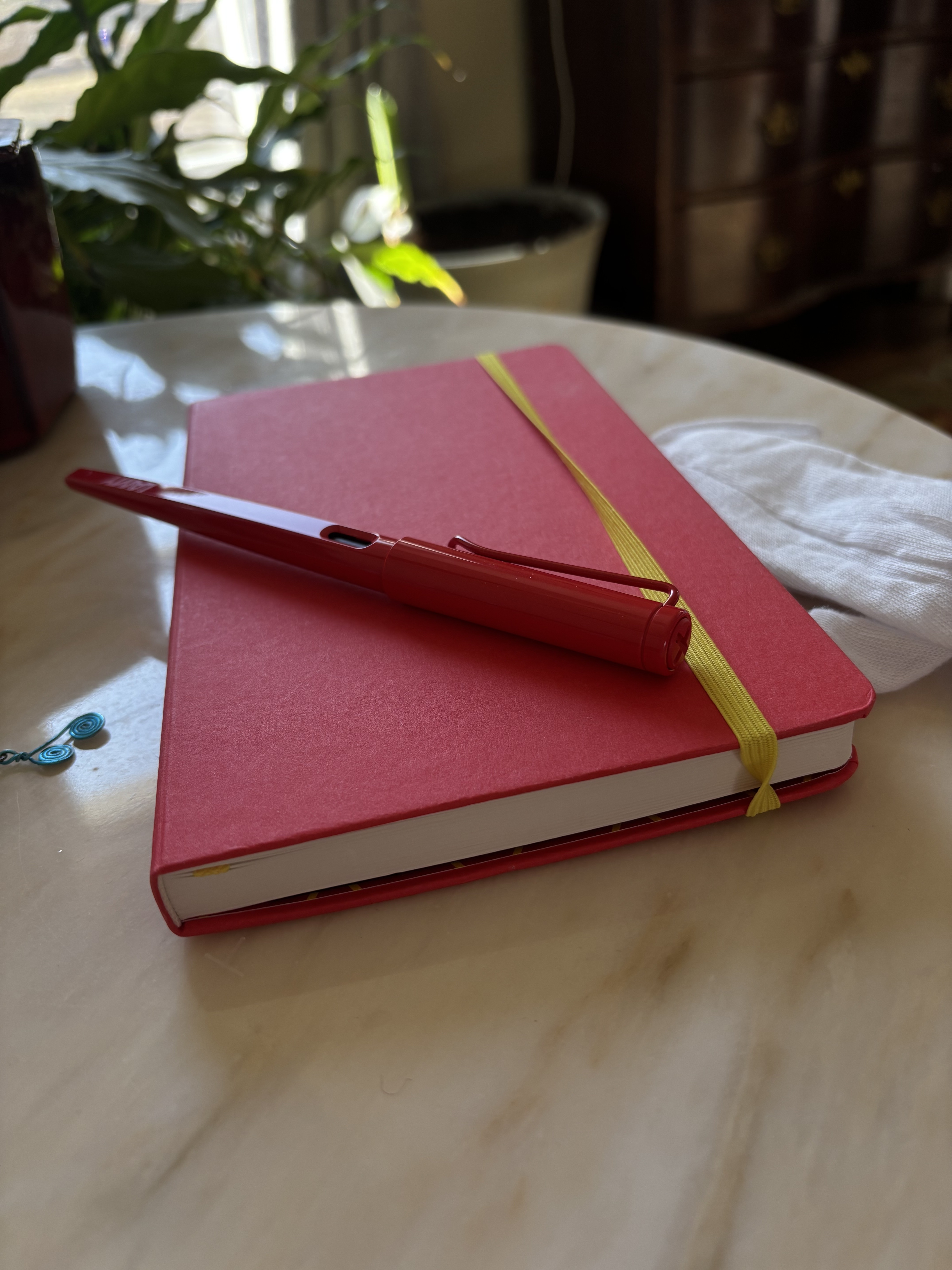
I have a new 1.5mm italic fountain pen that I can only use at home because I have to use ballpoint at work. And I have an empty journal that was lying around the house.
I’m trying to write one thing a day that can lead me into writing sophisticated haiku. If I ever write one that I think ticks all the boxes, I’ll share.
Editing on 5/5/25 to add another site I want to remember: https://owlcation.com/humanities/True-Haiku-Myth-5-7-5-how-to-write-haiku
“The aim is to create a clear thought or image in as few words as possible while preserving the meaning and the rhythm you desire. “
 I am the Audience
What do you think?