I took a workshop at the Bonsai Learning Center in Mooresville, NC this past Sunday. We were given instruction in the morning and created our first trees in the afternoon. I learned many things. The most intriguing was that the roots are wired into the pot. Somehow, I had missed that memo.
Here is the tree I picked out.
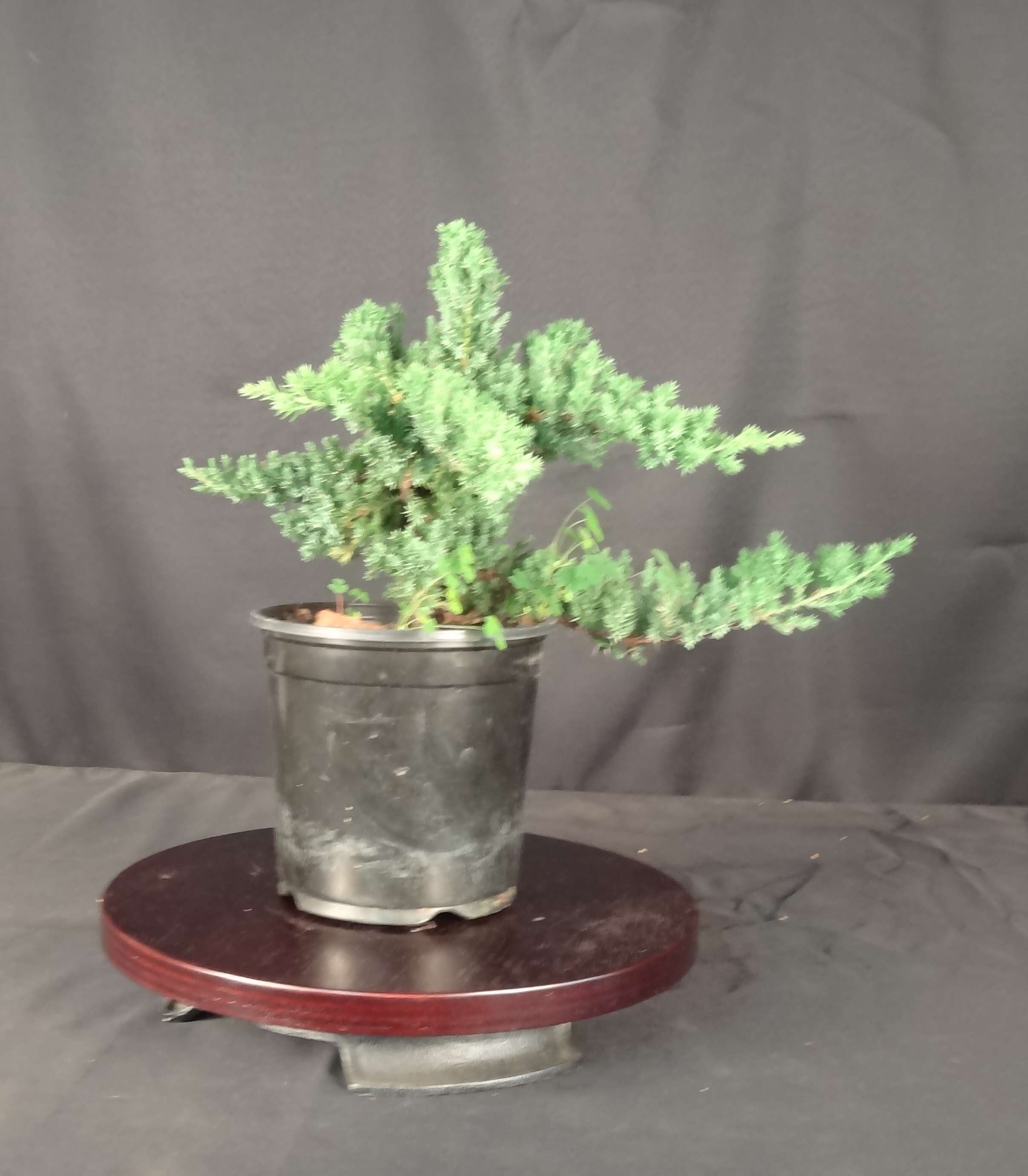 And here are some photos of how it was shaped.
First thing we did was pick off the greenery at the ends of all the branches closest to the trunk, opening up the tree so we could see what we were working with. We used long handled bonsai tweezers for this.
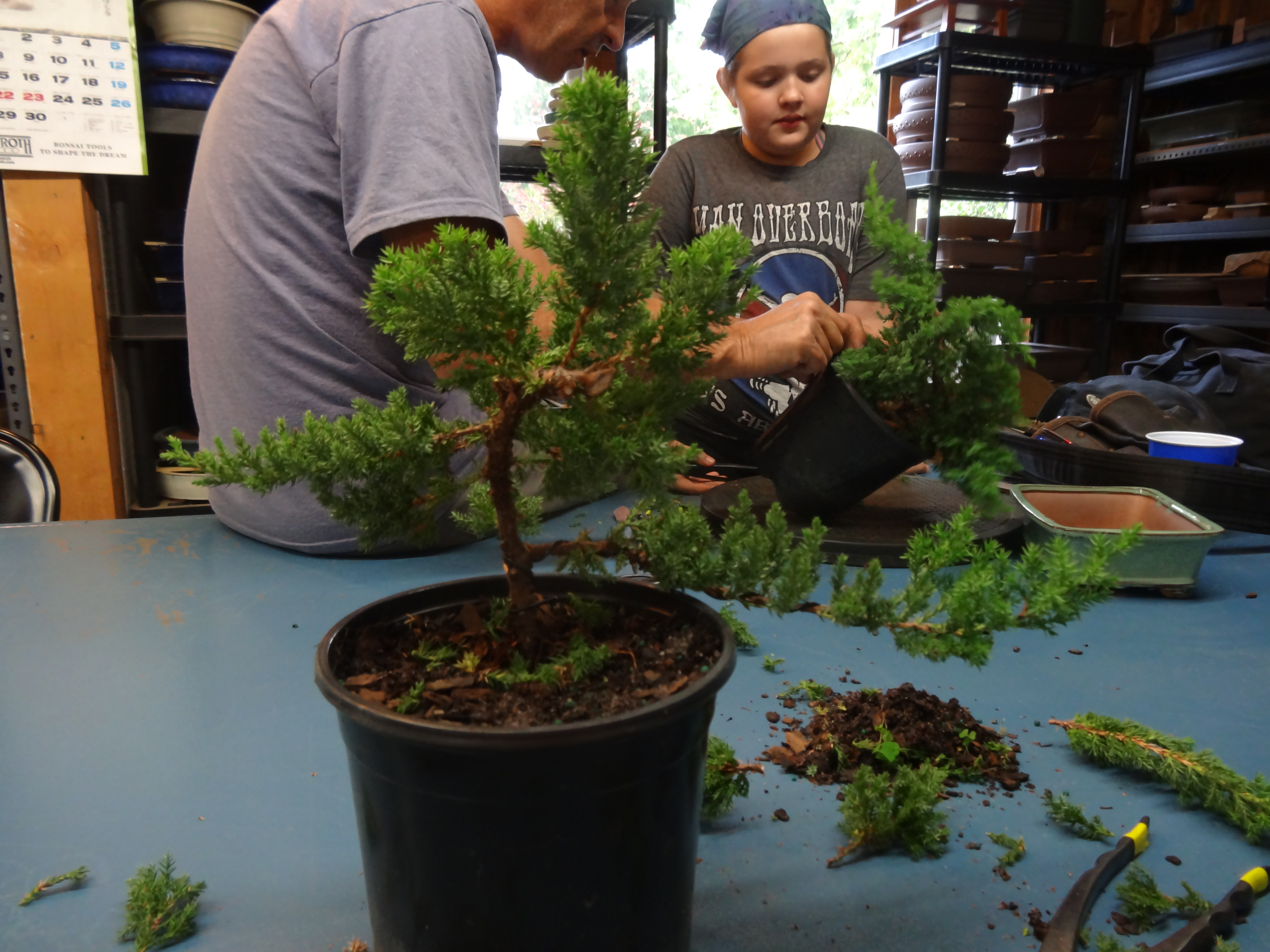
Then we cut and trimmed to begin to get the shape that we wanted. And wrapped wire carefully around all the branches so we could bend them to grow the way we want them to. The wire has to be removed and replaced as the tree grows so that it doesn’t cut into the bark and hurt the tree.
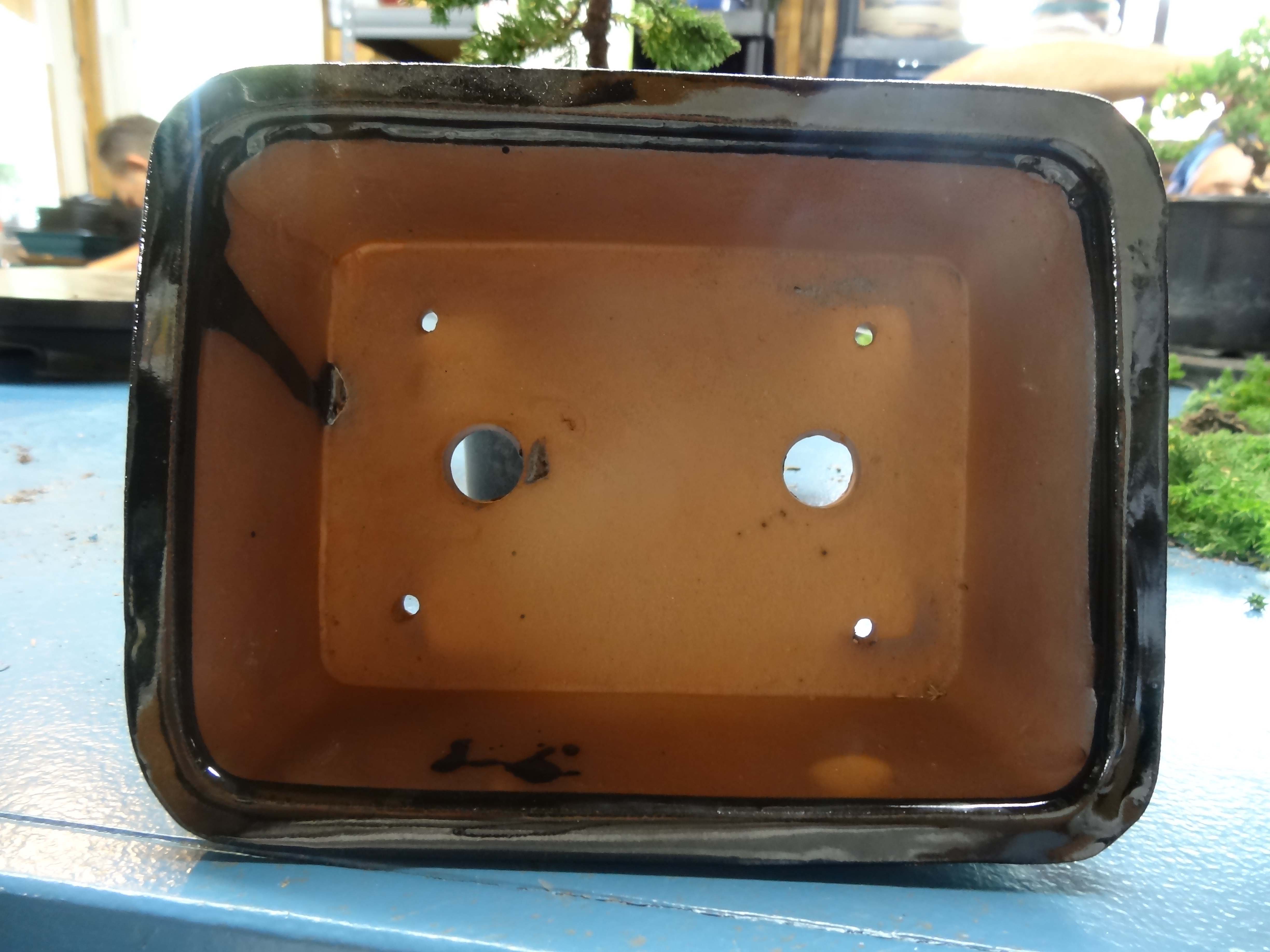
This is my pot. With all the holes. You use 4 long pieces of wire to hold the screen and roots in place.
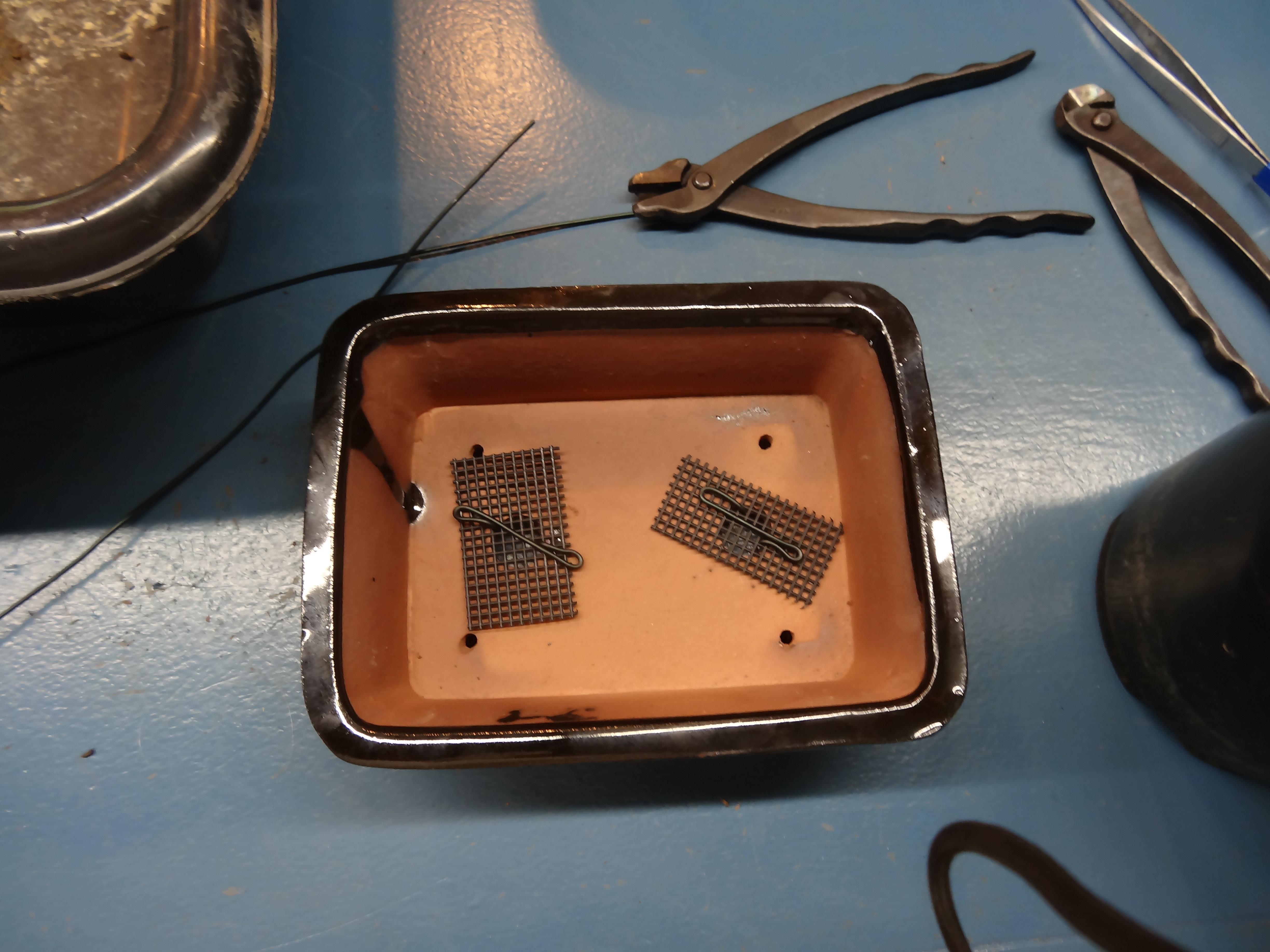
I didn’t get a photo of how this wire is twisted to hold the screen in place because I was just too busy. I will try to describe it and I think you can tell what I am talking about when you look at the pictures. The next time I pot a tree, I’ll make sure to do that.
You make a kind of squashed Z and then bend the ends perpendicular to the part that sits on top of the screen in the pot. Ends of the Z have to be wide enough to reach across the hole and hold the screen down. The ends go through close to the edges of the hole.
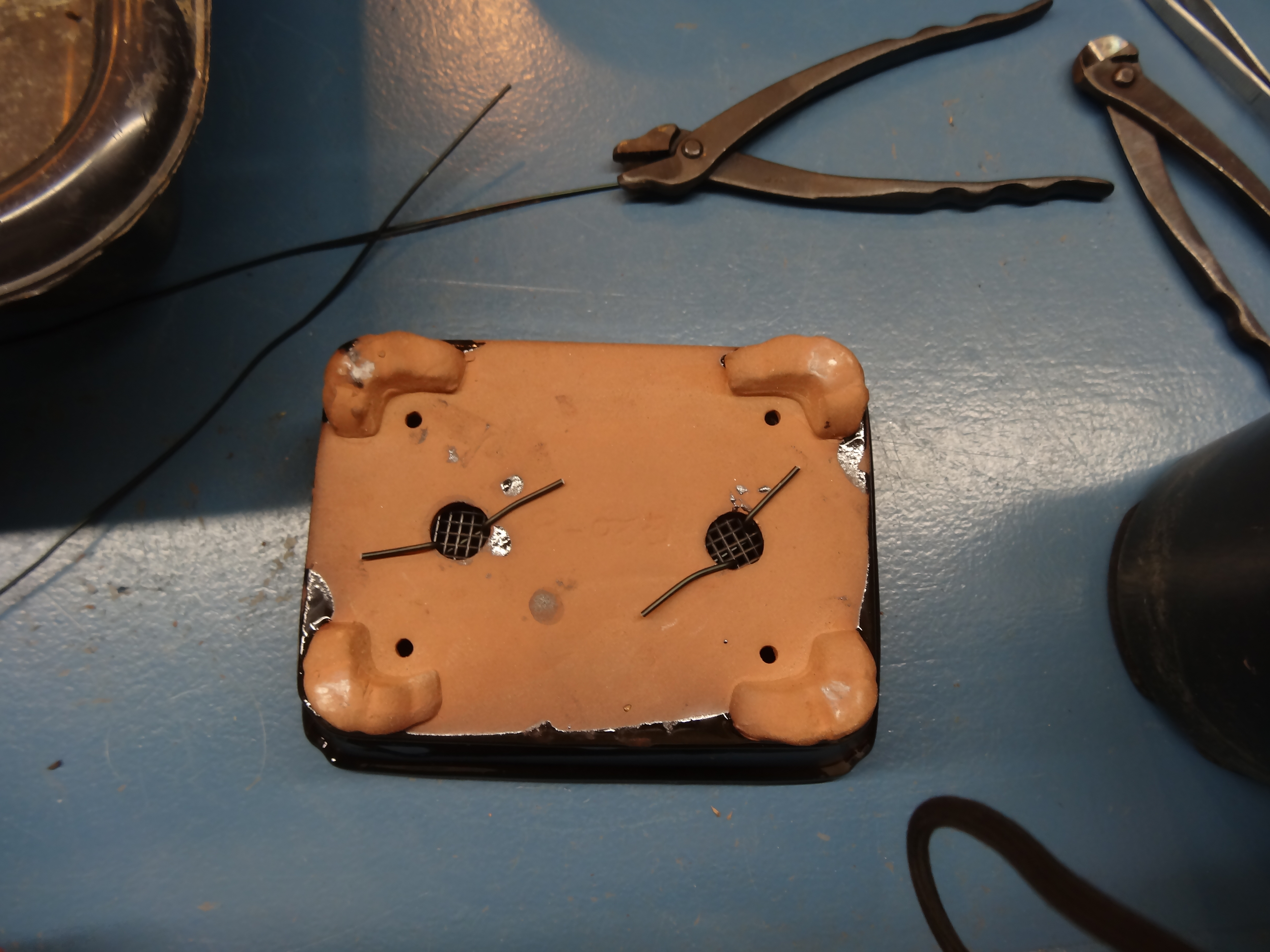
Then, you bend the ends to anchor the screens down securely..
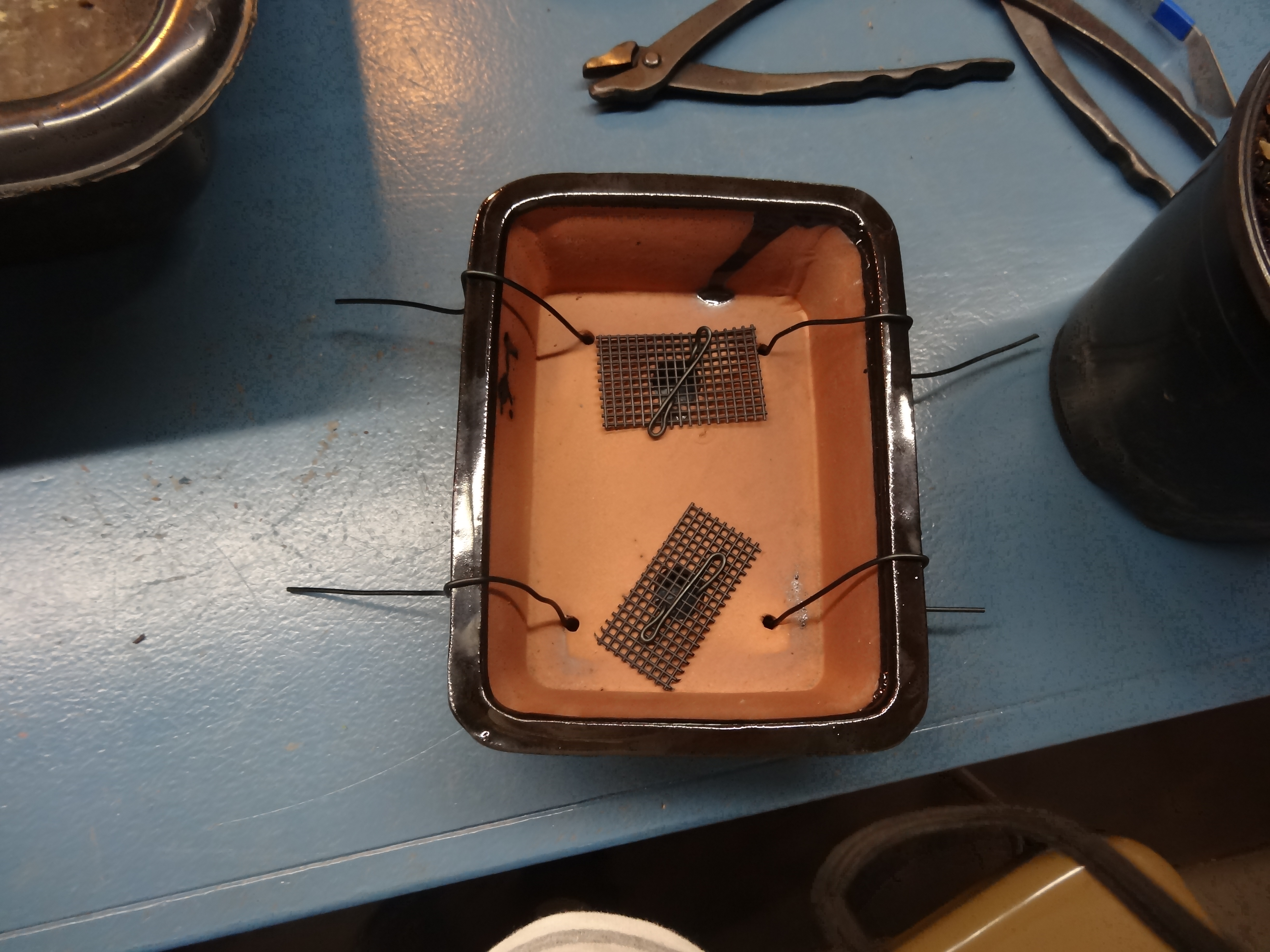
The long wires will hole the roots in place.
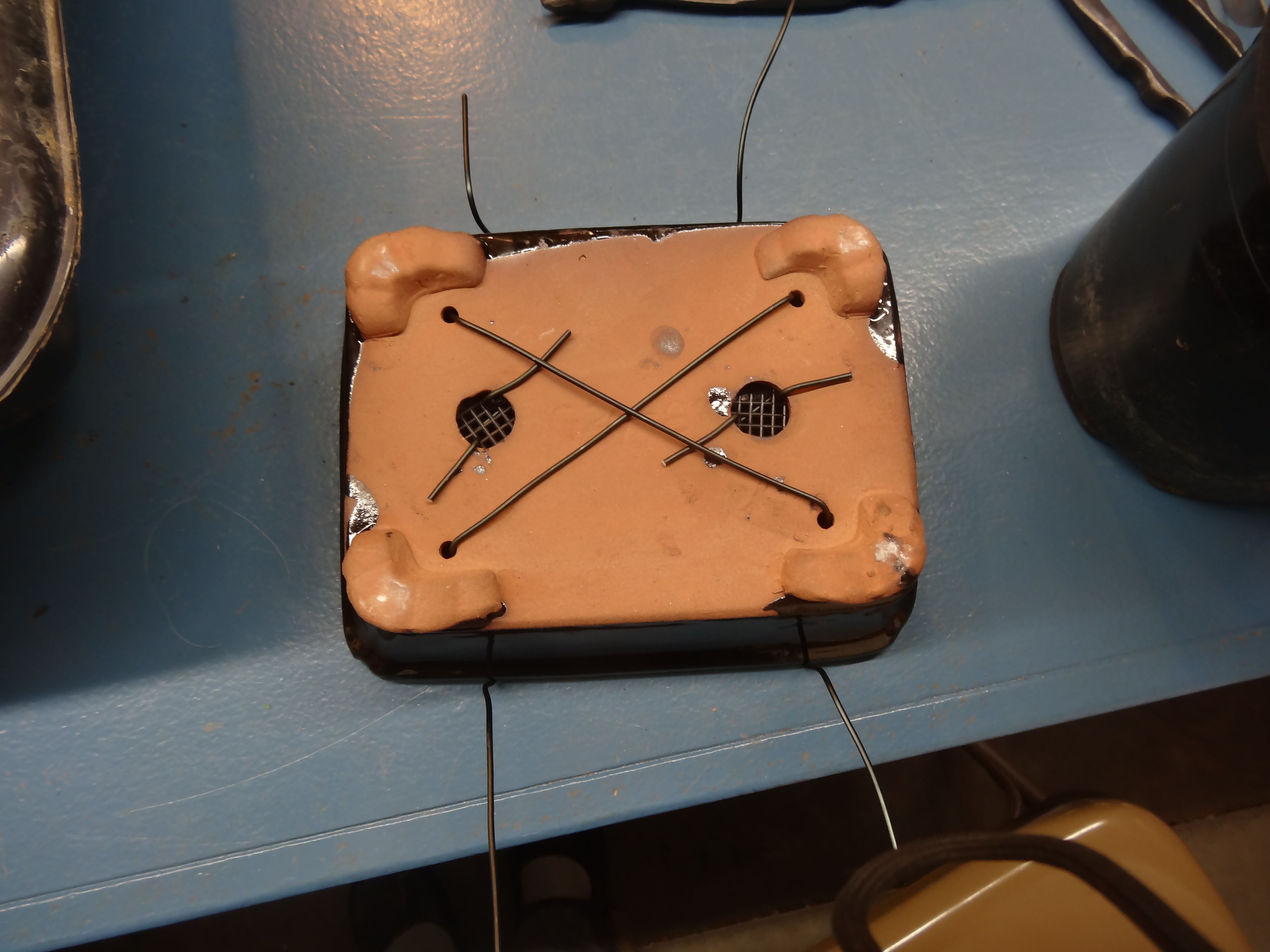
All the dirt and a LOT of roots are removed. Even the tap root. I asked about that, because I was under the impression that removing a taproot would kill the tree. Brad said that it doesn’t. It seems to anchor it, so that it doesn’t blow over in a storm and probably lets the tree know where to grow the side roots to find water. But, it isn’t needed for bonsai because I will be giving it all the water it’s ever going to get.
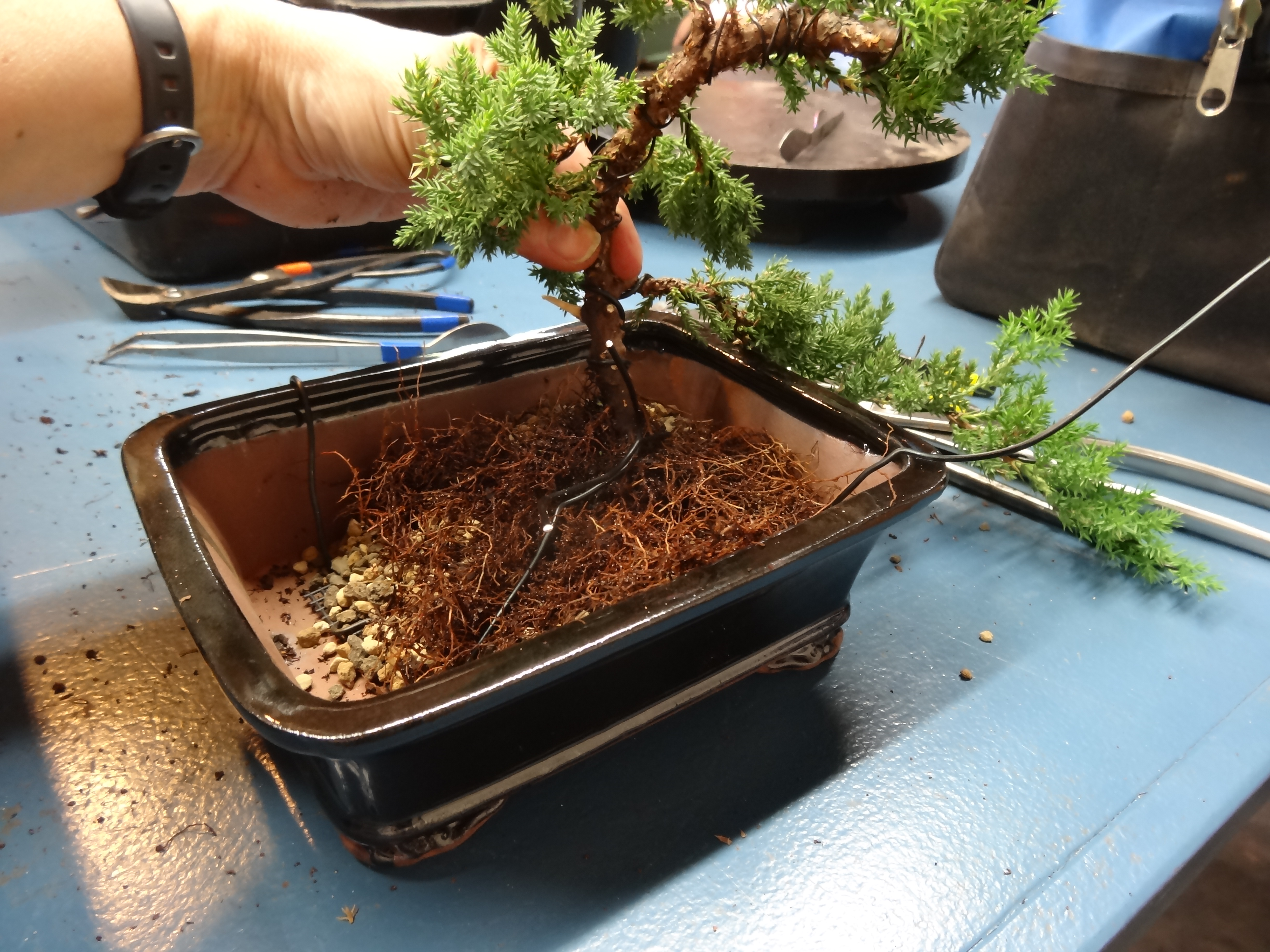
Put a little pile of bonsai soil where you want the tree. Then, wire it down. That way, wind or pets won’t knock it out of its pot by accident.
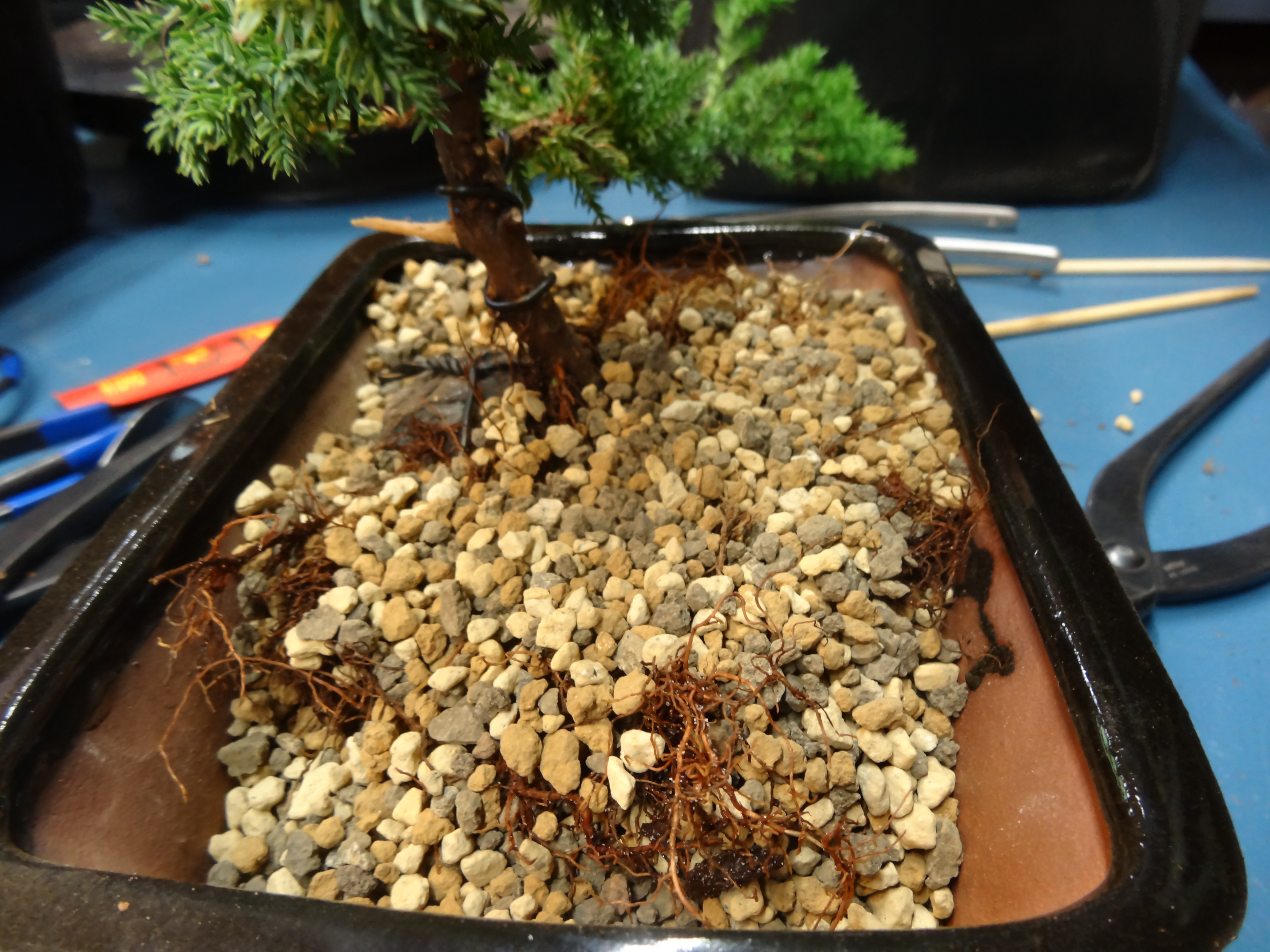
The soil my instructors use is made of lava, pumice and akadama. Akadama is a baked clay that eventually breaks down allowing some room for root growth. The pumice holds some water for a slower release. The lava rocks are supportive and may release some helpful micronutrients.
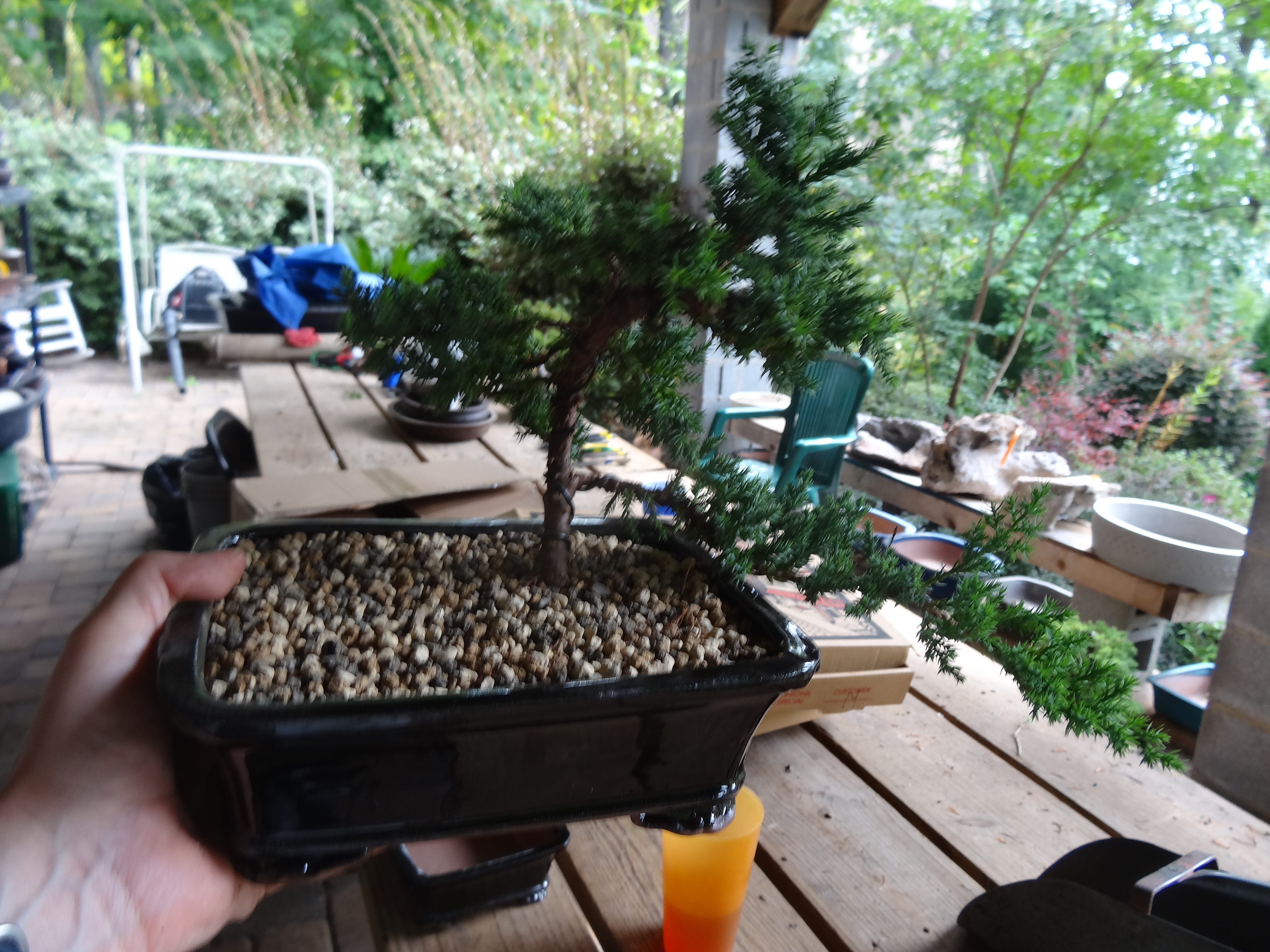
It got a good soak in a tub of water immediately after it was potted.
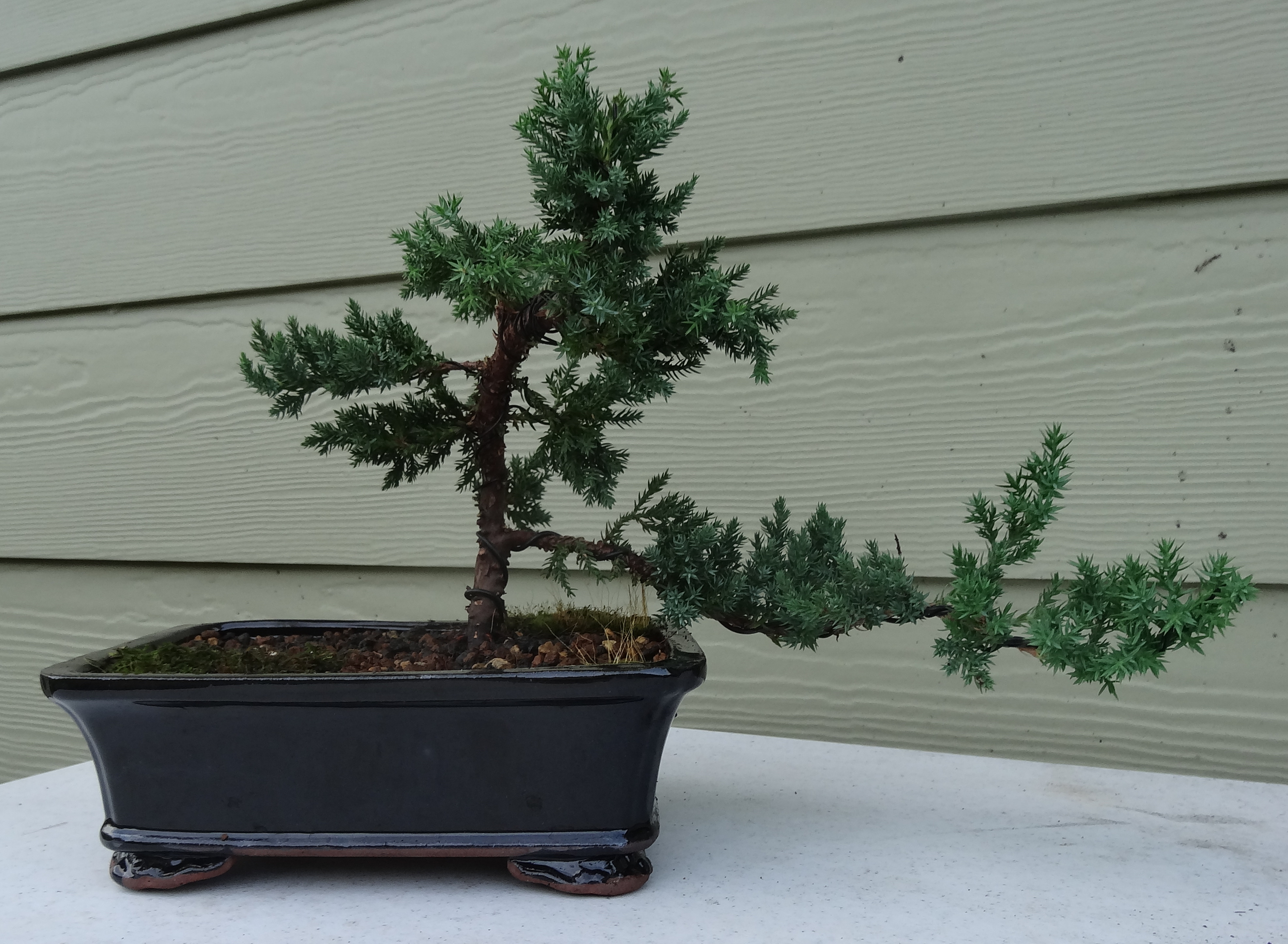 Now, it gets sprayed and watered every day for a month. I should add a little 0-10-10 fertilizer, after that. The weekend after Thanksgiving, it will be set down into a pile of mulch on the south side of my house to wait out the winter.
 I am the Audience
What do you think?