Honey is bee food. Beekeepers take honey that bees don’t need in the Springtime when there is a good nectar flow on and the bees have successfully overwintered. Beekeepers who take too much honey at the wrong time can starve their bees. Or find themselves feeding the bees sugar syrup or fondant to make up for the lack of real bee food.
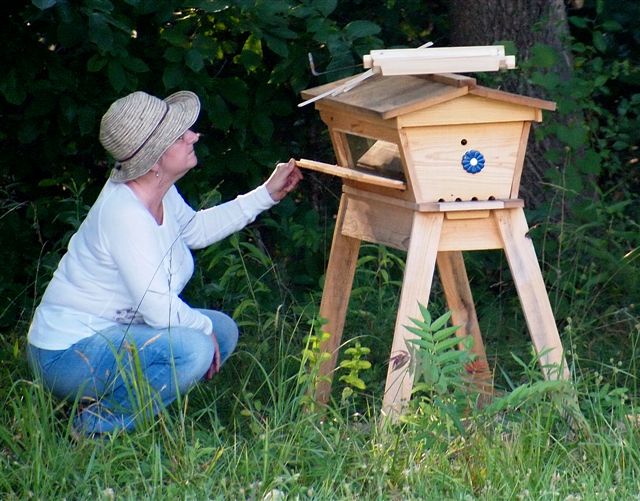
Chuck and I would rather take a little bit of honey, if they have enough to share, and leave the majority to the bees. We are mostly in it for the pollination, but also with the intention of helping to restore honeybee populations
And we hope that our hands-off way of tending the bees will help to restock the feral bee populations that have been hurt by Colony Collapse Disorder. It didn’t just affect commercial beekeepers and honey farmers. It has, also, decimate the wild bees.
Honeybees preceded settlers across the continent as soon as they landed. This was fortunate because so much of the crops that colonists were going to be planting needed those bees. And that hasn’t changed. In order to grown a huge amount of food we eat daily, we need honeybees.
Here are some (but not all) of the things they help pollinate:
Alfalfa, allspice, almonds, apples, apricots, avocados, beans (many varieties), beets, blackberries, blueberries, boysenberries, broccoli, Brussels sprouts, buckwheat, cabbage, cantaloupe, caraway, cardamom, carrots, cashews, cauliflower,celery, cherries (sweet and sour) chestnuts, clover, coconut, coffee, coriander, cotton, cranberries, cucumbers, currants, eggplants, elderberries, fennel, flax, grapes, guava, kiwi, lemon. lime, loquat, macadamias, mangoes, mustard, nectarine, okra, onions, papaya, peas (many, again) peach, pear, persimmon, plum, pomegranate, rapeseed (aka canola), raspberry, safflower, sesame, soybeans, squash (all sorts), strawberries, sunflowers, tangelos, tangerines, turnips, vetch and watermelon.
And notice that some of the crops listed aren’t people food. Alfalfa, clover and vetch are are food for other food.
The other important thing going on with honeybees is that because of how humans have handled them they have been exposed to parasites and diseases that they aren’t ready to deal with. Asian honeybees have developed habits and immunities to varroa mites and the diseases they carry that European honeybees haven’t had time to develop. But because they get moved around the country to pollinate huge monocrops (ie, Florida oranges groves, North Carolina blueberries and California almond orchards that cover an area the size of Rhode Island) they have been exposed to these pathogens fairly regularly.
That has been one of the pieces of the Colony Collapse puzzle.
Now, some beekeepers are raising queens that produce bees that have “hygienic behavior.” And there are treatments for the mites. Unfortunately, the treatments create weak bee colonies with resistant mites.
There is a subculture of beekeepers who are trying to support “survivor bees,” bees that have managed to thrive in spite of varroa without help from humans. These beekeepers let weak colonies die and then restock their hives with swarms caught from healthy hives or feral colonies. And they don’t whine a whole lot if one of their hives swarm away.
So, our hope is to pollinate our garden, get a little honey and to grow healthy bees that will help the Colony Collapse Disorder recovery.

 I am the Audience
Leave a comment